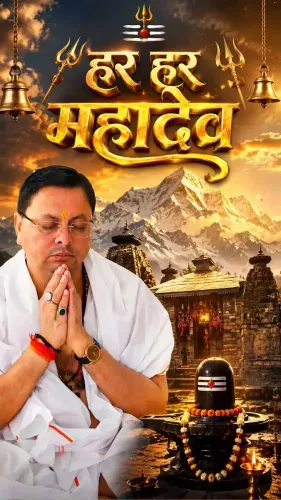
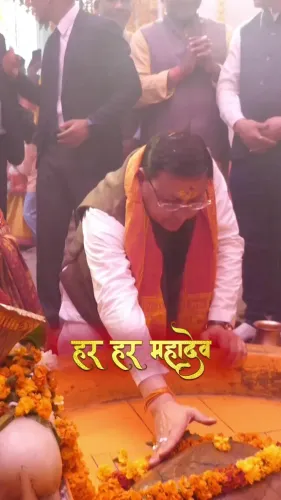
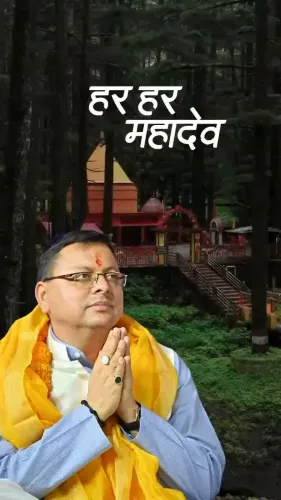
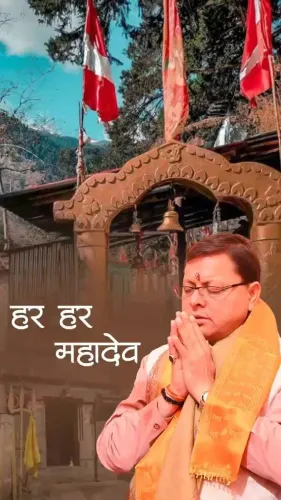
CM Dhami spotlights Tapkeshwar Mahadev amid Sawan season
Synopsis
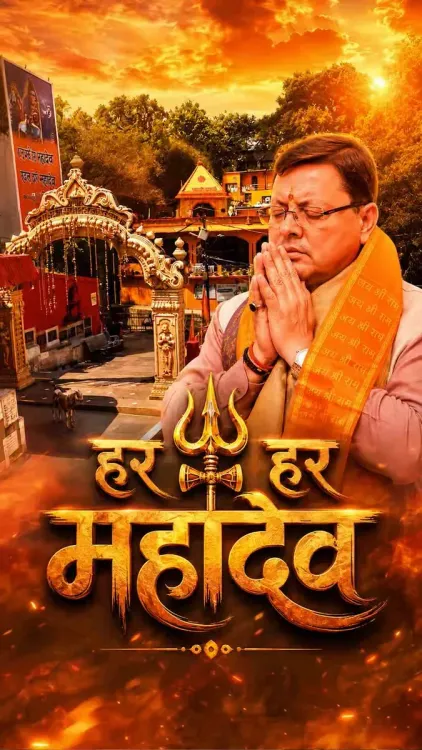
Uttarakhand CM Pushkar Singh Dhami promoted Dehradun's Tapkeshwar Mahadev Temple on August 9, 2026, calling it a must-visit during Sawan and highlighting the cave shrine's unique dripping Shivling as a source of spiritual peace.
Key Takeaways
CM Pushkar Singh Dhami posted about Tapkeshwar Mahadev Temple in Dehradun on August 9, 2026 .
The temple is located inside a natural cave, with a Shivling that receives a continuous drip of water — its defining spiritual feature.
Dhami called it one of Uttarakhand's foremost religious and spiritual sites and urged all visitors to Dehradun to seek darshan there.
The post coincides with the sacred Sawan month, when devotion to Lord Shiva peaks across India.
The promotion fits Uttarakhand's broader strategy of marketing its identity as Devbhoomi through religious tourism outreach.
As the sacred month of Sawan draws devotees toward every Shiva shrine in India, Uttarakhand Chief Minister Pushkar Singh Dhami turned the spotlight on one of Dehradun's most distinctive spiritual addresses — Tapkeshwar Mahadev Temple — on Sunday, August 9, 2026, urging visitors to the state capital to make the ancient cave temple a mandatory stop.
Dhami described the temple as one of Uttarakhand's foremost religious and spiritual sites, calling attention to its defining feature: a natural cave housing a Shivling upon which water drips continuously — a phenomenon that gives the shrine its name. 'Tapkeshwar' literally means 'the lord upon whom water drips.' He wrote that darshan at Tapkeshwar during the holy Sawan month 'mann ko aseem shanti aur adhyatmik urja pradan karte hain' — 'bestows boundless peace and spiritual energy upon the mind.'
A cave temple unlike any other in Devbhoomi
Tapkeshwar Mahadev Temple sits along the banks of the Tons river on the outskirts of Dehradun, tucked inside a natural limestone cave. The ceaseless drip of water onto the Shivling from the cave ceiling is regarded by devotees as a divine abhishek — a self-anointing — making the site especially resonant during Sawan, when ritual water offerings to Shiva are central to worship across the country.
Dehradun, as Uttarakhand's capital and a major gateway city, receives a surge of pilgrims during Sawan who are en route to the Char Dham circuit and other high-altitude shrines. Tapkeshwar, being within the city limits, offers an accessible point of devotion before or after longer journeys into the mountains.
Devbhoomi's social media pulpit
Uttarakhand's political leadership has consistently used digital platforms to reinforce the state's identity as Devbhoomi — the 'Land of the Gods.' Dhami's post fits a well-established pattern: amplifying local temples and pilgrimage circuits to sustain the religious tourism economy that is central to the state's revenue base. Sawan, which sees temple footfall spike sharply across northern India, is a natural inflection point for such outreach.
For the millions who visit Dehradun each year — whether for the hill stations, the military academies, or as a staging post for Uttarakhand's interior — the Chief Minister's message is a pointed reminder that the city itself holds a piece of that spiritual landscape. The dripping cave and its ancient Shivling have been doing so, quietly, for centuries.
Point of View
Amplifying accessible city-level shrines like Tapkeshwar broadens the appeal beyond the high-altitude Char Dham circuit to visitors who may not trek deep into the mountains. It also signals that the BJP-led state government views religious identity and tourism promotion as inseparable policy levers — a pattern consistent with the party's governance approach across Hindi-belt states.
NationPress
23 Sept 2026
Frequently Asked Questions
Where is Tapkeshwar Mahadev Temple located?
Tapkeshwar Mahadev Temple is located in Dehradun , the capital of Uttarakhand, on the banks of the Tons river. It is set inside a natural cave and is easily accessible from the city centre.
Why is Tapkeshwar Mahadev Temple special?
The temple is unique because of a natural cave housing a Shivling upon which water drips continuously from the cave ceiling — an occurrence devotees regard as a divine, self-anointing offering to Lord Shiva. The name 'Tapkeshwar' itself means 'the lord upon whom water drips.'
Why is Sawan the best time to visit Tapkeshwar temple?
Sawan (the Hindu month of Shravan) is considered the most auspicious period for worshipping Lord Shiva. Visiting Shiva temples like Tapkeshwar during this month is believed to bring heightened spiritual merit, peace, and energy, making it the most popular season for darshan.
What did CM Dhami say about Tapkeshwar Mahadev Temple?
CM Pushkar Singh Dhami described Tapkeshwar Mahadev as one of Uttarakhand's foremost religious and spiritual sites, noting that darshan there during Sawan bestows 'boundless peace and spiritual energy.' He urged everyone visiting Dehradun to make the temple a must-visit stop.
Is Tapkeshwar Mahadev Temple easy to visit from Dehradun city?
Yes. Tapkeshwar Mahadev Temple is situated within the outskirts of Dehradun city itself, making it one of the most accessible major Shiva shrines in Uttarakhand — no mountain trek required.