CM Dhami Reaffirms 10% Job Quota for Agniveers in Uttarakhand
Synopsis
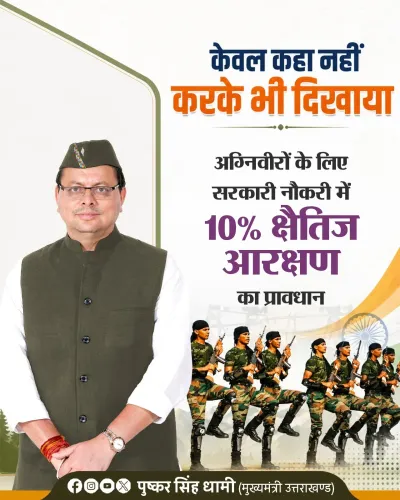
Uttarakhand CM Pushkar Singh Dhami on 17 July 2026 reaffirmed that his government has already granted Agniveers a 10 percent horizontal reservation in state government jobs, pledging dignified post-service opportunities for all who served under the Agnipath scheme.
Key Takeaways
Uttarakhand has granted Agniveers a 10 percent horizontal reservation in state government jobs, CM Dhami confirmed on 17 July 2026 .
The reservation is horizontal , meaning it cuts across all vertical categories (general, OBC, SC/ST) in state recruitment.
The Agnipath scheme , launched by the Union Ministry of Defence in June 2022 , recruits personnel on a four-year contractual basis .
Multiple BJP-governed states have introduced similar 5–10 percent reservations as part of a coordinated federal response to Agniveer post-service welfare.
Uttarakhand has a historically high military enlistment rate, making Agniveer rehabilitation a significant local employment issue.
Implementation data — actual absorption numbers under the quota — and potential legal challenges remain key issues to watch.
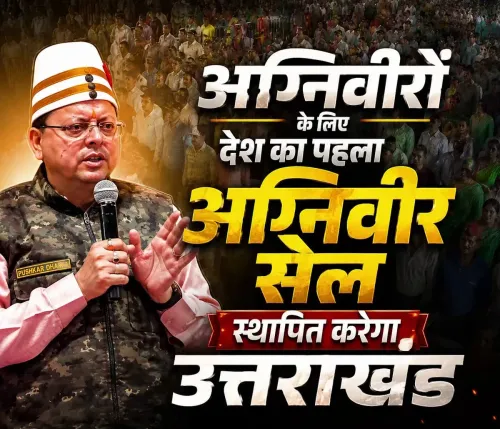
Uttarakhand Chief Minister Pushkar Singh Dhami on Friday, 17 July 2026, reaffirmed his government's commitment to post-service welfare for Agniveers, stating that the state has already granted them a 10 percent horizontal reservation in state government jobs and pledging dignified opportunities for every ex-Agniveer.
Context
Posting on X, CM Dhami wrote in Hindi: 'हमारी सरकार पहले ही अग्निवीरों को राज्य की सरकारी नौकरियों में 10 प्रतिशत क्षैतिज आरक्षण दे चुकी है' — 'Our government has already provided 10 percent horizontal reservation to Agniveers in state government jobs.' He further stated that it is the government's resolve that every Agniveer who has honoured the duty of national service should receive, after their service, 'a dignified opportunity, a self-reliant future, and a strong foundation for an empowered life.'
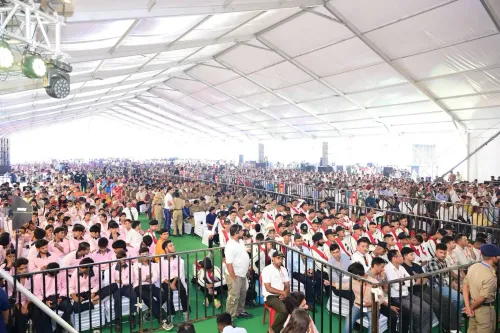
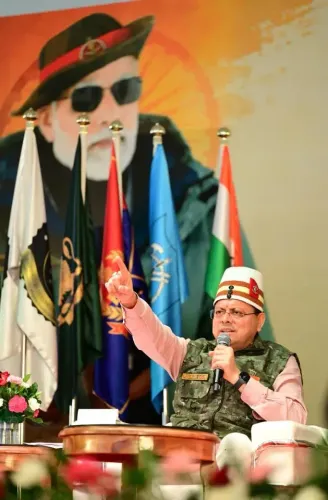
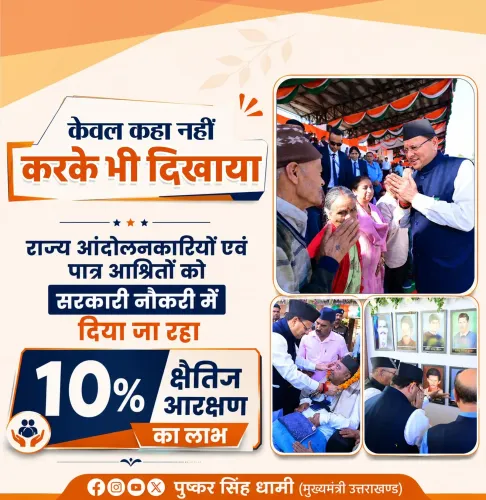
The post, accompanied by four images, comes as the welfare of Agniveers — short-service personnel recruited under the Agnipath scheme — continues to be a live political and policy issue across Indian states.
Policy Backdrop
The Agnipath scheme was launched by the Union Ministry of Defence in June 2022, replacing the earlier permanent military recruitment model with a four-year contractual service structure. Upon completion, Agniveers exit the armed forces and re-enter civilian life, making post-discharge rehabilitation a central concern for both the Centre and state governments.
Following the scheme's launch, several BJP-governed states introduced horizontal reservations in state government employment, typically ranging between 5 and 10 percent, as part of a coordinated federal response to post-service unemployment concerns. Uttarakhand, a Himalayan state with a historically high military enlistment rate, has aligned its state recruitment rules with these central welfare objectives.
A horizontal reservation operates across all existing vertical categories — such as general, OBC, and SC/ST — meaning Agniveers within each category benefit from the dedicated quota without displacing other reserved-category candidates.
Stakeholders and Impact
Agniveers from Uttarakhand stand to benefit directly, given the state's strong tradition of military service and the relatively large number of youth who enlist in the armed forces each cycle. For state job aspirants more broadly, the horizontal reservation introduces a new competing category in government recruitment processes.
The announcement also carries political weight: Uttarakhand goes to the polls in 2027, and the BJP government's visible commitment to Agniveer welfare addresses a constituency that has raised concerns about job security after the four-year service window closes. The post signals that the state intends to position itself as a model for Agniveer rehabilitation among BJP-ruled states.
What's Next
Attention will now turn to implementation data — specifically, how many Agniveers have availed the 10 percent horizontal quota in actual Uttarakhand state recruitment cycles since the reservation was notified. Legal scrutiny of such horizontal reservations has emerged in other states, and any High Court challenge in Uttarakhand could test the policy's durability.
As the first cohort of Agniveers approaches or completes their four-year tenures under the 2022 intake, the pressure on states to demonstrate concrete absorption numbers — not just policy announcements — will intensify. CM Dhami's public reaffirmation suggests the government is preparing to make Agniveer welfare a campaign-ready deliverable ahead of the next state election cycle.
Point of View
However, will be whether the government publishes verifiable absorption data showing Agniveers actually filling seats under the quota, rather than the reservation existing only on paper. Until those numbers are in the public domain, the announcement occupies the space between genuine welfare policy and electoral optics.
NationPress
17 Jul 2026
Frequently Asked Questions
What is the Agniveer job reservation in Uttarakhand?
Uttarakhand has granted Agniveers a 10 percent horizontal reservation in state government jobs, as confirmed by Chief Minister Pushkar Singh Dhami on 17 July 2026. This means Agniveers within each recruitment category — general, OBC, SC/ST — have a dedicated 10 percent quota.
What is the Agnipath scheme?
The Agnipath scheme is a central defence recruitment programme launched by the Union Ministry of Defence in June 2022. It recruits youth into the armed forces on a four-year contractual basis; those who complete service are called Agniveers and then return to civilian life.
Which other states have given job reservations to Agniveers?
Several BJP-governed states introduced horizontal reservations of 5–10 percent in state government jobs for Agniveers following the Agnipath scheme's 2022 launch, as part of a coordinated federal approach to post-service rehabilitation. Uttarakhand's 10 percent quota is at the upper end of this range.
What is a horizontal reservation and how does it differ from vertical reservation?
A horizontal reservation is a cross-cutting quota that applies within each existing vertical category (general, OBC, SC/ST, etc.), rather than being a separate standalone category. This means Agniveers from all backgrounds can benefit without displacing candidates from other reserved categories.
Why is Uttarakhand particularly focused on Agniveer welfare?
Uttarakhand has one of the highest per-capita military enlistment rates in India, meaning a significant share of the state's youth join the armed forces. This makes post-service employment for Agniveers a pressing local issue and an important political concern for the state government.