CM Dhami Reaffirms Pledge for Safe, Educated Uttarakhand Girls
Synopsis
Uttarakhand CM Pushkar Singh Dhami met a young girl on 27 July 2026 and reaffirmed his government's resolve to build a safe, educated, and empowered state for daughters, invoking the 'Beti Bachao Beti Padhao' policy framework and calling girls the state's greatest strength.
Key Takeaways
CM Pushkar Singh Dhami had an informal interaction with a girl student on 27 July 2026 , discussing her dreams, studies, and future.
He declared that daughters are 'the greatest strength' of Uttarakhand .
The Chief Minister reaffirmed his government's resolve to build a safe, educated, and empowered Uttarakhand for girls.
The pledge aligns with the national Beti Bachao Beti Padhao scheme launched in 2015 , which Uttarakhand has extended through state-level scholarship and safety programmes since 2017 .
Policy watchers will monitor state budget allocations and education department rollouts for concrete follow-through on the stated commitment.
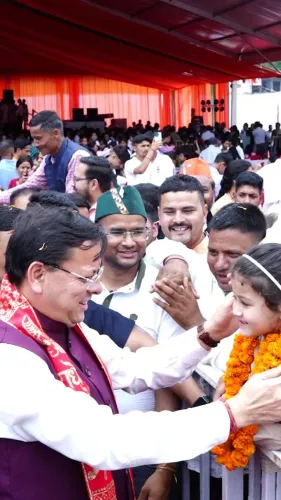
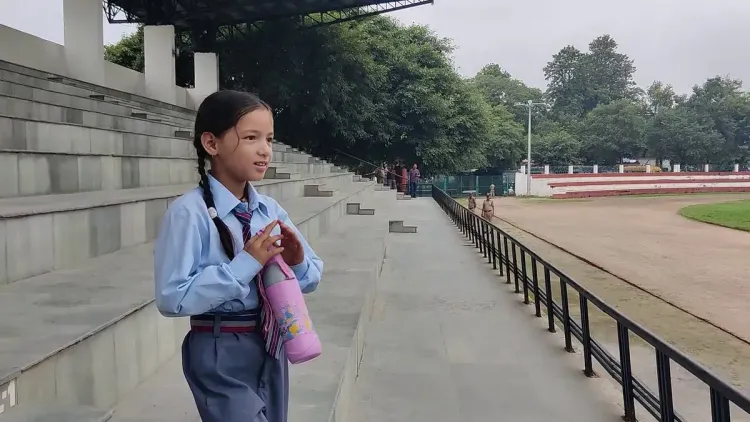
Uttarakhand Chief Minister Pushkar Singh Dhami on Monday, 27 July 2026, shared a warm interaction with a young girl, using the occasion to reaffirm his government's commitment to building a safe, educated, and empowered Uttarakhand for its daughters.
Posting in Hindi on X, CM Dhami wrote: 'Aaj ek pyaari bitiya se uske sapnon, padhai aur bhavishya ko lekar snehmaya baatcheet ki' ['Today I had an affectionate conversation with a dear daughter about her dreams, studies, and future']. He added that the smiles of the state's children reflect the golden tomorrow of Uttarakhand, and that 'our daughters are the greatest strength of the state.'
Context
The post captures a direct, informal engagement between the Chief Minister and a girl student, a format that has become a recurring feature of CM Dhami's public communication since he took office in 2021. Such interactions are typically used to signal the administration's ground-level connect with beneficiaries of welfare schemes. The Chief Minister explicitly framed the encounter around three pillars: safety (surakshit), education (shikshit), and empowerment (sashakt).
Policy Backdrop
The messaging aligns closely with the Beti Bachao Beti Padhao programme, the national scheme launched in 2015 to arrest a declining child sex ratio and expand educational access for girls. Uttarakhand has been among the states running targeted girl-child scholarship and safety programmes since at least 2017, building on that central framework. CM Dhami's declaration — 'surakshit, shikshit aur sashakt Uttarakhand ka nirman hamara sankalp hai' ['building a safe, educated, and empowered Uttarakhand is our resolve'] — mirrors the three-pillar language embedded in those policy documents.
Across BJP-governed states, CM-level public engagement with girl students has served as a visible signal of human-capital investment, connecting state welfare rhetoric to broader demographic and development goals. Uttarakhand's mountainous geography and historically high out-migration rates make girls' education and safety a particularly salient policy area, as educated women are seen as anchors for local community development.
Stakeholders and Impact
The primary beneficiaries of the state's girl-child welfare architecture are school-age girls and young women across Uttarakhand's thirteen districts, including those in remote hill areas with limited access to secondary and higher education. Scholarship programmes and safety infrastructure — such as women's helplines and hostel facilities — directly affect enrolment and retention rates. Parents, local self-government bodies, and school administrators are secondary stakeholders who shape how centrally and state-funded schemes reach the last mile.
The Chief Minister's public affirmation also carries symbolic weight for civil-society groups and women's organisations that have long advocated for stronger implementation of girl-child protections in the state's rural belt.
What's Next
Observers will watch Uttarakhand's upcoming education department rollouts and state budget allocations for concrete follow-through on the 'safe, educated, empowered' pledge. Any expansion of existing scholarship schemes or new safety infrastructure announcements in the coming fiscal cycle would be seen as a legislative and budgetary translation of the Chief Minister's stated resolve. The pattern of such CM-level engagements often precedes formal policy announcements, making this post a signal worth tracking.
Point of View
Education, and empowerment, he is signalling continuity with the 'Beti Bachao Beti Padhao' framework while personalising it through a direct citizen interaction. For a state like Uttarakhand — where out-migration and rural educational gaps remain structural challenges — such messaging carries both symbolic and electoral weight. The real test will be whether the coming budget cycle translates this resolve into measurable scheme expansions.
NationPress
27 Jul 2026
Frequently Asked Questions
What did CM Pushkar Singh Dhami say about girls in Uttarakhand?
CM Dhami said that daughters are the greatest strength of Uttarakhand and pledged to build a safe, educated, and empowered state for them, following a conversation with a young girl about her dreams and studies on 27 July 2026.
What is the Beti Bachao Beti Padhao scheme?
Beti Bachao Beti Padhao is a national programme launched in 2015 to improve the child sex ratio and promote education and empowerment of the girl child; Uttarakhand has run targeted extensions of this scheme since at least 2017.
What schemes does Uttarakhand have for girl child welfare?
Uttarakhand has implemented girl-child scholarship and safety programmes since at least 2017, building on the central Beti Bachao Beti Padhao framework, with measures including scholarships, women's helplines, and hostel facilities for students in remote areas.
Why is girls' education important in Uttarakhand?
Uttarakhand's mountainous geography and high out-migration rates make girls' education a critical policy area, as educated women are considered anchors for local community development and economic stability in the state's rural and hill districts.
What should we watch for after CM Dhami's pledge on girls' empowerment?
Policy observers will track Uttarakhand's upcoming education department announcements and state budget allocations to see whether the Chief Minister's stated resolve translates into new or expanded girl-child welfare schemes in the coming fiscal cycle.