CM Dhami Reaffirms Uttarakhand Govt's Commitment to Worker Welfare
Synopsis
Chief Minister Pushkar Singh Dhami's office on 24 July 2026 reaffirmed Uttarakhand's commitment to worker welfare, reflecting the hill state's long-standing focus on protecting migrant and unorganised sector labourers through social security, insurance, and skill programmes aligned with central labour code reforms.
Key Takeaways
CM Pushkar Singh Dhami publicly reaffirmed the Uttarakhand government's commitment to worker welfare on 24 July 2026 .
Uttarakhand has a structural out-migration challenge, making labour welfare a recurring governance priority.
The state aligned its welfare provisions for unorganised sector workers following central labour code reforms of 2019-2020 .
Key beneficiaries include migrant labourers and construction workers , who form the bulk of the state's informal workforce.
Welfare instruments used by the state include worker welfare boards, insurance schemes, pension provisions, and skill development programmes.
Future budget allocations and scheme expansions in upcoming assembly sessions will be the test of this commitment.
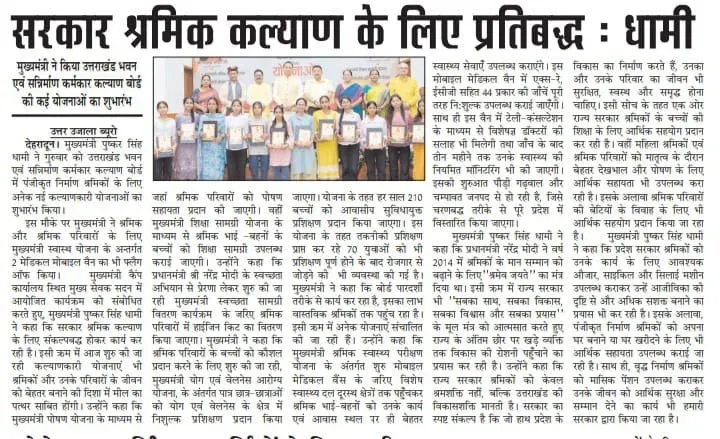
The Chief Minister's Office of Uttarakhand on Friday, 24 July 2026, posted on X reaffirming Chief Minister Pushkar Singh Dhami's commitment to the welfare of workers in the state, stating that the state government remains dedicated to the well-being of labourers.
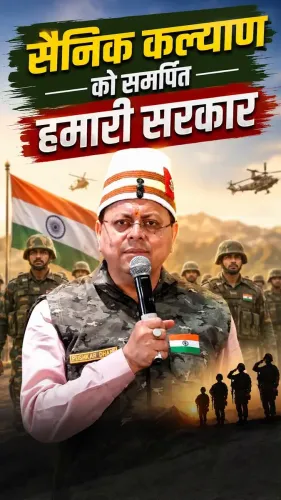
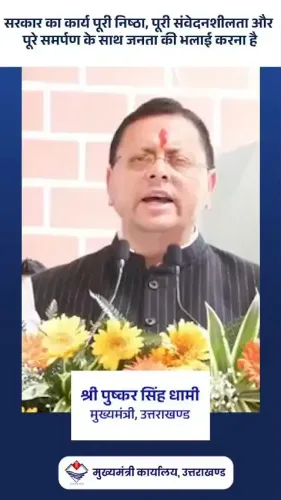
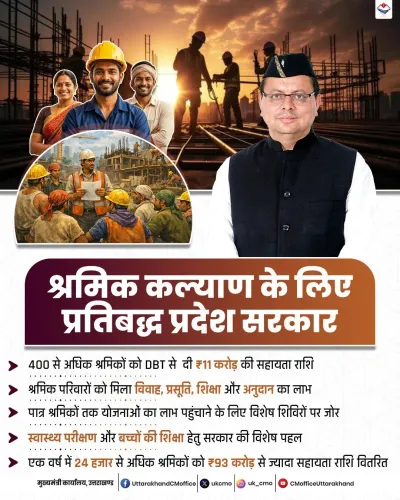
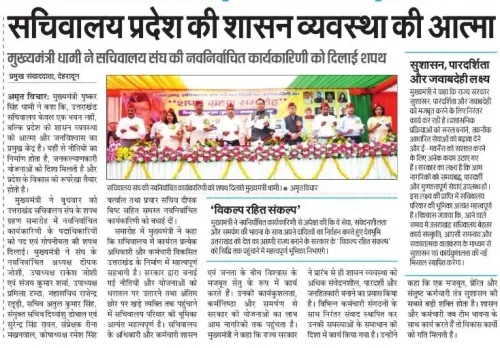
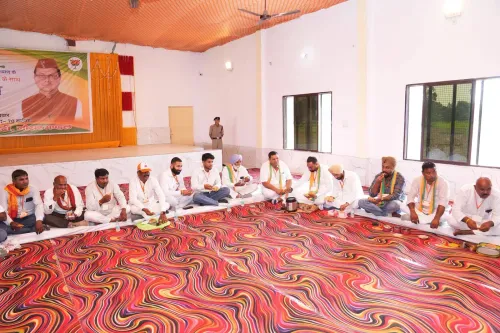
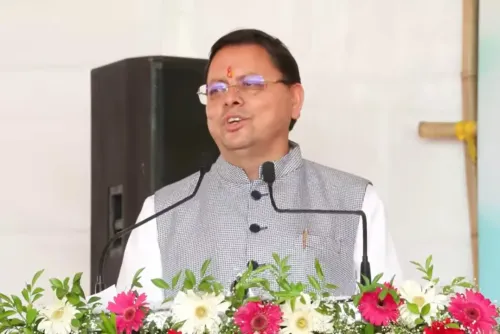
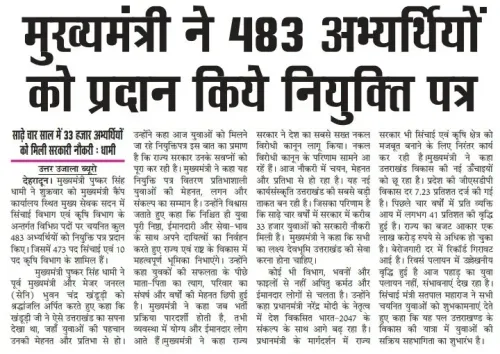
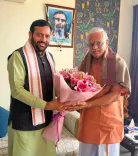
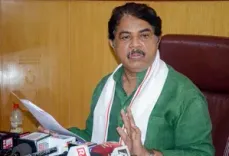
The post, shared in Hindi, carried the headline: 'Shramikon ke kalyan ke liye pratibaddh hai rajya sarkar' ('The state government is committed to the welfare of workers'), attributed directly to Chief Minister Pushkar Singh Dhami. Four images accompanied the post, indicating a formal event or official engagement related to labour welfare.
Context
Uttarakhand is a hill state with a long history of out-migration, with large numbers of workers — particularly from rural and mountainous districts — travelling to other states for employment in construction, manufacturing, and services. This structural dependence on migrant labour has made worker welfare a recurring political and administrative priority for successive state governments.
CM Dhami, who has held office since 2021, has positioned social welfare and inclusive development as central planks of his administration. Statements on labour welfare from his office reflect an ongoing effort to signal the state's commitment to its working population, including those employed outside Uttarakhand's borders.
Policy Backdrop
Following the central government's landmark labour code reforms of 2019-2020, which consolidated dozens of central labour laws into four broad codes, Uttarakhand aligned its state-level welfare provisions for unorganised sector workers accordingly. These reforms were intended to extend social security coverage to a larger share of the workforce, including migrant and construction workers.
Hill states like Uttarakhand have historically channelled welfare support through instruments such as worker welfare boards, insurance schemes, pension provisions, and skill development programmes. State-level implementation of central labour policies has been a consistent feature of governance in the region, with budget allocations to these boards often serving as a barometer of political commitment.
Stakeholders and Impact
The primary beneficiaries of Uttarakhand's labour welfare measures are migrant labourers and construction workers — two of the most economically vulnerable groups in the state. Many households in rural Uttarakhand are remittance-dependent, making the welfare and security of workers employed elsewhere a matter of direct economic significance for families back home.
Organised sector employees have relatively stronger protections under existing law, but unorganised and informal workers — who constitute the bulk of Uttarakhand's labour force — stand to gain most from strengthened state-level welfare interventions. Any expansion of insurance, pension, or skill-linked benefits would directly affect this segment.
What's Next
Observers will watch for concrete follow-through in the form of state budget allocations or scheme expansions for labour welfare in upcoming assembly sessions. Reviews of existing worker boards and announcements of new beneficiary enrolments would be key indicators of whether this commitment translates into measurable policy action.
For a state where out-migration remains a structural challenge, sustained political attention to worker welfare — backed by administrative delivery — will be critical to improving livelihoods and reducing the vulnerabilities of Uttarakhand's working families.
Point of View
Even as implementation on the ground remains uneven. For Uttarakhand, where remittance-dependent households are numerous, such commitments carry electoral weight alongside administrative significance. The real test will come in budget allocations and scheme enrolment numbers, not in declarations alone.
NationPress
24 Jul 2026
Frequently Asked Questions
What did CM Pushkar Singh Dhami say about worker welfare in Uttarakhand?
CM Pushkar Singh Dhami reaffirmed on 24 July 2026 that the Uttarakhand state government is committed to the welfare of workers, as stated in a post by the Chief Minister's Office on X.
What welfare schemes exist for workers in Uttarakhand?
Uttarakhand provides welfare support to workers through instruments such as worker welfare boards, insurance schemes, pension provisions, and skill development programmes, particularly targeting unorganised and migrant sector workers.
How has Uttarakhand implemented central labour code reforms?
Following the central government's labour code reforms of 2019-2020, Uttarakhand aligned its state-level welfare provisions for unorganised sector workers with the new framework, extending social security coverage to a broader segment of the workforce.
Why is worker welfare a major issue in Uttarakhand?
Uttarakhand faces significant out-migration, with many workers leaving the hill state for employment in construction and other sectors elsewhere in India. Many households are remittance-dependent, making worker welfare a critical social and economic concern.
Who are the main beneficiaries of Uttarakhand's labour welfare policies?
The primary beneficiaries are migrant labourers and construction workers — the most economically vulnerable groups — along with unorganised sector workers who form the bulk of Uttarakhand's labour force.