CM Dhami Recalls 1994 Khatima, Mussoorie, Rampur Tiraha Firings
Synopsis
Uttarakhand CM Pushkar Singh Dhami on 27 September 2026 invoked the 1994 Khatima, Mussoorie, and Rampur Tiraha firing incidents, naming the then-SP state government and Congress-led Centre as responsible, calling the episodes 'dark chapters' inseparable from the state's founding sacrifice.
Key Takeaways
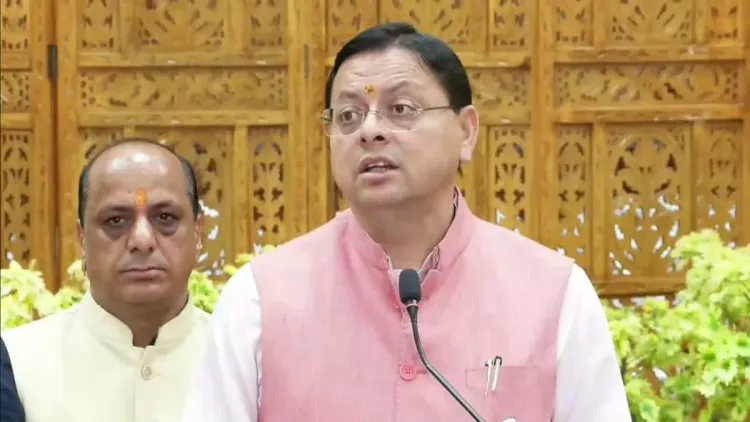
CM Pushkar Singh Dhami posted on 27 September 2026 recalling the Khatima, Mussoorie, and Rampur Tiraha firing incidents of 1994.
He stated that the Samajwadi Party was in power in UP and the Indian National Congress was at the Centre during the shootings.
The 1994 crackdown targeted protesters demanding separation of hill districts from Uttar Pradesh to form a new state.
Uttarakhand was ultimately granted statehood on 9 November 2000 , after sustained agitation and sacrifice.
Dhami called the episodes 'dark chapters of history' that must be remembered as part of the state's founding narrative.
The post is part of a broader BJP pattern of keeping the Uttarakhand Andolan alive in political memory ahead of the November statehood anniversary.
Three firing incidents — Khatima, Mussoorie, and Rampur Tiraha — cut through the history of the Uttarakhand statehood movement like fault lines, and Uttarakhand Chief Minister Pushkar Singh Dhami invoked all three on Sunday, 27 September 2026, demanding they never be forgotten by the state or the nation.
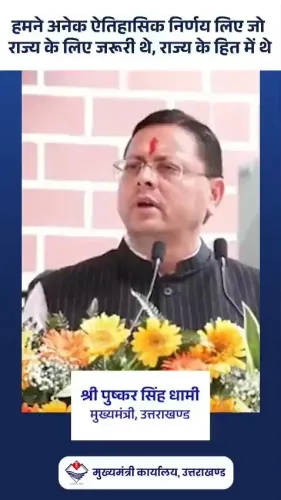
Posting in Hindi, CM Dhami wrote: 'राज्य आंदोलन के दौरान खटीमा, मसूरी और रामपुर तिराहा गोलीकांड को उत्तराखंड कभी नहीं भूल सकता.' — 'Uttarakhand can never forget the Khatima, Mussoorie, and Rampur Tiraha firing incidents during the statehood movement.' He added that it is necessary to remember these 'dark chapters of history' because the making of Uttarakhand is inseparable from the struggle and sacrifice of its agitators.
What happened at Khatima, Mussoorie, and Rampur Tiraha in 1994
The three incidents trace back to 1994, the most turbulent year of the Uttarakhand Andolan — the sustained popular agitation demanding that the hill districts of Uttar Pradesh be carved into a separate state. Protesters, students, and activists mobilised across the region, and the state machinery responded with force at multiple flashpoints. Police opened fire on agitators at Khatima and Mussoorie, and a particularly remembered episode unfolded near Rampur Tiraha in October 1994, when Uttar Pradesh police fired on a group of Uttarakhand activists and students.
The agitation eventually succeeded. On 9 November 2000, Uttarakhand was formally carved out of Uttar Pradesh and granted statehood — a milestone that the state's political class across parties holds as foundational.
SP in UP, Congress at the Centre — Dhami names the governments
CM Dhami's post is pointed in its political attribution. He explicitly states that at the time of the shootings, the Samajwadi Party was in power in Uttar Pradesh and the Indian National Congress was at the Centre. The Samajwadi Party government in UP was led by Mulayam Singh Yadav during the peak of the agitation — a name that carries particular weight in Uttarakhand's political memory.
By naming the parties in power during the crackdown, Dhami draws a direct line between those governments and what he calls 'dark chapters of history.' The framing is one that BJP leaders in Uttarakhand have consistently employed — contrasting the sacrifices of the agitators with the actions of the then state and central governments — and it carries particular resonance as the state approaches the anniversary of its founding each November.
Memory as political identity in Uttarakhand
The invocation of the 1994 firing incidents is not merely historical. In Uttarakhand's political culture, the Andolan and its martyrs function as the moral founding narrative of the state — its own version of a freedom struggle. Politicians who can credibly claim proximity to that sacrifice, or who remind voters of who stood against it, hold a distinct rhetorical advantage.
With Uttarakhand's statehood anniversary on 9 November approaching, such commemorative messaging is expected to intensify. Dhami's post signals the start of that season — and puts the opposition firmly on notice that the memory of 1994 will remain live political terrain.
Point of View
He tethers a historical grievance to present-day electoral identity, keeping the Uttarakhand Andolan useful rather than merely archival. The timing, weeks before the state's statehood anniversary on 9 November, suggests a deliberate calendar of commemoration designed to frame the political season. For the opposition, the post is a reminder that the narrative of 1994 remains uncontested terrain — and that silence on it carries its own cost.
NationPress
27 Sept 2026
Frequently Asked Questions
What was the Khatima firing incident of 1994?
The Khatima firing was a 1994 police action against Uttarakhand statehood protesters in Khatima, in which demonstrators agitating for a separate hill state were fired upon by UP police. It became one of the defining tragic episodes of the Uttarakhand Andolan.
What happened at Rampur Tiraha in 1994?
In October 1994, UP police fired on a group of Uttarakhand activists and students near Rampur Tiraha. The incident is remembered as one of the bloodiest moments of the statehood agitation and is frequently cited by Uttarakhand politicians.
Which government was in power during the 1994 Uttarakhand firing incidents?
The Samajwadi Party, led by Mulayam Singh Yadav, was in power in Uttar Pradesh, and the Indian National Congress was at the Centre during the 1994 crackdown on the Uttarakhand statehood agitation.
When did Uttarakhand get statehood?
Uttarakhand was carved out of Uttar Pradesh and granted statehood on 9 November 2000, following years of sustained popular agitation known as the Uttarakhand Andolan.
Why is CM Dhami talking about the 1994 Uttarakhand Andolan now?
Dhami posted on 27 September 2026 ahead of Uttarakhand's statehood anniversary on 9 November. BJP leaders in the state regularly invoke the 1994 firing incidents as part of commemorations, attributing responsibility to the SP and Congress governments then in power.