CM Dhami Shares President, PM Modi at Odisha Tribal Sacred Grove

Synopsis
Uttarakhand CM Pushkar Singh Dhami shared a live broadcast on 20 June 2026 showing President Droupadi Murmu and PM Narendra Modi offering prayers at the sacred Jahera groves of the Santhal and Ho communities in Pahadpur, Odisha, spotlighting Adivasi cultural heritage at the highest constitutional level.
Key Takeaways
CM Pushkar Singh Dhami shared a live broadcast on 20 June 2026 of the event on X.
President Droupadi Murmu — herself from the Santhal tribe of Odisha — and PM Narendra Modi participated in prayers at the Jahera sacred groves.
The ritual took place at Pahadpur, Odisha , at groves maintained by the Santhal and Ho Adivasi communities.
Jahera groves are traditional sacred forest spaces that also serve as biodiversity refugia in eastern India.
The visit intersects with the Forest Rights Act, 2006 , which recognises community rights over forest land and associated cultural practices.
Analysts will watch for follow-up policy announcements on formal protection or funding for Jahera groves.
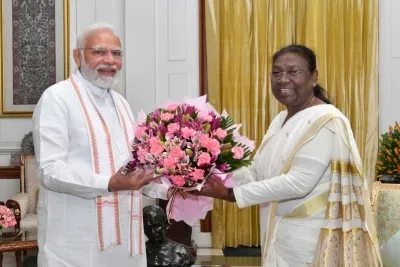
Uttarakhand Chief Minister Pushkar Singh Dhami on Saturday, 20 June 2026, shared a live broadcast showing President Droupadi Murmu and Prime Minister Narendra Modi performing prayers at the sacred Jahera groves of the Santhal and Ho communities in Pahadpur, Odisha.
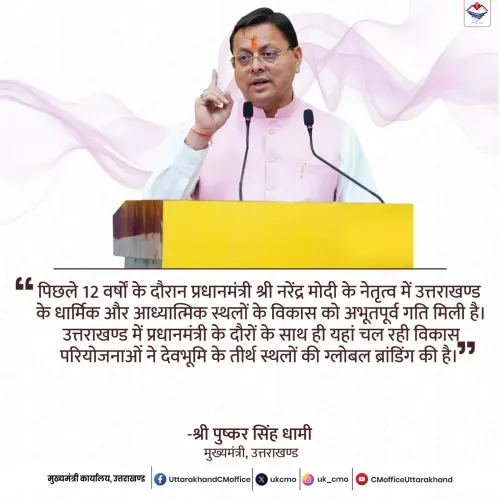
Dhami's post, shared in Hindi, described the two constitutional leaders as 'puja-archana karte hue' — 'offering prayers and worship' — at the 'pavitra upavano', or holy groves, associated with Santhal and Ho tribal traditions.
Context
The Jahera groves are sacred forest spaces maintained for generations by the Santhal and Ho communities, two of Odisha's most prominent Adivasi groups. These groves serve simultaneously as sites of communal worship and as protected ecological corridors, preserving biodiversity in areas of eastern India that are otherwise under significant resource-extraction pressure.
President Droupadi Murmu, who took office in 2022, is herself from the Santhal tribe of Odisha — making her participation in a Santhal ritual observance a moment of particular cultural resonance. She is the first person from a tribal background to hold India's highest constitutional office.
Policy Backdrop
The visit takes place within the framework of the Scheduled Tribes and Other Traditional Forest Dwellers (Recognition of Forest Rights) Act, 2006, which formally recognises community rights over forest land, including cultural and ritual practices associated with sacred groves. The legislation has been a cornerstone of Adivasi land-rights advocacy for two decades.
High-level official engagement with tribal sacred sites has become a recurring feature of the current administration's outreach to Adivasi communities, particularly in the mineral-rich districts of Odisha, Jharkhand, and West Bengal, where the Santhal and Ho populations are concentrated. Analysts note that such participation reinforces the symbolic alignment between constitutional leadership and indigenous cultural continuity.
Stakeholders and Impact
For Santhal and Ho communities, the presence of the President — who shares their ethnic heritage — and the Prime Minister at a Jahera grove carries deep cultural weight, lending national visibility to traditions that have historically received limited mainstream attention. Community leaders and tribal-rights advocates have long sought formal protection and state funding for Jahera groves as both sacred spaces and biodiversity refugia.
The live broadcast format, amplified by senior political figures including CM Dhami, extended the event's reach to a national audience, drawing attention to Adivasi spiritual practices at a moment when tribal-area development policy remains a contested political terrain.
What's Next
Observers will watch for any follow-up policy announcements regarding the formal protection status of Jahera groves or dedicated funding provisions in upcoming central or state budget exercises. The event could also catalyse renewed discussion on expanding the scope of the Forest Rights Act to more explicitly cover sacred-grove ecosystems. Whether the high-profile participation translates into concrete legislative or financial commitments for tribal cultural heritage will be the key measure of its lasting significance.
Point of View
Her presence at a community sacred grove collapses the distance between constitutional authority and indigenous identity in a way no previous President could. PM Modi's attendance alongside her reinforces a deliberate pattern of high-visibility Adivasi cultural engagement that the ruling dispensation has cultivated since 2014. For tribal communities in Odisha and Jharkhand, the gesture is significant, but advocacy groups will measure its worth against concrete outcomes — formal grove-protection status, expanded Forest Rights Act coverage, and development funding. CM Dhami's decision to amplify the broadcast signals that the BJP's tribal outreach is being coordinated across state and central leadership ahead of future electoral cycles in Adivasi-heavy constituencies.
NationPress
20 Jun 2026
Frequently Asked Questions
What are Jahera sacred groves and why are they important?
Jahera groves are traditional forest spaces preserved by the Santhal and Ho communities of eastern India for communal worship and biodiversity protection. They hold deep spiritual significance and also function as ecological refugia in mineral-rich districts of Odisha and Jharkhand.
Why did President Droupadi Murmu visit a Santhal sacred grove?
President Murmu, who belongs to the Santhal tribe of Odisha, participated in prayers at the Jahera grove in Pahadpur, Odisha, on 20 June 2026 alongside PM Modi, in an event that highlighted Adivasi cultural heritage at the highest constitutional level.
What did CM Pushkar Singh Dhami post about the Odisha tribal event?
CM Dhami shared a live broadcast on X showing President Murmu and PM Modi offering prayers at Santhal and Ho Jahera sacred groves in Pahadpur, Odisha, describing the leaders as performing 'puja-archana' at the holy groves.
What is the Forest Rights Act and how does it relate to sacred groves?
The Scheduled Tribes and Other Traditional Forest Dwellers (Recognition of Forest Rights) Act, 2006, formally recognises community rights over forest land, including cultural and ritual practices associated with sacred groves like the Jahera sites.
Who are the Santhal and Ho tribes?
The Santhal and Ho are two of India's largest Adivasi groups, concentrated primarily in Odisha, Jharkhand, and West Bengal. Both communities maintain Jahera sacred groves as protected spaces for worship and ecological conservation.