CM Dhami Slams Uttarakhand Congress Over Doval, SP Remarks
Synopsis
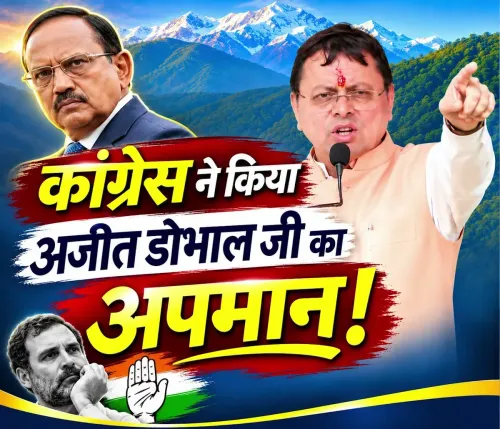
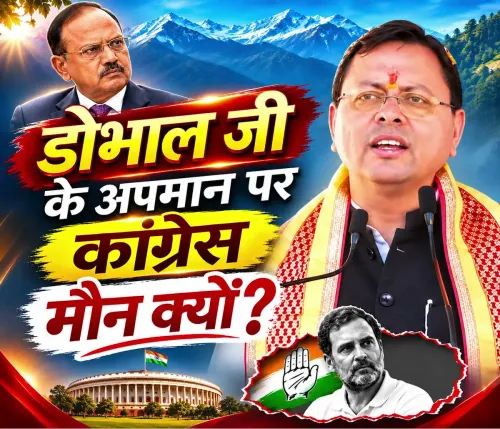
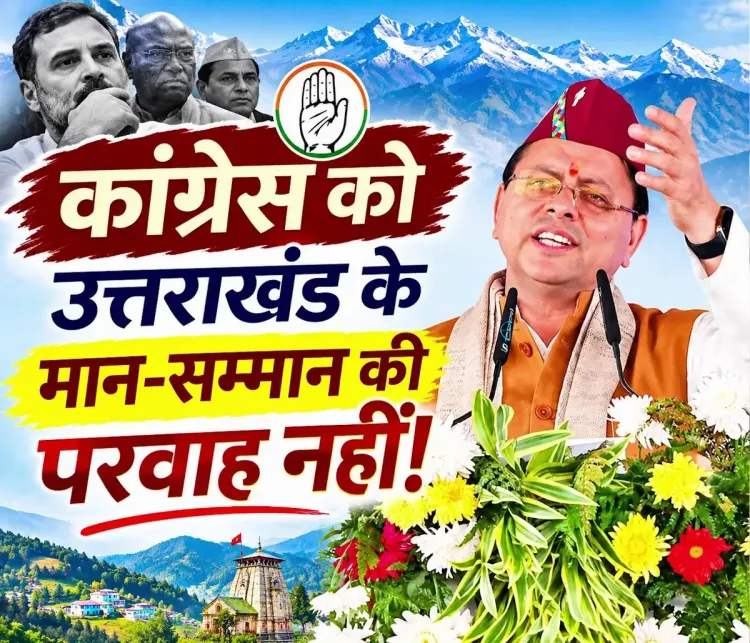
Uttarakhand CM Pushkar Singh Dhami accused state Congress leaders of ignoring two controversies — Rahul Gandhi's remark on NSA Ajit Doval and Akhilesh Yadav's alleged 'infiltrator' jibe at Uttarakhand residents — framing their silence as a betrayal of the state's honour.
Key Takeaways
CM Dhami posted on November 17, 2026 accusing Uttarakhand Congress of indifference to the state's dignity.
He cited two specific incidents: a remark by Rahul Gandhi targeting NSA Ajit Doval , and a statement by Akhilesh Yadav allegedly calling Uttarakhand residents 'infiltrators' ( ghuspaithiya ).
Ajit Doval has served as India's National Security Advisor since 2014 , making any criticism politically sensitive.
Uttarakhand borders both China and Nepal , giving national-security themes added local resonance.
The post puts state Congress in a bind — responding either requires distancing from national leadership or defending the contested remarks.
No response from Uttarakhand Congress was available at the time of publication.
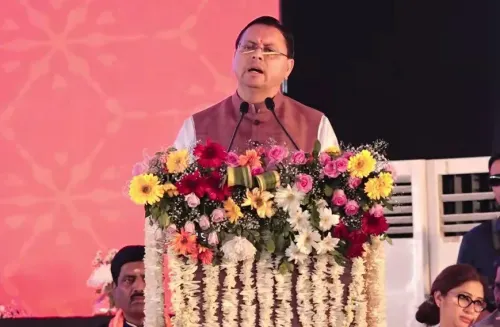
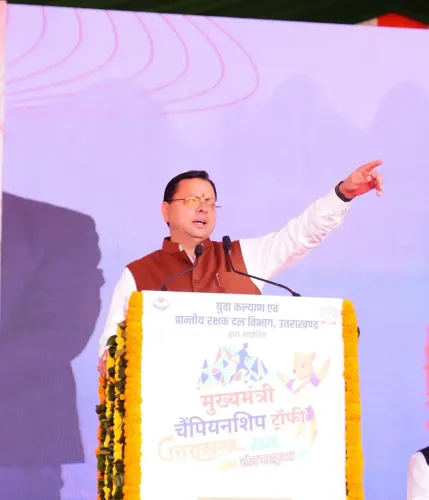
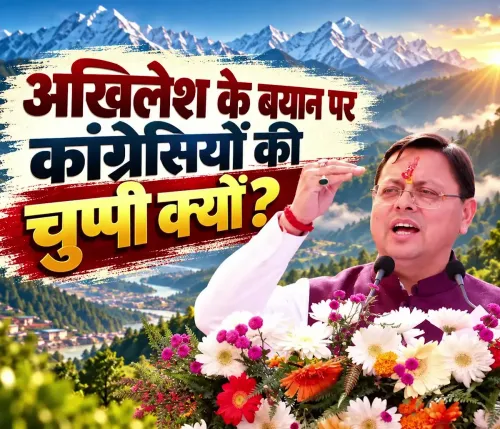
Uttarakhand Chief Minister Pushkar Singh Dhami fired a pointed broadside at the state's Congress leadership on Tuesday, November 17, 2026, accusing them of staying silent on two controversies he says directly wound Uttarakhand's honour — a remark by Rahul Gandhi targeting National Security Advisor Ajit Doval, and a statement by Akhilesh Yadav that allegedly described people of Uttarakhand as 'infiltrators'.
The Two Silences Dhami Is Calling Out
Posting in Hindi, Dhami wrote: 'प्रदेश कांग्रेस के नेताओं को उत्तराखंड के मान-सम्मान और स्वाभिमान की कोई चिंता नहीं है' — 'The leaders of the state Congress have no concern for the honour, dignity, and self-respect of Uttarakhand.' He then laid out his case with two specific charges: first, that Congress leaders in the state failed to push back when Rahul Gandhi made a comment about NSA Ajit Doval; second, that they raised no voice when Samajwadi Party chief Akhilesh Yadav allegedly branded Uttarakhand's residents as 'infiltrators' (ghuspaithiya).
The double accusation is deliberate. By pairing a slight against a national security institution with a slight against the state's own people, Dhami frames Congress's silence as a failure on two registers simultaneously — patriotism and regional pride. It is a tight rhetorical trap: defending either figure would require Uttarakhand Congress to distance itself from its own national leadership or from a key coalition-era ally.
Who Is Ajit Doval — and Why His Name Carries Weight
Ajit Doval has served as India's National Security Advisor since 2014, becoming one of the most prominent faces of the country's security architecture. His background in intelligence operations and his role in shaping India's border and counter-terrorism posture make him a figure the BJP regularly invokes as a symbol of national security credibility. Any critical remark aimed at Doval lands, in BJP political framing, as an attack on the security establishment itself.
Uttarakhand's geography makes this especially resonant. The state shares borders with both China and Nepal and has historically been central to India's Himalayan security strategy. For Dhami, linking Doval's name to Uttarakhand's political debate is not incidental — it ties the state's identity to the front lines of national defence.
Akhilesh Yadav's Alleged Remark and the 'Infiltrator' Charge
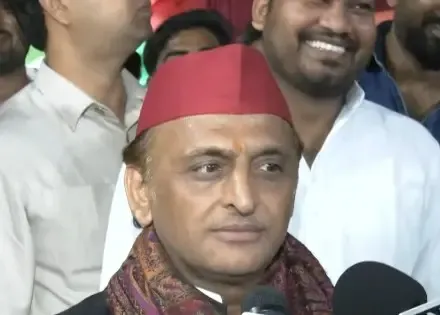
Akhilesh Yadav, the Samajwadi Party chief and former Chief Minister of Uttar Pradesh, has been engaged in an extended political rivalry with BJP across the Hindi belt. The specific remark Dhami references — that Yadav described Uttarakhand residents as 'infiltrators' — has not been independently verified, but its invocation by the Chief Minister signals it has become a live talking point in state political circles. The word ghuspaithiya carries loaded connotations in the context of demographic politics in border states, and its alleged use against the people of Uttarakhand is precisely the kind of charge designed to mobilise regional sentiment.
Uttarakhand Congress Caught in the Cross-Fire
State-level Congress units across India routinely face a structural bind: national party statements often create local political exposure that the state unit must absorb without visibly contradicting the high command. Dhami is exploiting that bind here with precision. By demanding to know why the state Congress did not 'protest' or 'raise its voice,' he shifts the burden entirely onto a unit that had no obvious role in either controversy.
The post arrives at a moment when BJP and Congress are locked in ongoing battles over border security narratives and opposition credibility on national defence — a pattern that has played out repeatedly across Himalayan and border states. Dhami's statement fits that broader arc, but its sharper edge is local: it is as much about defining Uttarakhand Congress's loyalties ahead of future electoral cycles as it is about either Doval or Yadav.
Uttarakhand's political establishment will be watching whether the state Congress responds — and whether that response requires them to either defend or distance themselves from their national partners. Either move carries a cost.
Point of View
He forces Uttarakhand Congress to either break with its national leadership or absorb the political cost of silence — an asymmetric position with no clean exit. This tactic mirrors a broader BJP pattern in Himalayan and border states, where national security and demographic identity are routinely fused into a single electoral narrative. The real test is whether the state Congress can craft a response that addresses both charges without amplifying them further.
NationPress
17 Nov 2026
Frequently Asked Questions
What did CM Dhami accuse Uttarakhand Congress of?
CM Dhami accused Uttarakhand Congress leaders of failing to protest Rahul Gandhi's remark against NSA Ajit Doval and of not speaking out when Akhilesh Yadav allegedly called Uttarakhand residents 'infiltrators'.
What was Rahul Gandhi's comment about Ajit Doval?
The specific nature of Rahul Gandhi's remark about NSA Ajit Doval referenced in Dhami's post has not been independently verified; Dhami's post describes it as a comment that merited protest from state Congress leaders.
Did Akhilesh Yadav call Uttarakhand people infiltrators?
CM Dhami's post alleges that Akhilesh Yadav described Uttarakhand residents as 'infiltrators' ( ghuspaithiya ), but this specific statement has not been independently verified at the time of this report.
Who is Ajit Doval and why is he significant?
Ajit Doval is India's National Security Advisor, a post he has held since 2014. He is a former intelligence officer and a central figure in India's border security and counter-terrorism policy.
How did Uttarakhand Congress respond to Dhami's attack?
No formal response from Uttarakhand Congress was available at the time of publication. Political observers are watching for whether the state unit will address either of the two controversies Dhami raised.