CM Himanta flags Centre-State-KAAC push for Assam's 2nd Sainik School

Synopsis
Chief Minister Himanta Biswa Sarma has spotlighted a three-way partnership between the Centre, Assam state government, and the Karbi Anglong Autonomous Council to establish the state's second Sainik School — more than 60 years after the first was set up in Goalpara.
Key Takeaways
Himanta Biswa Sarma announced joint efforts by the Centre, Assam state government, and KAAC to establish the state's second Sainik School.
Assam's first Sainik School was established in Goalpara in 1964 — over 60 years ago.
The Karbi Anglong Autonomous Council (KAAC) , a Sixth Schedule body, is a key partner — making this structurally distinct from a standard state scheme.
Sainik Schools are run by the Ministry of Defence to prepare students for entry into the NDA and armed forces.
Exact location, funding breakdown, and operational timeline remain to be formally announced.
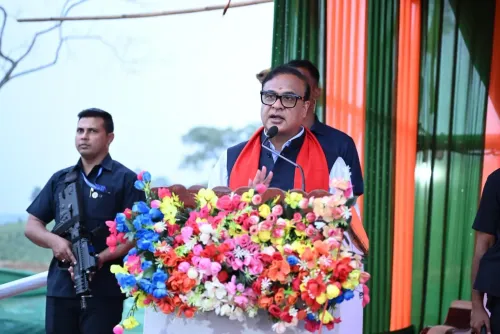
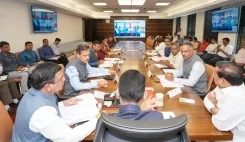
More than six decades after Assam's first Sainik School opened its gates in Goalpara in 1964, the state is on course to add a second — and this time, it is the product of a three-way partnership that few infrastructure projects in the Northeast have attempted. Chief Minister Dr. Himanta Biswa Sarma, speaking on Tuesday, 17 November 2026, highlighted the coordinated effort between the Centre, the Assam state government, and the Karbi Anglong Autonomous Council (KAAC) to bring the school to life.
A 62-year gap and a three-way handshake
Assam's first Sainik School at Goalpara has, for over six decades, been the state's sole feeder institution preparing young students for the National Defence Academy (NDA) and entry into the armed forces. The gap since 1964 underscores how long defence-oriented residential education went without fresh infrastructure in the region. The second school changes that arithmetic entirely.
What makes this project structurally distinct is the involvement of KAAC — the Karbi Anglong Autonomous Council — alongside the Ministry of Defence and the state government. Autonomous district councils in India's Northeast carry significant land and administrative powers under the Sixth Schedule of the Constitution, making their participation not just symbolic but operationally essential for any project within their jurisdiction.
Sainik Schools and the Northeast's defence pipeline
Sainik Schools are residential institutions run under the aegis of the Ministry of Defence, designed to give students — particularly from regions underserved by elite schooling — a disciplined, academically rigorous foundation with a clear pathway to the defence services. The national network has expanded steadily over decades, but the Northeast has historically lagged in the number of such institutions relative to its size and strategic importance.
Assam's second school, once operational, would expand the pool of defence aspirants from the region, including from the hill districts of Karbi Anglong — an area where opportunities in specialised residential education have been limited. Local students and families awaiting admission details will now watch closely for official announcements on site selection, the construction timeline, and the intake process.
CM Sarma's governance thread through education
Dr. Himanta Biswa Sarma, who has led Assam since 2021, has consistently positioned education infrastructure — from model schools to degree colleges — as a central plank of his administration. The Sainik School announcement fits that pattern, but the KAAC angle adds a layer of federal negotiation that elevates it beyond a routine state scheme. Getting an autonomous council to co-invest in a centrally-linked project signals a degree of institutional alignment that is worth noting.
Exact details on funding shares, the precise location within Karbi Anglong, and the operational start date have not yet been formally confirmed — but the political groundwork, by CM Sarma's own account, is laid.
When the doors of Assam's second Sainik School eventually open, they will carry the weight of a 62-year wait — and the ambition of three governments moving in the same direction.
Point of View
Co-opting an autonomous council into a Ministry of Defence-linked project is also a consolidation of soft power in a region where institutional trust between state governments and hill councils has historically been uneven. The announcement fits a broader national pattern of using Sainik School expansion as a low-controversy, high-visibility instrument of federal outreach in aspirational districts. What will matter most is whether the execution timeline holds and admissions reach students from the hill communities KAAC represents.
NationPress
17 Nov 2026
Frequently Asked Questions
Where will Assam's second Sainik School be located?
The exact location has not been formally confirmed yet, though the involvement of the Karbi Anglong Autonomous Council (KAAC) suggests it will be sited within the Karbi Anglong region of Assam.
Where is Assam's first Sainik School?
Assam's first Sainik School is located in Goalpara and was established in 1964 , making it one of the older institutions in the national Sainik School network.
What is a Sainik School and who runs it?
Sainik Schools are residential schools run under the Ministry of Defence , designed to prepare students — especially from underserved regions — for entry into the National Defence Academy (NDA) and other defence services through disciplined academic and physical training.
What is the KAAC and why is it involved in the Sainik School project?
The Karbi Anglong Autonomous Council (KAAC) is a Sixth Schedule autonomous district council in Assam with significant land and administrative powers. Its involvement is essential for any infrastructure project within its jurisdiction, making it a critical partner alongside the Centre and state government.
When will Assam's second Sainik School become operational?
An operational start date has not yet been officially announced. Details on the construction timeline, site selection, and admission process are expected to be confirmed in subsequent official communications.