CM Himanta Flags Education Reach in Assam's Frontier Tea Belts

Synopsis
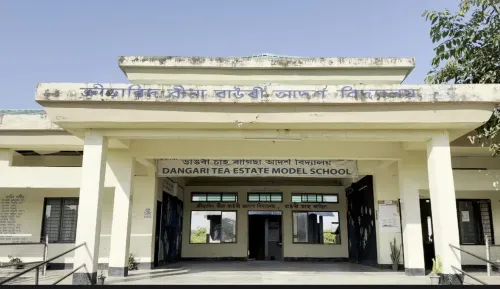
Assam Chief Minister Himanta Biswa Sarma highlighted that children in remote tea garden frontier districts, over 500 km from Guwahati, are accessing formal education for the first time, 79 years after Independence — a milestone tied to accelerated school infrastructure drives since 2021.
Key Takeaways
Assam CM Himanta Biswa Sarma announced that children in remote tea garden frontier districts are opening textbooks for the first time, 79 years after Independence .
The districts cited are more than 500 km from Guwahati , bordering Arunachal Pradesh, Nagaland, and Myanmar .
Tea tribe communities in Assam have historically had among the lowest literacy and schooling access rates in the state.
Targeted state education missions and school infrastructure drives for tea garden and tribal blocks accelerated after 2021 under Sarma's administration.
District-level enrollment data and new school construction reports from Upper Assam and frontier blocks will be the next concrete indicators of progress.
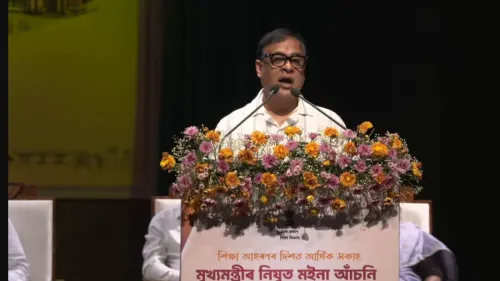
Seventy-nine years after Independence, children in Assam's most remote tea garden districts — more than 500 km from Guwahati — are opening textbooks for the first time, according to Assam Chief Minister Himanta Biswa Sarma, who marked the development in a post on Thursday, November 5, 2026. It is the kind of milestone that rarely makes headlines, yet speaks directly to a stubborn gap in India's development story.
A literacy gap older than the republic itself
Assam's tea tribe communities — settled across sprawling plantation estates that stretch toward the borders with Arunachal Pradesh, Nagaland, and Myanmar — have historically sat at the margins of education and social services. Low literacy, poor road connectivity, and geographic isolation combined to keep generations of tea garden children out of formal schooling long after the rest of the country moved on. The problem is not new; successive state governments have acknowledged it since the 2000s.
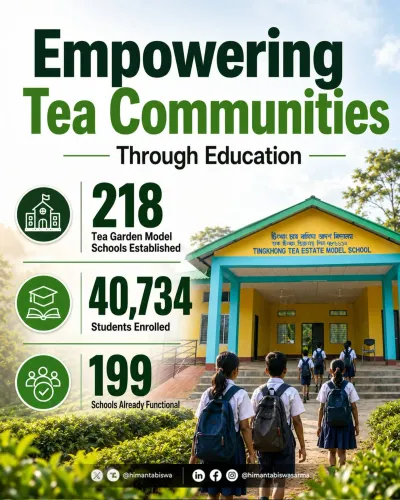
What shifted the needle, at least structurally, was a wave of infrastructure work that gathered pace after 2016 and accelerated further after 2021, when Sarma's administration began directing state education missions specifically at tea garden and tribal blocks. School construction, enrollment drives, and targeted welfare schemes have been the instruments — unglamorous work, but the kind that eventually shows up in a child carrying a textbook.
Why the frontier districts remain the hard case
The districts Sarma references are not merely rural — they sit in a category of their own. The 500-km distance from Guwahati is as much a governance problem as a geographic one: supply chains break down, teacher postings go unfilled, and monitoring is inconsistent. That is precisely why the state's focus on frontier blocks draws attention beyond Assam's borders.
Across the North East, human development indicators in remote border areas have lagged national averages for decades. Sarma, as convenor of the North-East Democratic Alliance (NEDA), has repeatedly framed education access as the structural anchor for the region's long-term stability — a political argument, yes, but one grounded in the numbers that come out whenever district-level enrollment surveys are released.
What the district data will tell us next
The real test of the milestone Sarma is claiming will come in hard figures: enrollment rates in Upper Assam and frontier blocks, school completion data, and new construction reports from the state's education department. Those releases are the ones to watch. Progress in reaching tea garden children is real and documented across the past decade — the question now is whether the momentum has pushed into the last, most isolated pockets the Chief Minister is pointing to.
For the children in those gardens, a textbook is not a policy output. It is the entry point to everything else.
Point of View
Anchoring the NEDA identity to tangible outcomes in the region's most underserved communities is a consistent thread, one that serves both state-level electoral logic and the broader BJP argument about governance delivery in the North East. Whether the enrollment data eventually validates the milestone will determine how durable the narrative is.
NationPress
5 Nov 2026
Frequently Asked Questions
Which districts in Assam are more than 500 km from Guwahati?
The frontier districts of Upper Assam — including those bordering Arunachal Pradesh, Nagaland, and areas close to Myanmar — are roughly 500 km or more from Guwahati, the state capital.
What is the literacy situation in Assam's tea garden areas?
Tea tribe communities in Assam's plantation belts have historically had low literacy rates and limited access to formal schooling, driven by geographic isolation, poor infrastructure, and economic marginalisation that predates Independence.
What education schemes has the Assam government run for tea garden children?
Since 2021, the Assam government has directed state education missions at tea garden and tribal blocks, running enrollment drives and accelerating school construction, building on welfare schemes that began in earlier administrations around the 2000s.
Who are the tea tribe communities in Assam?
Tea tribes are communities originally brought to Assam as plantation labourers, primarily from Jharkhand, Odisha, and Chhattisgarh, during the British colonial era. They remain one of Assam's largest and most socioeconomically vulnerable populations.
What is NEDA and what is Himanta Biswa Sarma's role in it?
The North-East Democratic Alliance (NEDA) is a BJP-led coalition of regional parties across North Eastern states. Himanta Biswa Sarma serves as its convenor, playing a key role in the BJP's political strategy across the region.