CM Dhami Launches Child Labour Drive in Uttarakhand
Synopsis
Uttarakhand CM Pushkar Singh Dhami on 12 June 2026 declared the fight against child labour a collective social duty, announcing a state-wide campaign to identify and rescue child labourers and mainstream them into education, while urging citizens to report violations to police.
Key Takeaways
CM Pushkar Singh Dhami declared child labour elimination a collective social responsibility, not merely a legal obligation.
A comprehensive campaign is under way across Uttarakhand to identify children in labour and enrol them in mainstream education.
Citizens have been urged to report any child seen working at a workplace or nearby area to police or the district administration immediately.
The campaign aligns with the Child Labour (Prohibition and Regulation) Amendment Act, 2016 , which bans employment of children below 14 years .
The national PENCIL portal provides a real-time monitoring framework that the state campaign can feed into for tracking rescues and school enrolments.
India's commitments under ILO Conventions 138 and 182 and the Right to Education Act, 2009 form the broader legal architecture underpinning such state-level drives.
Uttarakhand Chief Minister Pushkar Singh Dhami on Friday, 12 June 2026, called the fight against child labour a collective social responsibility and announced that a comprehensive campaign is under way across Uttarakhand to identify, rescue, and mainstream child labourers into formal education.
Context
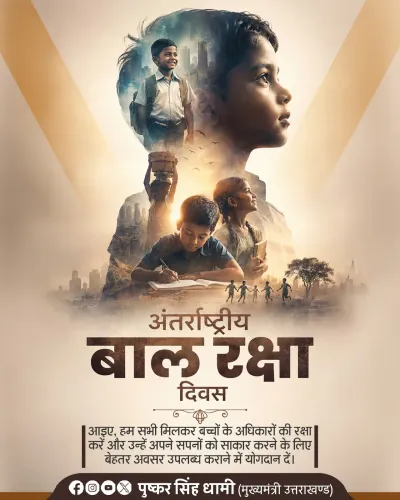
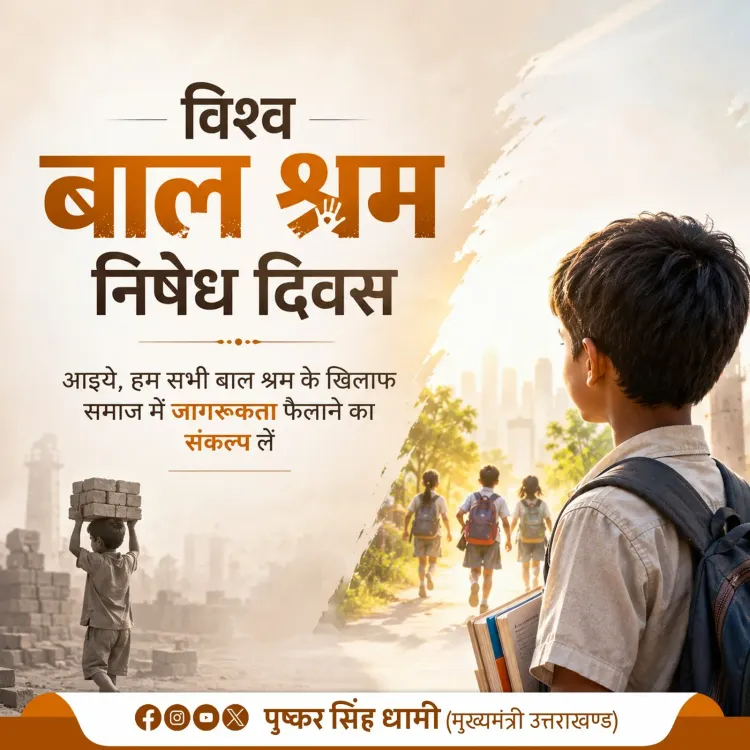
Posting in Hindi on World Day Against Child Labour, CM Dhami stated: 'बाल श्रम के विरुद्ध लड़ाई केवल कानून की नहीं, बल्कि समाज की सामूहिक जिम्मेदारी है' — 'The fight against child labour is not just a matter of law, but the collective responsibility of society.' He described an ongoing state-wide campaign to pull children out of the 'vicious cycle of labour' and place books in their hands instead of tools.
The Chief Minister also issued a direct public appeal: anyone who spots a child working at a workplace or in their neighbourhood should immediately inform the police or the relevant administrative department.
Policy Backdrop
India's legal framework on child labour has been progressively tightened. The Child Labour (Prohibition and Regulation) Amendment Act, 2016 extended the absolute ban on employing children below 14 years and introduced steeper penalties for violations. The law also restricts employment of adolescents aged 14–18 in hazardous industries.
At the national level, the National Child Labour Project (NCLP) Scheme, operational since 1988, funds the identification, withdrawal, and rehabilitation of child labourers through special bridge schools before their enrolment in mainstream education. India has also ratified ILO Conventions 138 and 182, committing to minimum age standards and the elimination of the worst forms of child labour. The Right to Education Act, 2009 further mandates free and compulsory schooling for all children aged 6–14, creating a legal scaffold that state campaigns like Uttarakhand's are designed to activate on the ground.
The PENCIL portal — Platform for Effective Enforcement for No Child Labour — maintained by the central government, allows states to log complaints, track rescues, and report rehabilitation progress in real time, providing a monitoring backbone for such campaigns.
Stakeholders and Impact
The primary beneficiaries are children trapped in informal labour — domestic work, construction sites, roadside eateries, and agriculture — predominantly from economically vulnerable families. Uttarakhand's geography, which includes remote hill districts with limited school access, has historically made enforcement difficult and rehabilitation more complex than in urban settings.
Employers in the informal sector, particularly small businesses and households, face legal exposure under the 2016 Amendment Act, which prescribes fines and imprisonment for violations. Civil society groups, district administration, and the state police are the operational arms of the rescue and rehabilitation chain.
What's Next
State-level quarterly progress reports on child rescues and school enrolments under the campaign will be a key indicator of its reach. Integration with the national PENCIL portal would allow independent tracking of Uttarakhand's performance against other states. The Chief Minister's public call for citizen reporting signals that community participation is being positioned as a force-multiplier alongside law enforcement — a model that, if sustained, could inform how other hill states approach the problem.
Point of View
Signalling that Uttarakhand is trying to close the gap between legislation and ground-level compliance. For a hill state where geography and poverty intersect to sustain informal child labour, the credibility of this campaign will ultimately rest on verifiable rescue and enrolment numbers, not messaging alone. The post, timed to World Day Against Child Labour, also fits a pattern of BJP-governed states using international observance days to amplify welfare optics ahead of electoral cycles.
NationPress
13 Sept 2026
Frequently Asked Questions
What is Uttarakhand's child labour campaign about?
The Uttarakhand government is running a state-wide drive to identify children engaged in labour, rescue them from exploitative work, and enrol them in mainstream schools so they can access education instead of being trapped in the labour cycle.
How can I report child labour in Uttarakhand?
CM Dhami has urged anyone who spots a child working at a workplace or in their neighbourhood to immediately contact the local police or the relevant district administrative department.
What is the law against child labour in India?
The Child Labour (Prohibition and Regulation) Amendment Act, 2016 bans the employment of children below 14 years in any occupation and restricts work by adolescents aged 14–18 in hazardous industries, with fines and imprisonment for violators.
What is the PENCIL portal for child labour?
PENCIL — Platform for Effective Enforcement for No Child Labour — is a central government online system that allows states and citizens to file complaints about child labour, track rescue operations, and monitor rehabilitation and school enrolment in real time.
What is the National Child Labour Project scheme?
The National Child Labour Project (NCLP) Scheme, running since 1988, provides funding for identifying child labourers, withdrawing them from work, and placing them in special bridge schools before mainstreaming them into formal education.