CM Dhami Thanked for Khet Bachao Abhiyan Success
Synopsis
Union Agriculture Minister Shivraj Singh Chouhan has written to Uttarakhand CM Pushkar Singh Dhami thanking him for the state's active role in the Khet Bachao Abhiyan, a nationwide June 2026 campaign that directly engaged over 1.04 crore farmers across 721 districts on soil health and natural farming.
Key Takeaways
Union Minister Shivraj Singh Chouhan wrote to CM Pushkar Singh Dhami on 21 July 2026 thanking Uttarakhand for its role in the Khet Bachao Abhiyan .
The campaign ran from 1 June to 30 June 2026 , covering 721 districts and more than 71,000 villages nationwide.
Approximately 1.04 crore farmers were reached through direct engagement during the campaign.
Frontline demonstrations on natural farming and scientific practices were held on the fields of over 96,000 farmers .
Social media outreach extended the campaign's message to approximately 5 crore farmers across India.
The campaign was implemented with ICAR , KVKs , agricultural universities, and state agriculture departments as key partners.
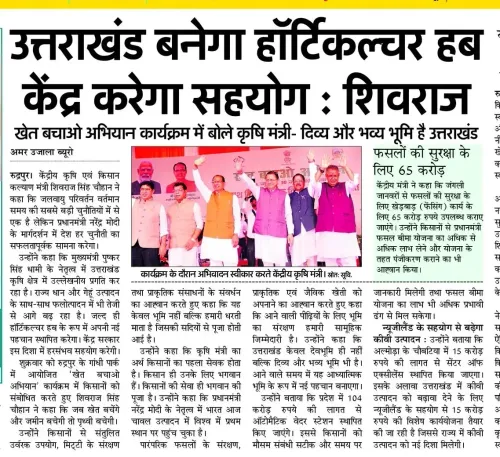
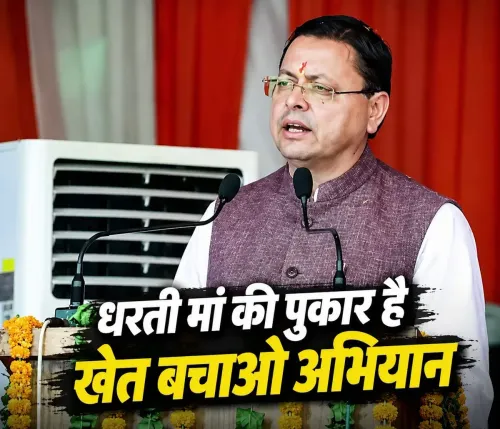
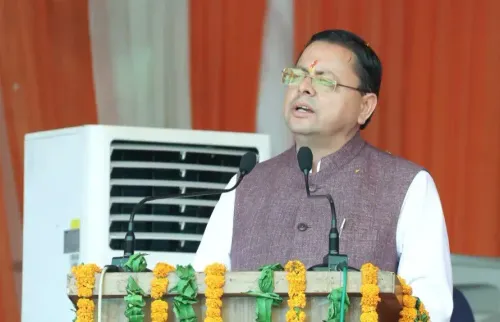
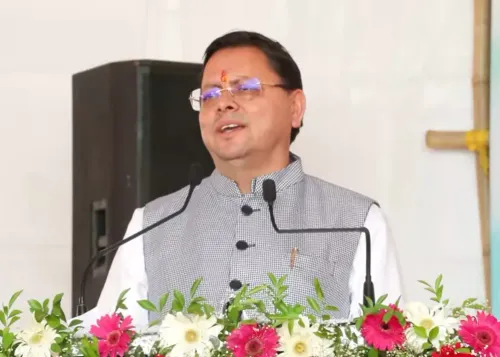
The Chief Minister's Office of Uttarakhand announced on Tuesday, 21 July 2026 that Union Minister of Agriculture and Farmers Welfare Shivraj Singh Chouhan has written a letter to Chief Minister Pushkar Singh Dhami, expressing gratitude for Uttarakhand's cooperation, guidance, and active participation in the successful conduct of the nationwide Khet Bachao Abhiyan (Save the Farm Campaign).
Context
The Khet Bachao Abhiyan was conducted from 1 June to 30 June 2026 by the Union Ministry of Agriculture and Farmers Welfare. The campaign was implemented in collaboration with the Indian Council of Agricultural Research (ICAR), Krishi Vigyan Kendras (KVKs), agricultural universities, and state agriculture departments across the country.
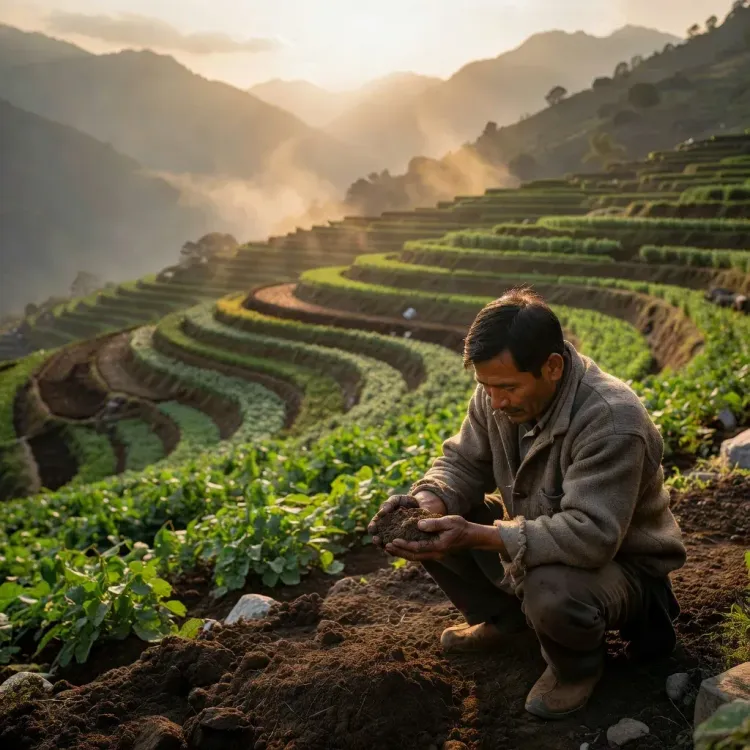
The campaign's stated objective was to make farmers aware of soil-testing-based nutrient management, balanced and scientific use of fertilisers, integrated nutrient management, and natural farming — with the goal of turning the resolve of 'Swasth Mitti – Swasth Fasal – Samridh Kisan' ('Healthy Soil – Healthy Crop – Prosperous Farmer') into a mass movement.
Policy Backdrop
The Khet Bachao Abhiyan builds on a sustained federal push for sustainable agriculture. The Soil Health Card Scheme, launched in 2015, introduced soil nutrient testing to guide balanced fertiliser use among farmers. The Paramparagat Krishi Vikas Yojana, also initiated in 2015, promoted organic farming clusters to reduce chemical input dependence.
ICAR and the network of KVKs — district-level farm science centres — have long served as the frontline infrastructure for technology transfer and demonstration to farmers. The June 2026 campaign channelled this existing institutional framework into a concentrated, time-bound awareness drive.
Scale and Impact
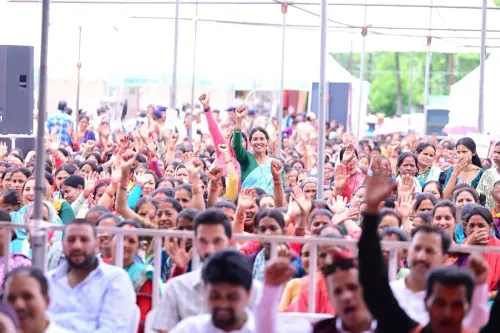
According to Chouhan's letter, the campaign reached 71,000-plus villages across 721 districts in the country, with direct engagement with approximately 1.04 crore farmers. Frontline demonstrations on natural farming, green manure, inclusion of pulse crops, and other scientific farming methods were conducted on the fields of more than 96,000 farmers.
The campaign also leveraged social media to carry the message of soil health conservation and sustainable agriculture to approximately 5 crore farmers. In Uttarakhand specifically, Chouhan noted in his letter that awareness among farmers regarding soil health conservation, balanced nutrient management, and natural and sustainable farming has increased, lending fresh momentum to national efforts to make agriculture more profitable, scientific, and environment-friendly.
What's Next
With the campaign concluded, state governments — including Uttarakhand — may be expected to announce follow-up training programmes or budget allocations for natural farming clusters ahead of the next agricultural season. Parliamentary scrutiny of campaign outcomes is also likely during the ongoing monsoon session.
The exchange of letters between the Union Minister and CM Dhami signals continued federal-state coordination on sustainable agriculture, with Uttarakhand's hilly, ecologically sensitive terrain making the shift toward natural and soil-health-conscious farming particularly consequential for the state's farming communities.
Point of View
A transition that carries both ecological promise and implementation risk for smallholder farmers. Uttarakhand's participation is strategically significant: the state's fragile hill ecology makes it an apt showcase for sustainable farming, and a successful state-level follow-through could serve as a model for other ecologically sensitive regions. How the campaign's awareness gains translate into measurable changes in fertiliser use and farmer income will determine whether this remains a communication exercise or a genuine policy inflection point.
NationPress
22 Jul 2026
Frequently Asked Questions
What is the Khet Bachao Abhiyan?
The Khet Bachao Abhiyan is a nationwide campaign run by the Union Ministry of Agriculture and Farmers Welfare from 1 June to 30 June 2026, aimed at promoting soil-testing-based nutrient management, balanced fertiliser use, and natural farming practices among Indian farmers under the theme 'Healthy Soil – Healthy Crop – Prosperous Farmer'.
How many farmers were reached by the Khet Bachao Abhiyan?
According to Union Minister Shivraj Singh Chouhan's letter, the campaign directly engaged approximately 1.04 crore farmers across 721 districts and over 71,000 villages, while social media outreach extended the message to around 5 crore farmers.
Why did Shivraj Singh Chouhan write to CM Pushkar Singh Dhami?
Chouhan wrote to Dhami to formally thank the Uttarakhand government for its cooperation, guidance, and active participation in the successful conduct of the Khet Bachao Abhiyan, noting that awareness on soil health and sustainable farming has grown in the state.
What role did ICAR and KVKs play in the Khet Bachao Abhiyan?
The Indian Council of Agricultural Research (ICAR) and Krishi Vigyan Kendras (KVKs) — district-level farm science centres — partnered with the Agriculture Ministry, agricultural universities, and state departments to conduct frontline demonstrations and awareness programmes across the country during the campaign.
What comes after the Khet Bachao Abhiyan for Uttarakhand farmers?
Following the campaign, state governments including Uttarakhand are expected to announce follow-up training programmes or allocate resources for natural farming clusters ahead of the next agricultural season, building on the awareness generated during June 2026.