CM Dhami Thanks Modi, Sitharaman for ₹1,244 Cr Tax Devolution

Synopsis
Uttarakhand CM Pushkar Singh Dhami publicly thanked PM Modi and FM Sitharaman after the Centre released ₹1,244 crore to the state as an advance tax devolution instalment, timed ahead of the festive season to fund infrastructure and welfare schemes.
Key Takeaways
The Centre released ₹1,244 crore to Uttarakhand under the constitutional tax devolution framework on 31 October 2026 .
CM Pushkar Singh Dhami thanked PM Modi and FM Sitharaman for the advance instalment, citing the upcoming festive season.
The funds are earmarked for development projects, infrastructure expansion, and welfare scheme implementation across the state.
The 15th Finance Commission set the combined states' share at 41% of the divisible pool for 2021–2026; Uttarakhand benefits notably from the forest-cover criterion.
The Centre has a standing practice of releasing advance devolution tranches ahead of major festivals to support peak state expenditure needs.
The 15th Finance Commission's mandate expires in 2026 , making the upcoming 16th Commission formula a key variable for future transfers.
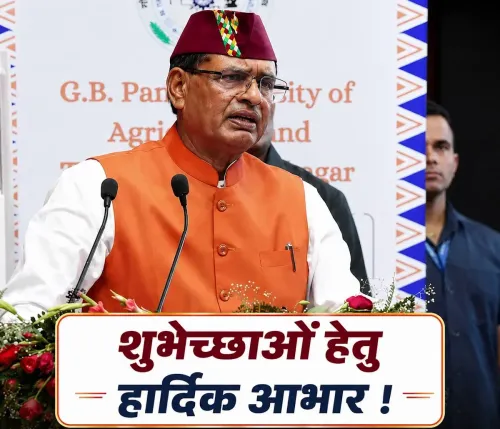
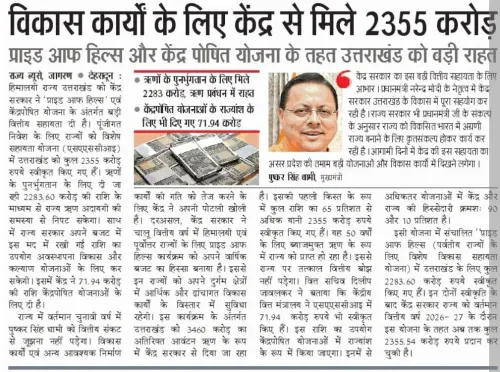
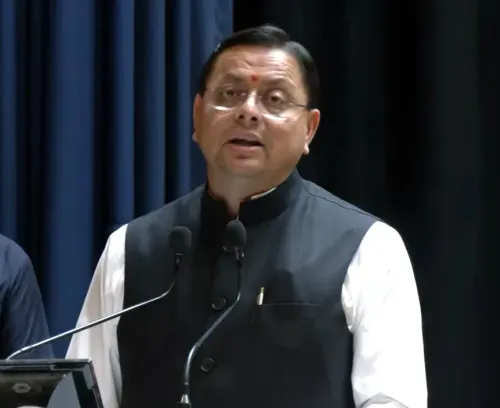
A fresh injection of ₹1,244 crore is heading to Uttarakhand — and Chief Minister Pushkar Singh Dhami wasted no time acknowledging the source. Posting on X on Saturday, 31 October 2026, Dhami expressed gratitude to Prime Minister Narendra Modi and Union Finance Minister Nirmala Sitharaman for releasing the advance instalment under the tax devolution framework, timed ahead of the festive season.
In his post, Dhami wrote: 'Kar hastantaran ke antargat Uttarakhand ko ₹1,244 crore ki dhanrashi jaari karne hetu...' — thanking the Prime Minister and Finance Minister for funds he said would accelerate development projects, expand basic infrastructure, and strengthen welfare scheme implementation across the hill state.
What ₹1,244 Crore Under Tax Devolution Actually Means
Tax devolution is not a grant — it is Uttarakhand's constitutionally guaranteed share of central taxes. The 15th Finance Commission (2020) fixed the combined states' share at 41% of the divisible pool for the period 2021–2026, with each state receiving a slice determined by a formula weighing population, area, income distance, and forest cover. Uttarakhand, with its large forest expanse and difficult terrain, has historically benefited from the forest-cover criterion in that formula.
What makes this release notable is its timing. The Centre has a documented practice of front-loading devolution instalments ahead of major festivals — when state treasuries face peak demand for salary disbursements, welfare transfers, and contractor payments. Releasing funds now, with the festive calendar full, ensures Uttarakhand's spending pipeline stays uninterrupted.
Dhami's Development Pitch for the Mountain State
CM Dhami framed the funds around three explicit priorities: development projects, infrastructure expansion, and welfare scheme implementation. Uttarakhand's infrastructure needs are acute — the state's Himalayan geography means road connectivity, power supply, and water projects carry outsized costs and timelines. A ₹1,244-crore advance instalment provides the state's finance department with liquidity headroom to keep contractors paid and schemes running without waiting for routine monthly tranches.
Dhami has governed Uttarakhand since 2021, steering a BJP administration in a state where central transfers form a critical pillar of public expenditure, given limited own-tax revenue compared to larger plains states.
Centre–State Fiscal Rhythm and What Comes Next
The Centre–state fiscal transfer mechanism is routine but politically visible — each release becomes a moment for the ruling party to signal delivery. What analysts and opposition alike will watch now: whether Uttarakhand's state assembly follows with supplementary budget announcements that specify exactly which projects absorb this liquidity, and whether utilisation certificates reach the Centre on schedule — the accountability loop the devolution framework demands.
With the 15th Finance Commission's mandate expiring in 2026, the state's share under any new formula from the 16th Finance Commission will reshape this arithmetic going forward. For now, the hill state has its festive-season windfall — the test is what it builds with it.
Point of View
244 crore to Uttarakhand ahead of the festive season sits squarely within the Centre's pattern of front-loading devolution to BJP-governed states at politically convenient moments — a practice that blurs the line between routine fiscal management and electoral optics. CM Dhami's public gratitude to PM Modi and FM Sitharaman transforms a constitutional transfer into a loyalty signal, reinforcing the Centre–state political compact within the BJP ecosystem. With the 15th Finance Commission's tenure closing, both the Centre and Uttarakhand have incentive to project a harmonious fiscal relationship before a new devolution formula reshapes the arithmetic. The real accountability test — utilisation certificates and project outcomes — will matter far more than the announcement itself.
NationPress
31 Oct 2026
Frequently Asked Questions
What is tax devolution and why did Uttarakhand receive ₹1,244 crore?
Tax devolution is the constitutionally mandated transfer of a share of central tax revenues to states. Uttarakhand received ₹1,244 crore as an advance instalment under this framework, released ahead of the festive season to support state expenditure on infrastructure and welfare schemes.
What did CM Dhami say about the ₹1,244 crore release?
CM Pushkar Singh Dhami thanked PM Narendra Modi and FM Nirmala Sitharaman, stating the funds would help accelerate development projects, expand basic infrastructure, and effectively implement welfare schemes in Uttarakhand.
What is the 15th Finance Commission and how does it affect Uttarakhand?
The 15th Finance Commission set states' collective share of central taxes at 41% of the divisible pool for 2021–2026. Uttarakhand benefits particularly from the formula's forest-cover criterion, given its extensive Himalayan forest area.
Why does the Centre release advance devolution instalments before festivals?
State treasuries face peak demand during festive periods for salaries, welfare payments, and contractor settlements. Advance releases ensure states have liquidity to meet these obligations without disruption to ongoing projects.
What happens to Uttarakhand's central funds after the 15th Finance Commission ends in 2026?
The 16th Finance Commission will recommend a new devolution formula for the next period. Uttarakhand's share could change depending on the new weightage given to criteria like forest cover, population, and income distance — making the new commission's recommendations closely watched by the state.