CM Dhami: Uttarakhand govt makes policy in the field, not AC rooms
Synopsis
Chief Minister Pushkar Singh Dhami declared on 15 July 2026 that his Uttarakhand government makes policy by engaging directly with citizens rather than from office chambers, reaffirming a field-first governance approach that has defined his administration since 2021.
Key Takeaways
CM Pushkar Singh Dhami stated that the Uttarakhand government resolves problems by going among the people, not by sitting in air-conditioned offices.
The statement was shared by the official Chief Minister's Office (@ukcmo) account on 15 July 2026 .
Dhami has served as Chief Minister since March 2021 and was re-elected in 2022 under the BJP .
The government has previously expanded district-level grievance redressal camps modelled on the 'Mukhya Mantri Janata Darbar' format.
The messaging reflects a pattern across BJP-governed states of contrasting field engagement with bureaucratic insularity.
Upcoming district tours by the CM and any new grievance portals will test whether the stated approach yields institutional follow-through.
The Chief Minister's Office of Uttarakhand on Wednesday, 15 July 2026 shared a statement by Chief Minister Pushkar Singh Dhami asserting that his government frames policy by going directly among the people rather than from office chambers — a message that signals the administration's continued emphasis on field-level governance.
Context
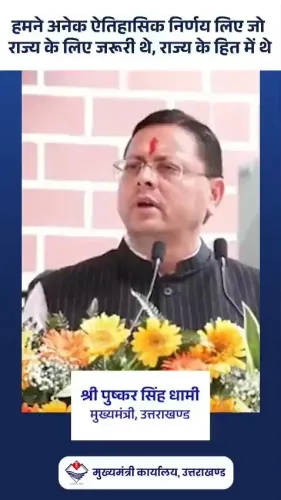
The statement, posted in Hindi, quotes CM Dhami as saying: 'Hamari sarkar AC kamron mein baithkar neetiyan nahin banati, balki logon ke beech mein jakar unki samasyaon ka samadhan karti hai' — 'Our government does not make policies sitting in air-conditioned rooms; instead, it goes among the people and resolves their problems.' The phrasing is a pointed contrast between bureaucratic insularity and on-ground responsiveness.
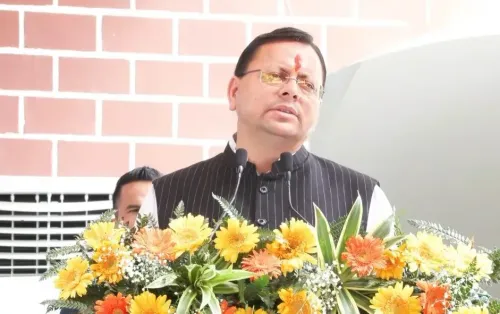
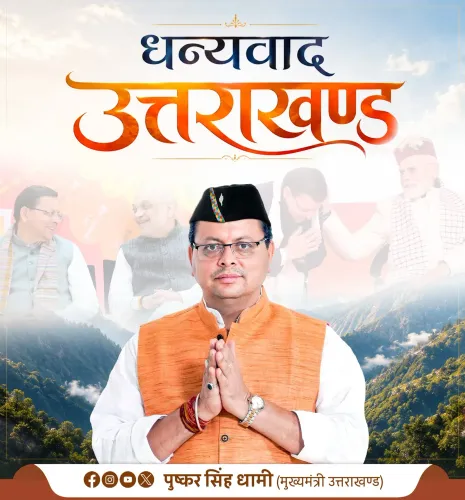
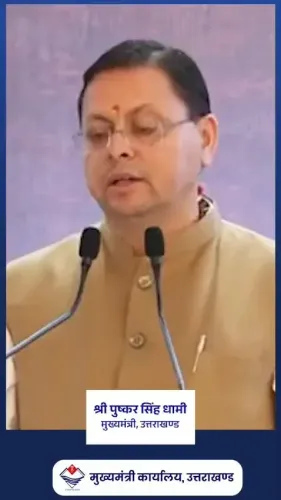
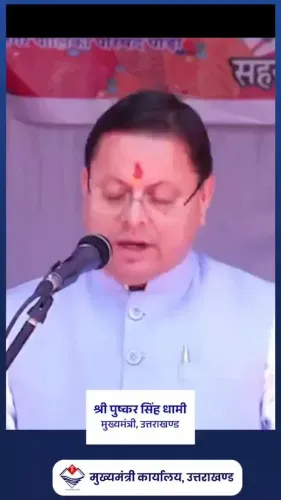
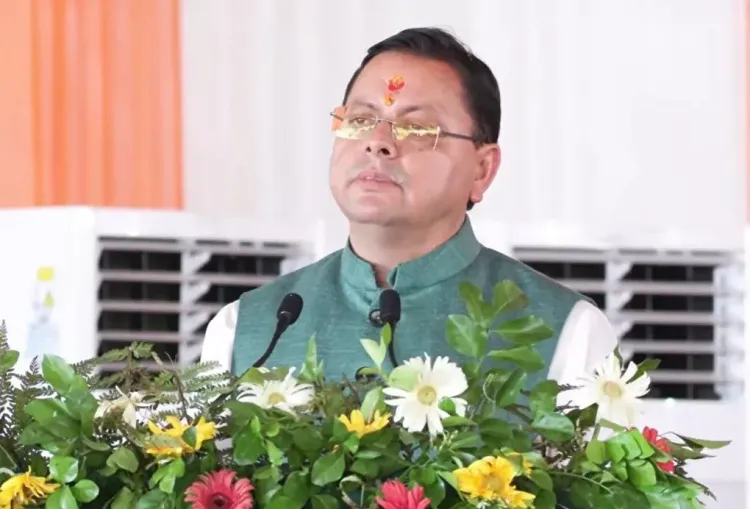
The post carries one image and was shared from the official @ukcmo handle, the verified social-media channel of the Chief Minister's Office, Uttarakhand.
Policy Backdrop
Pushkar Singh Dhami has served as Chief Minister of Uttarakhand since March 2021 and was re-elected in 2022, representing the Bharatiya Janata Party (BJP). After taking office, his administration expanded district-level grievance redressal camps modelled on earlier 'Mukhya Mantri Janata Darbar' formats that the state had used previously.
Uttarakhand, a Himalayan state bordering China and Nepal, faces governance challenges specific to its hill geography — dispersed populations, difficult terrain, and vulnerabilities to natural disasters — making direct outreach programmes especially significant for residents of remote districts.
This style of messaging mirrors a broader pattern visible across BJP-governed states since 2014, where chief ministers have contrasted field engagement with perceived bureaucratic detachment. Similar rhetoric has accompanied mobile offices, video conferences with district officials, and periodic public darbars in states such as Uttar Pradesh and Madhya Pradesh.
Stakeholders and Impact
The primary beneficiaries of field-first governance models are citizens of Uttarakhand's hill districts, who often face longer distances to administrative centres and slower grievance resolution through conventional channels. Direct outreach camps and public darbars reduce the number of intermediaries a resident must navigate to reach the state government.
For the BJP government in Uttarakhand, the communication also serves a political function — reinforcing an image of an accessible, people-centric administration ahead of any future electoral cycle. The statement's tone is consistent with the party's national messaging around responsive, ground-up governance.
What's Next
Observers will watch for scheduled district tours by CM Dhami or the rollout of any new single-window grievance portal announced in the wake of public interactions — concrete follow-through that would give the stated philosophy institutional form. The frequency and geographic spread of such outreach visits will be the clearest indicator of how the government translates this messaging into administrative practice.
Point of View
Accessible governance. The 'AC room' contrast is a well-worn rhetorical device, but it resonates in a hill state where physical distance from administrative centres is a lived reality for millions of residents. The real test will be whether district outreach programmes expand in frequency and geographic reach, or whether the statement remains aspirational. If concrete mechanisms such as a single-window grievance portal or a more regular Janata Darbar calendar follow, the rhetoric gains policy weight; if not, it reads primarily as political communication.
NationPress
15 Jul 2026
Frequently Asked Questions
What did CM Pushkar Singh Dhami say about governance on 15 July 2026?
CM Dhami said that his government does not make policies sitting in air-conditioned rooms but instead goes among the people to resolve their problems, as quoted by the Chief Minister's Office of Uttarakhand on 15 July 2026.
What is the Mukhya Mantri Janata Darbar in Uttarakhand?
The Mukhya Mantri Janata Darbar is a public grievance redressal format used in Uttarakhand where citizens can directly present their problems to the Chief Minister or senior officials; the Dhami government expanded district-level versions of this model after 2021.
How does Uttarakhand's terrain affect governance?
Uttarakhand's Himalayan geography means many residents live far from administrative centres, making direct outreach camps and field visits by officials particularly important for timely grievance resolution.
Is this kind of messaging common among BJP chief ministers?
Yes, contrasting field-level engagement with bureaucratic detachment has been a recurring communication style across BJP-governed states since 2014, accompanied by tools such as mobile offices and video conferences with district officials.
What should citizens watch for after CM Dhami's statement?
Citizens and observers should watch for scheduled district tours by CM Dhami and any announcement of a new single-window grievance portal, which would indicate the government is translating its stated people-first approach into concrete administrative action.