CM Dhami: Uttarakhand to Be Global Yoga Capital
Synopsis
On International Yoga Day 2026, Chief Minister Pushkar Singh Dhami declared Uttarakhand is working to become the global yoga and wellness capital, citing India's first state yoga policy that provides subsidies up to ₹20 lakh for yoga and meditation centres.
Key Takeaways
CM Pushkar Singh Dhami reaffirmed the Uttarakhand government's goal of making the state the global capital of yoga and wellness .
The state claims to have implemented India's first yoga policy , launched on the previous International Yoga Day .
Under the policy, subsidies of up to ₹20 lakh are available for the development of yoga and meditation centres.
Uttarakhand's yoga identity is anchored by cities like Rishikesh and Haridwar , long-established global wellness destinations.
The announcement aligns with India's broader AYUSH ministry -led integration of yoga into national health and soft-power strategy.
Disbursement of subsidies and growth in certified centres will be the key indicators of the policy's real-world impact.
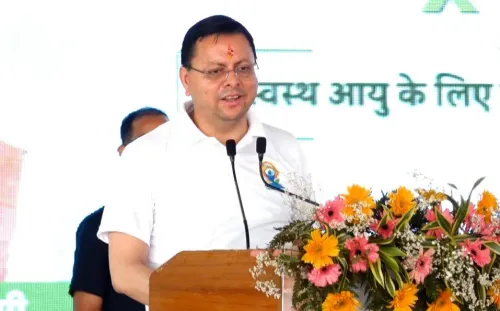
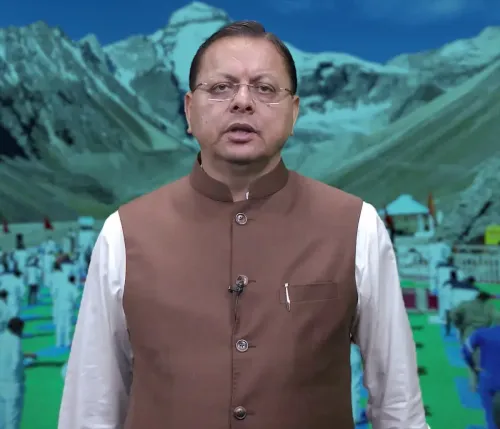
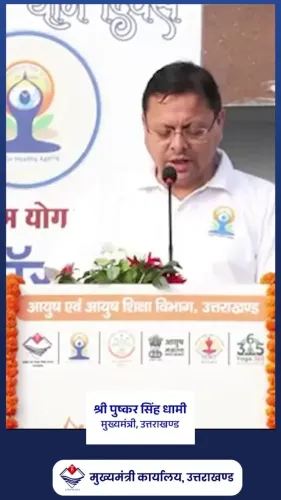
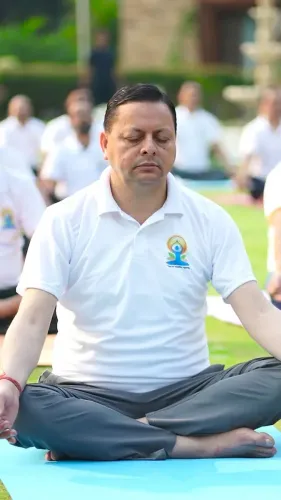
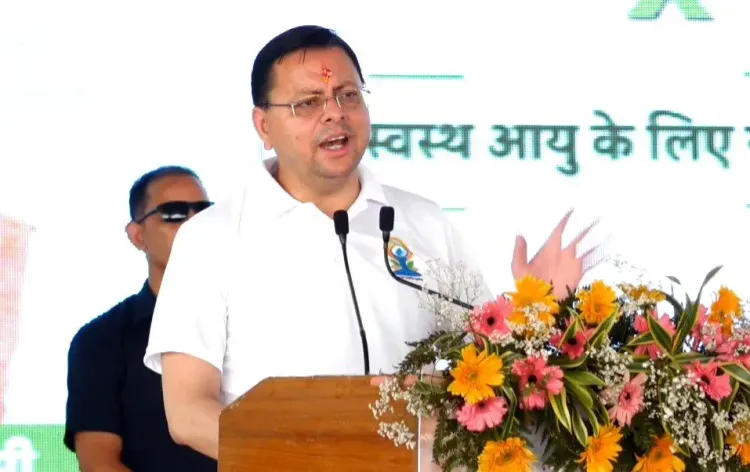
The Chief Minister's Office of Uttarakhand on Sunday, 21 June 2026 — International Yoga Day — shared a statement by Chief Minister Pushkar Singh Dhami affirming that the state government is working with resolve to establish Uttarakhand as the global capital of yoga and wellness, and that India's first state-level yoga policy has been implemented with subsidies of up to ₹20 lakh for yoga and meditation centres.
Context
Speaking on the occasion of International Yoga Day, CM Dhami stated — 'हमारी सरकार उत्तराखण्ड को योग एवं वेलनेस की वैश्विक राजधानी के रूप में स्थापित करने के संकल्प के साथ कार्य कर रही है' ('Our government is working with the resolve to establish Uttarakhand as the global capital of yoga and wellness'). He added that on the previous Yoga Day, the state launched what it describes as the country's first yoga policy, under which subsidies of up to ₹20 lakh are being provided for the development of yoga and meditation centres.
International Yoga Day is observed every year on 21 June following a United Nations General Assembly resolution in 2014 that adopted India's proposal for a dedicated global observance, with the first edition held in 2015.
Policy Backdrop
Uttarakhand's claim to a distinct yoga identity rests on cities such as Rishikesh and Haridwar, which have drawn practitioners and spiritual seekers for decades and today anchor a significant share of the state's wellness tourism. State governments have promoted this heritage through tourism campaigns and linkages with the Union government's AYUSH ministry since the early 2000s.
The yoga policy announced by the Dhami government formalises this ambition at the legislative and financial level. By offering a subsidy ceiling of ₹20 lakh per centre, the policy targets small and mid-sized operators — yoga studios, meditation retreats, and ashram-style wellness facilities — that might otherwise lack capital to upgrade infrastructure to international standards. India's broader integration of yoga into its health and soft-power strategy through the AYUSH ministry provides a favourable policy environment for such state-level initiatives.
Stakeholders and Impact
The primary beneficiaries of the subsidy scheme are yoga practitioners, wellness tourism operators, and entrepreneurs looking to establish certified yoga and meditation centres across Uttarakhand. International visitors who travel to the state specifically for yoga retreats and teacher-training programmes stand to benefit from improved facilities.
At a macro level, a successful rollout could reinforce Uttarakhand's positioning in global wellness tourism, a sector that has grown significantly in the post-pandemic period. Other states with comparable spiritual or natural assets may look to replicate a similar policy framework if the Uttarakhand model demonstrates measurable uptake.
What's Next
The immediate measure of success will be the pace at which eligible centres apply for and receive the ₹20 lakh subsidy, and how quickly new yoga and meditation infrastructure becomes operational across the state. Analysts and wellness industry bodies will watch whether the policy generates a verifiable increase in certified centres and inbound wellness tourism numbers.
If Uttarakhand can demonstrate tangible outcomes — more centres, higher tourist footfall, international accreditations — it could strengthen the state's case for hosting major global yoga events and attracting foreign investment in the wellness sector, deepening India's soft-power projection through its most ancient health tradition.
Point of View
Riding the momentum of India's successful UN push for International Yoga Day. Positioning a state-level subsidy scheme as 'India's first yoga policy' is a calculated branding move that could attract both domestic investment and international wellness tourism. It also fits a pattern of BJP-governed states using cultural and traditional wellness narratives to build distinct identities beyond standard development metrics. The policy's credibility will ultimately depend on verifiable subsidy disbursements and measurable growth in certified wellness infrastructure.
NationPress
21 Jun 2026
Frequently Asked Questions
What is Uttarakhand's yoga policy?
Uttarakhand's yoga policy, described by the state government as India's first, provides financial subsidies of up to ₹20 lakh for the development of yoga and meditation centres across the state, aiming to establish Uttarakhand as a global wellness destination.
Who announced Uttarakhand's yoga policy?
Chief Minister Pushkar Singh Dhami's government announced and implemented the yoga policy. The Chief Minister's Office shared his statement on International Yoga Day, 21 June 2026, reaffirming the initiative.
When was Uttarakhand's yoga policy launched?
According to CM Dhami's statement, the yoga policy was launched on the previous International Yoga Day, which would be 21 June 2025, though the exact implementation date has not been independently verified.
What is International Yoga Day and why is it celebrated on 21 June?
International Yoga Day is a global observance held every year on 21 June, established by a United Nations General Assembly resolution in 2014 following India's proposal. The first International Yoga Day was celebrated in 2015.
Why is Uttarakhand considered a yoga destination?
Uttarakhand is home to Rishikesh and Haridwar, cities with decades-long histories as centres of yoga, meditation, and spiritual practice. The state has actively promoted wellness tourism through its natural landscape and cultural heritage.