Mahua Moitra Slams 20 TMC MPs Who Formed New Party NCPI
Synopsis
TMC MP Mahua Moitra on 21 June 2026 publicly mocked 20 MPs elected on AITC symbols who launched a new party called NCPI, calling them 'not-so-poor traitors.' The episode raises questions under India's anti-defection law and could trigger proceedings before the Lok Sabha Speaker and Election Commission.
Key Takeaways
20 MPs elected on All India Trinamool Congress symbols have floated a new outfit named NCPI .
TMC MP Mahua Moitra publicly labelled the breakaway legislators 'not-so-poor traitors' on 21 June 2026 .
India's Tenth Schedule (1985) makes legislators liable for disqualification if they voluntarily leave the party on whose symbol they were elected.
The Lok Sabha Speaker and the Election Commission of India are the key authorities who will determine the legal fate of the breakaway group.
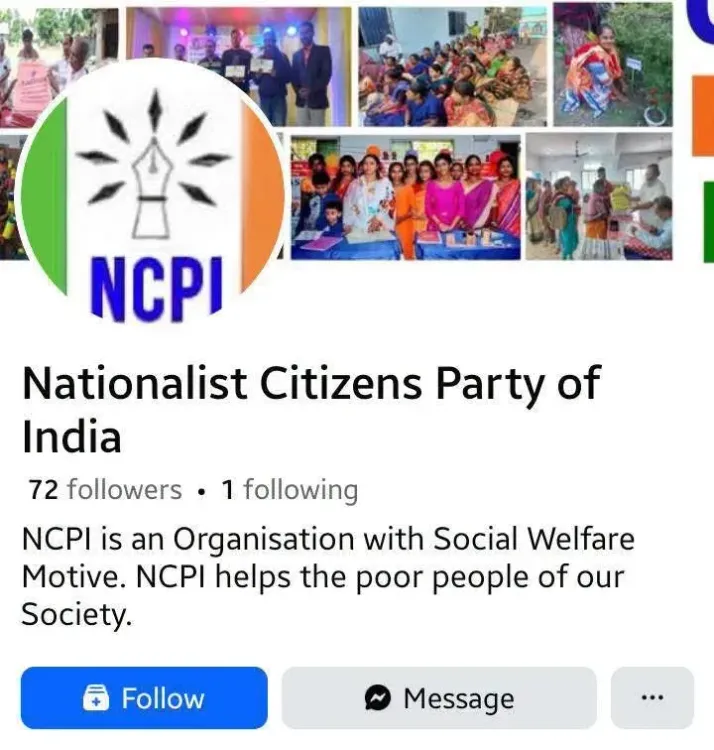
NCPI's Facebook page describes the outfit as one that 'helps the poor people of our society,' a claim Moitra cited mockingly.
Whether the MPs seek a formal merger with another party — a possible shield under anti-defection rules — remains a critical variable to watch.
TMC MP Mahua Moitra on Sunday, 21 June 2026, publicly ridiculed a newly floated outfit called the National Congress Party of India (NCPI), describing its founding members — 20 Members of Parliament elected on All India Trinamool Congress (AITC) symbols — as 'traitors' in a pointed post on X.
Context
Moitra's post introduces the NCPI as 'the new party of the 20 MPs elected on @AITCofficial symbols,' noting sardonically that the outfit's Facebook page claims it 'helps the poor people of our society.' She closed with a sharp jab: 'Really hope it manages to help these 20 not-so-poor traitors too.' The remark signals that the TMC leadership views the breakaway group's formation as a straightforward act of defection rather than a principled split.
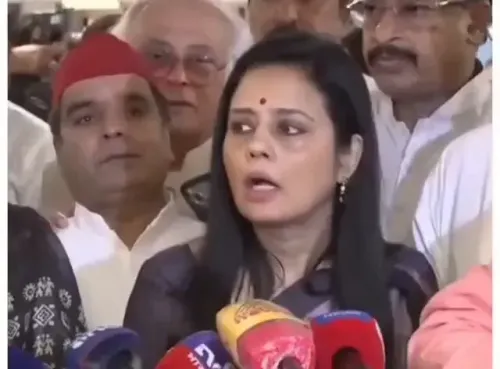
The post was accompanied by one image, apparently a screenshot or graphic related to the NCPI's social-media presence, lending visual weight to Moitra's mockery of the new party's stated mission.
Policy Backdrop
Under India's Tenth Schedule — inserted into the Constitution in 1985 through the 52nd Amendment — a legislator who voluntarily gives up membership of the party on whose symbol they were elected, or votes against that party's direction, is liable to be disqualified from the House. The law was designed precisely to deter the kind of post-election floor-crossing that has historically destabilised governments.
A group of legislators elected on one party's symbol forming a new outfit has repeatedly triggered disputes in Indian parliamentary history over symbol retention, legislative party recognition, and disqualification petitions before the Speaker. Whether the 20 MPs in question have formally resigned from the TMC or simply announced a new platform will be critical to determining their legal exposure under the anti-defection provisions.
Stakeholders and Impact
The immediate stakeholders are the TMC's parliamentary group, the Lok Sabha Speaker, and the Election Commission of India. If the TMC files a disqualification petition, the Speaker would be required to adjudicate it — a process that has often stretched over months or years in past cases. The Election Commission would separately decide whether to allot the NCPI a fresh symbol or recognise it as a registered political party.
For West Bengal's political landscape, a bloc of 20 Lok Sabha MPs — if they hold together — represents a numerically significant fragment that could affect the party's effective strength in Parliament and its bargaining position within any coalition arithmetic.
What's Next
The key developments to watch are any disqualification notices issued by the Lok Sabha Speaker and the Election Commission's response to an application for party recognition or symbol allotment by the NCPI. Moitra's public framing of the breakaway MPs as 'traitors' suggests the TMC intends to pursue legal and political remedies aggressively rather than absorb the split quietly.
How the 20 MPs respond — whether they seek a merger with another parliamentary party (which could offer a separate route around the Tenth Schedule) or stand alone as NCPI — will shape the constitutional and political trajectory of this episode in the weeks ahead.
Point of View
Caustic response signals that the TMC intends to treat the NCPI formation as a defection case rather than a legitimate split, setting the stage for legal action under the Tenth Schedule. The 'not-so-poor traitors' framing is a deliberate attempt to pre-empt any sympathy narrative the breakaway MPs might build around NCPI's pro-poor branding. This episode fits a recurring pattern in Indian politics where legislators elected on a strong regional party's symbol attempt to monetise their seats by forming or joining rival outfits after the election. The constitutional and electoral outcomes — disqualification proceedings, symbol disputes — will test the robustness of India's anti-defection framework once again.
NationPress
19 Sept 2026
Frequently Asked Questions
What is NCPI and who formed it?
NCPI, or National Congress Party of India, is a new political outfit formed by 20 Members of Parliament who were originally elected on All India Trinamool Congress (AITC) symbols. TMC MP Mahua Moitra announced the group's existence on 21 June 2026, mocking its stated mission of helping the poor.
Why did Mahua Moitra call the 20 MPs traitors?
Moitra used the word 'traitors' because the 20 MPs were elected to the Lok Sabha on TMC's election symbol but subsequently formed a separate party called NCPI, which she views as a betrayal of the mandate given to them as TMC representatives.
Can the 20 MPs be disqualified under the anti-defection law?
Potentially yes. India's Tenth Schedule, added to the Constitution in 1985, provides for the disqualification of legislators who voluntarily give up membership of the party on whose symbol they were elected. The Lok Sabha Speaker would adjudicate any petition filed by the TMC.
What role does the Election Commission play in the NCPI dispute?
The Election Commission of India would decide whether to register NCPI as a political party and allot it an election symbol. It may also weigh in on questions of the original party's symbol if a dispute arises between the TMC and the breakaway group.
Is there a way for the 20 MPs to avoid disqualification?
Under Indian constitutional practice, a group of legislators that merges with another recognised political party — rather than simply forming a new outfit — has historically had a stronger defence against disqualification. Whether the NCPI MPs pursue such a route remains to be seen.