CM Dhami Vows Balanced Growth via Infrastructure Push
Synopsis
Chief Minister Pushkar Singh Dhami has reaffirmed Uttarakhand's commitment to balanced development, pledging to empower every region of the hill state with robust infrastructure, better connectivity, and effective disaster management — building on the legacy of the Char Dham Pariyojana and post-2013 disaster resilience frameworks.
Key Takeaways
CM Pushkar Singh Dhami on 24 July 2026 stated the government's goal is balanced and comprehensive development across all regions of Uttarakhand .
The three-pillar focus is strong basic infrastructure , better connectivity , and effective disaster management .
The Char Dham Pariyojana (launched 2016 ) remains the backbone of the state's all-weather road connectivity push to major pilgrimage sites.
Post- 2013 Kedarnath disaster reforms established dedicated disaster management cells and early-warning systems that underpin current policy.
Hill communities and the pilgrimage-tourism sector are the primary beneficiaries of the administration's infrastructure agenda.
Central schemes including PM Gati Shakti are being used to coordinate multi-sector connectivity and risk-reduction investments in the state.
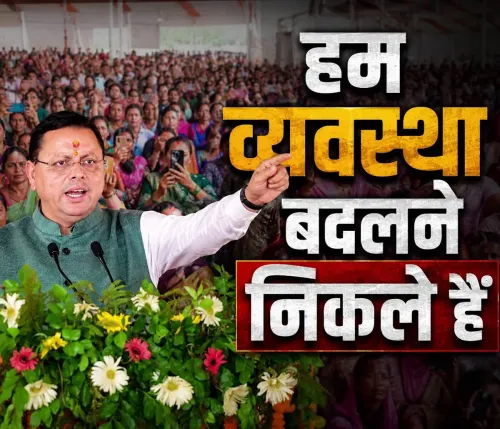
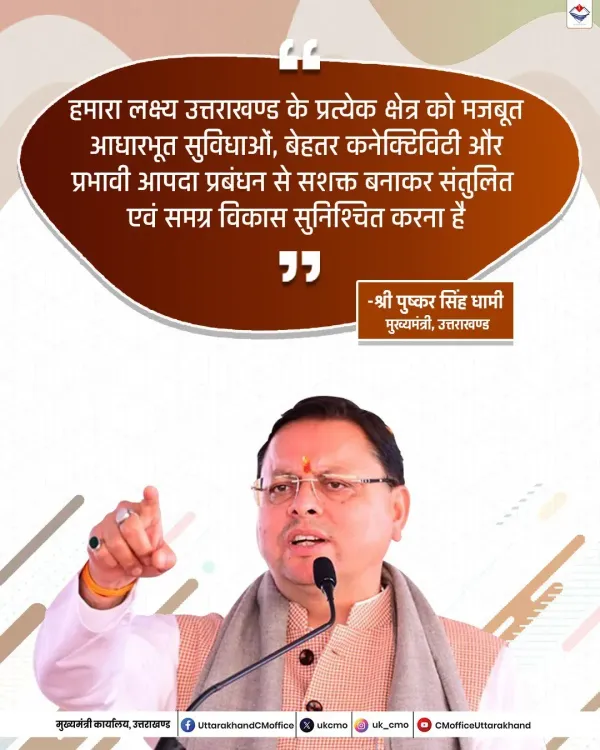
The Chief Minister's Office of Uttarakhand, on Friday, 24 July 2026, shared a statement from Chief Minister Pushkar Singh Dhami reaffirming the state government's commitment to balanced and holistic development across every region of the hill state through robust infrastructure, improved connectivity, and effective disaster management.
Quoting CM Dhami directly, the post stated: 'हमारा लक्ष्य उत्तराखण्ड के प्रत्येक क्षेत्र को मजबूत आधारभूत सुविधाओं, बेहतर कनेक्टिविटी और प्रभावी आपदा प्रबंधन से सशक्त बनाकर संतुलित एवं समग्र विकास सुनिश्चित करना है।' ('Our goal is to ensure balanced and comprehensive development by empowering every region of Uttarakhand with strong basic facilities, better connectivity, and effective disaster management.')
Context
Uttarakhand is a Himalayan state whose terrain poses persistent challenges to year-round access and public safety. Seasonal floods, landslides, and extreme snowfall routinely cut off remote hill communities, making infrastructure and disaster preparedness a perennial governance priority. The state's economy is heavily tied to pilgrimage tourism, making reliable connectivity a matter of both livelihoods and public safety.
The statement from CM Dhami signals that the current administration views infrastructure development and disaster resilience not as separate verticals but as interlocked pillars of equitable growth — a framing that has gained traction across Himalayan state governments in recent years.
Policy Backdrop
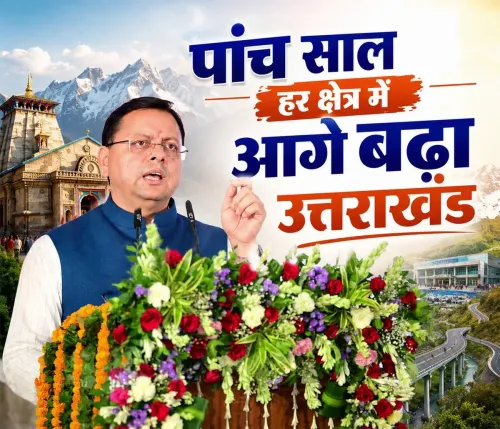
The policy lineage behind this statement is substantial. The Char Dham Pariyojana, launched in 2016, set out to upgrade road connectivity to Uttarakhand's four major pilgrimage sites — Yamunotri, Gangotri, Kedarnath, and Badrinath — through all-weather highway widening. Ongoing phases of this project continue to shape how the state approaches terrain-specific road engineering.
The catastrophic 2013 Kedarnath floods remain a defining moment in the state's disaster management history. In their aftermath, both the state and central governments established dedicated disaster management cells and early-warning systems. Central frameworks such as PM Gati Shakti have since been deployed to coordinate multi-sector investments in connectivity and risk reduction across the region.
Similar infrastructure-plus-disaster-planning models have been adopted in neighbouring Himalayan states including Himachal Pradesh and Sikkim, reflecting a broader regional consensus on the need to integrate slope stabilisation, road resilience, and emergency response into a single development architecture.
Stakeholders and Impact
The communities most directly affected by these priorities are Uttarakhand's hill residents, many of whom face seasonal isolation when roads are damaged by monsoon-season landslides. Better connectivity translates directly into access to healthcare, education, and markets for these populations.
The pilgrimage and tourism sector — a critical driver of the state economy — also stands to benefit significantly. Reliable, all-weather road networks reduce pilgrimage disruptions and lower the risk to the millions of devotees who visit the Char Dham circuit annually. Contractors, logistics operators, and local hospitality businesses are among the wider stakeholders watching infrastructure timelines closely.
What's Next
Observers will track whether CM Dhami's statement is followed by specific budgetary allocations or project announcements in the coming weeks. Key indicators to watch include progress updates on pending Char Dham road-widening phases and any revisions to the state's disaster management action plan in upcoming budget sessions.
If the administration translates this development vision into concrete project timelines and inter-departmental coordination mechanisms, Uttarakhand could strengthen its position as a model for infrastructure-led resilience planning among India's Himalayan states.
Point of View
The Chief Minister is also pre-empting criticism that road-widening projects have not adequately accounted for ecological fragility and landslide risk. The three-pillar formulation mirrors the Centre's own Gati Shakti vocabulary, suggesting an effort to align state messaging with national development branding. Whether this vision translates into measurable outcomes will depend on project execution timelines and inter-departmental coordination — areas where Himalayan states have historically struggled.
NationPress
24 Jul 2026
Frequently Asked Questions
What is CM Pushkar Singh Dhami's development plan for Uttarakhand?
CM Dhami has stated that the government's goal is to ensure balanced and comprehensive development across every region of Uttarakhand by strengthening basic infrastructure, improving connectivity, and building effective disaster management systems.
What is the Char Dham Pariyojana?
The Char Dham Pariyojana, launched in 2016, is a central government project to upgrade and widen roads connecting Uttarakhand's four major pilgrimage sites — Yamunotri, Gangotri, Kedarnath, and Badrinath — into all-weather highways.
How does Uttarakhand manage natural disaster risks?
Following the devastating 2013 Kedarnath floods, Uttarakhand established dedicated disaster management cells and early-warning systems. The state also uses central frameworks like PM Gati Shakti to coordinate connectivity and risk-reduction investments.
Who benefits from Uttarakhand's infrastructure development push?
The primary beneficiaries are hill communities facing seasonal isolation due to landslides and floods, as well as the pilgrimage and tourism sector, which depends on reliable all-weather road access to the Char Dham circuit.
How does Uttarakhand's infrastructure approach compare to other Himalayan states?
Uttarakhand's model of integrating road resilience, slope stabilisation, and disaster management into a unified development framework is similar to approaches adopted in Himachal Pradesh and Sikkim, reflecting a broader Himalayan regional consensus.