CM Fadnavis: 400 GCC Hubs to Create 4 Lakh Jobs in Maharashtra

Synopsis
The Chief Minister's Office of Maharashtra announced that 400 Global Capability Centers will create employment for 4 lakh people in the state, with CM Devendra Fadnavis positioning Maharashtra as India's GCC sector leader in a direct challenge to Karnataka and Tamil Nadu.
Key Takeaways
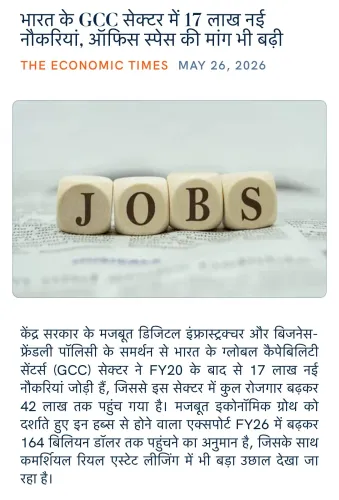
400 Global Capability Centers are projected to generate employment for 4 lakh people in Maharashtra, per the CMO's announcement on 12 August 2026 .
CM Devendra Fadnavis is positioning Maharashtra as the national leader in the GCC sector, a claim that directly challenges Karnataka and Tamil Nadu .
GCCs are offshore delivery and knowledge hubs of multinational firms — a rapidly expanding sector as global companies deepen their India operations.
Maharashtra's GCC push builds on IT and electronics policies introduced during Fadnavis's earlier term from 2014 to 2019 .
Key cities likely to host GCC expansion include Mumbai , Pune , and Nagpur , which already anchor the state's services economy.
Implementation timelines and the split between operational, under-construction, and MoU-stage centres remain the critical metric to watch.
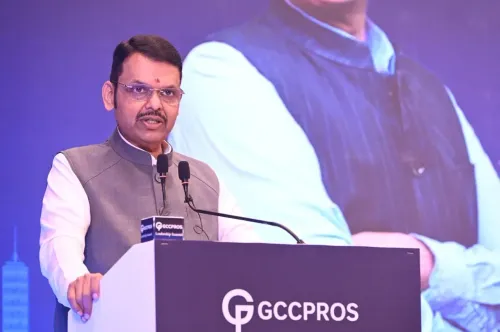
Four hundred Global Capability Centers. Four lakh jobs. Maharashtra is staking its claim as India's undisputed GCC capital — and Chief Minister Devendra Fadnavis wants the world to know it. The Chief Minister's Office of Maharashtra shared the announcement on Wednesday, 12 August 2026, framing the state's GCC ambitions in stark, headline-ready numbers.
The 400-Centre Bet and What It Means for Maharashtra's Workforce
The post — directed at the CMO's own handle and tagging Devendra Fadnavis — declares that 400 GCC centres will deliver employment to 4 lakh people, positioning Maharashtra as the sector's national leader. Global Capability Centers are the offshore delivery arms of multinational corporations, handling everything from IT engineering to financial analytics and legal services. They are not back-offices of the past — they are increasingly the strategic nerve centres of global firms, and India has become their preferred home.
The numbers, if realised, represent a significant employment multiplier for a state that already hosts a disproportionate share of India's services economy. At 10,000 jobs per 100 centres on average, the implied scale suggests large-format campuses rather than boutique operations — the kind of investment that reshapes city skylines and talent pipelines alike.
Maharashtra vs Karnataka and Tamil Nadu: The GCC Race Heats Up
Maharashtra has long competed with Karnataka — home to Bengaluru's dominant tech ecosystem — and Tamil Nadu for GCC investments, deploying land incentives, single-window clearances, and plug-and-play infrastructure to close the gap. Under Fadnavis's earlier tenure from 2014 to 2019, the state rolled out IT and electronics policies designed specifically to attract knowledge-economy firms. The current push builds on that lineage, but with a sharper employment headline attached.
Nationally, GCCs have expanded rapidly as multinationals shift higher-value knowledge work to India — a trend accelerated by global cost pressures and India's deep engineering talent pool. Maharashtra's pitch is that it can absorb that demand at scale, offering both the infrastructure and the workforce that Bengaluru's congested corridors increasingly struggle to provide.
What Comes Next: From Announcement to Implementation
The critical question is translation — how many of the 400 centres are already operational, how many are under construction, and how many remain at the MoU stage. State GCC announcements in India have historically carried a gap between headline figures and ground-level delivery. Investors and IT professionals will be watching for follow-through in state budget allocations, new incentive notifications, and occupancy data from designated GCC zones across Mumbai, Pune, and Nagpur.
If Maharashtra closes even two-thirds of that employment gap, it would cement Fadnavis's economic-growth narrative ahead of future electoral cycles — and give the state a tangible answer to every comparison with Bengaluru.
Point of View
White-collar jobs narrative at a time when Maharashtra faces persistent comparison with Bengaluru as India's tech capital. Framing the state as a GCC 'leader' — rather than a competitor — signals confidence in scale, but the credibility of that claim will hinge on verified occupancy and payroll data, not headline numbers alone. Historically, Indian states have struggled with the MoU-to-employment gap in large tech-sector announcements, and Maharashtra is not immune to that pattern. If the 400-centre figure holds up under scrutiny, it would represent a genuine structural shift in India's GCC geography — and a significant political asset for Fadnavis heading into future electoral cycles.
NationPress
12 Aug 2026
Frequently Asked Questions
What is a Global Capability Center (GCC) and why does it matter for jobs in Maharashtra?
A Global Capability Center is an offshore hub set up by a multinational company to handle IT, engineering, analytics, or corporate services work. Maharashtra's push to host 400 such centres is significant because GCCs typically create large numbers of skilled, well-paying jobs in the services sector.
How many jobs will Maharashtra's GCC centres create?
The Chief Minister's Office of Maharashtra announced that 400 GCC centres will provide employment to 4 lakh (400,000) people in the state, as stated on 12 August 2026.
How does Maharashtra compare to Karnataka and Tamil Nadu in attracting GCCs?
Maharashtra competes directly with Karnataka — home to Bengaluru's dominant tech cluster — and Tamil Nadu for GCC investments. The state offers land incentives, single-window clearances, and infrastructure to close the gap with Bengaluru, and the Fadnavis government is now explicitly claiming national leadership in the sector.
What is Devendra Fadnavis's track record on IT and industrial policy in Maharashtra?
Devendra Fadnavis served as Chief Minister of Maharashtra from 2014 to 2019 and introduced IT and electronics policies aimed at attracting technology services firms. His current term continues that policy lineage with a sharper focus on GCC-linked employment targets.
Which cities in Maharashtra are likely to benefit from GCC expansion?
Mumbai, Pune, and Nagpur are the primary hubs of Maharashtra's services economy and are the most likely destinations for GCC campuses, given their existing infrastructure, talent pools, and connectivity.