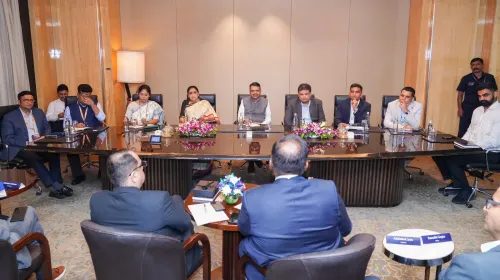
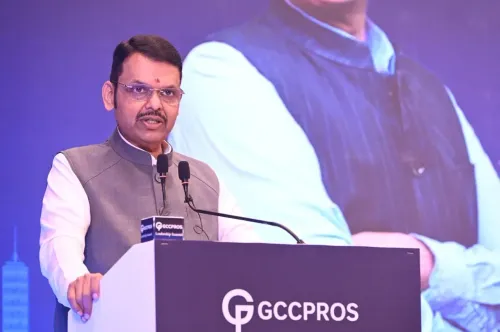
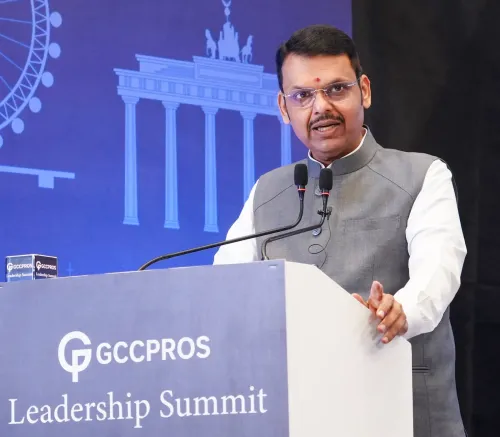
CM Fadnavis at GCC Leadership Summit in Pune

Synopsis
Maharashtra Chief Minister Devendra Fadnavis attended the GCCPROS Leadership Summit in Pune on August 11, 2026. The event spotlights Maharashtra and Pune's growing importance as a hub for Global Capability Centres established by multinational firms in India.
Key Takeaways
CM Devendra Fadnavis participated in the GCCPROS Leadership Summit in Pune on August 11, 2026 .
Pune is Maharashtra's second-largest city and a leading destination for multinational technology and engineering operations.
Maharashtra has run IT and investment promotion policies since the early 2000s to attract Global Capability Centres.
Indian states are in active competition to host GCCs, with Pune's talent pool and infrastructure giving it a structural edge.
Investment announcements or new GCC incentive frameworks from the summit are the key outcomes to watch.
Maharashtra's technology ambitions took centre stage on Tuesday, August 11, 2026, as Maharashtra Chief Minister Devendra Fadnavis joined the GCCPROS Leadership Summit in Pune, signalling the state's continued push to cement its position as India's premier destination for Global Capability Centres.
Pune's GCC moment — and why Maharashtra is betting big on it
Pune is no accidental venue. The city has quietly become one of India's most consequential technology corridors, hosting engineering, IT, and business-services operations for dozens of multinationals. Its combination of deep engineering talent, established infrastructure, and proximity to Mumbai's financial networks makes it a natural magnet for Global Capability Centres — the in-house offshore units through which global firms run R&D, analytics, and back-office functions from India.
Across India, the race to host GCCs has intensified sharply. States from Telangana to Karnataka have rolled out dedicated incentive frameworks, and Maharashtra has kept pace with successive IT and investment promotion policies dating back to the early 2000s. A sitting Chief Minister attending a GCC-focused leadership summit is itself a signal — that the state views this sector as a strategic priority, not a footnote.
Fadnavis, the summit, and what investors are watching
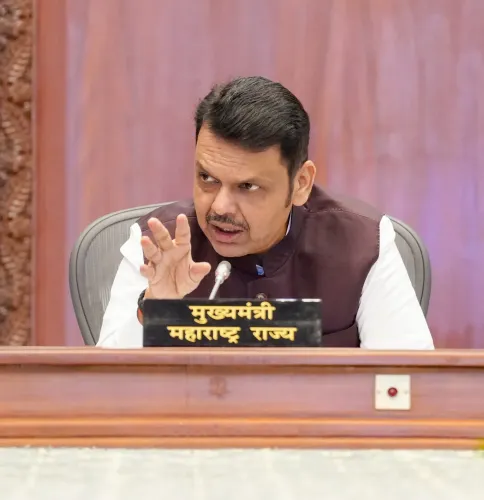
Devendra Fadnavis, who returned to the Chief Minister's office after previously serving from 2014 to 2019, has made industrial and technology investment a consistent theme of his administration. His presence at the GCCPROS Leadership Summit at 6:37 PM on August 11 underlines that positioning. For multinational firms evaluating where to plant or expand their India capability hubs, a Chief Minister's visible engagement at sector summits carries practical weight — it signals policy attention, faster clearances, and a government willing to be a partner.
The key question the industry will now watch: whether the summit translates into concrete investment commitments or new GCC-specific incentives that find their way into subsequent state policy documents or budget allocations.
Point of View
Not a secondary IT policy. For Maharashtra, which faces competition from Telangana and Karnataka, visible Chief Ministerial engagement is a soft-power signal to multinational location teams. If the summit yields concrete incentive announcements, it could reinforce Pune's position as the country's second GCC capital after Bengaluru — a distinction with real fiscal and employment consequences for the state.
NationPress
11 Aug 2026
Frequently Asked Questions
What is the GCCPROS Leadership Summit?
The GCCPROS Leadership Summit is a sector-focused event bringing together leaders from Global Capability Centres and the broader technology industry. The August 2026 edition was held in Pune, Maharashtra.
Why did CM Fadnavis attend a GCC summit in Pune?
CM Devendra Fadnavis attended to signal Maharashtra's policy support for Global Capability Centres, which are a major source of technology investment and high-skill employment for the state.
What is a Global Capability Centre (GCC)?
A Global Capability Centre is an in-house offshore unit set up by a multinational company, typically handling R&D, analytics, engineering, or business services. India hosts hundreds of such centres, with Pune and Bengaluru among the top cities.
Why is Pune important for the GCC sector in India?
Pune offers a large engineering and IT talent pool, established infrastructure, and proximity to Mumbai, making it one of India's most attractive cities for multinationals setting up or expanding capability centres.
What investment outcomes are expected from the Pune GCC summit?
Industry observers are watching for new investment commitments, GCC-specific incentive announcements, or policy signals that could be reflected in Maharashtra's future budget allocations or IT policy documents.