West Bengal loudspeaker row: AJUP chief Humayun Kabir calls for equal rules at temples, mosques
Synopsis
With West Bengal police allegedly removing loudspeakers from temples and mosques alike, AJUP chief Humayun Kabir’s call for uniform enforcement cuts across communal lines — while a PIL in the Calcutta High Court now questions whether the state’s removal order had any legal basis at all.
Key Takeaways
AJUP chief Humayun Kabir on Tuesday demanded equal application of noise rules to both temples and mosques in West Bengal .
The Supreme Court has set a 65-decibel ceiling for noise at religious places; Kabir said no loudspeaker removal should occur without a formal government notification.
A PIL was filed before the Calcutta High Court on Monday by TMC MP and advocate Kalyan Banerjee on behalf of lawyer Danish Faruqi , challenging the legality of the removal order.
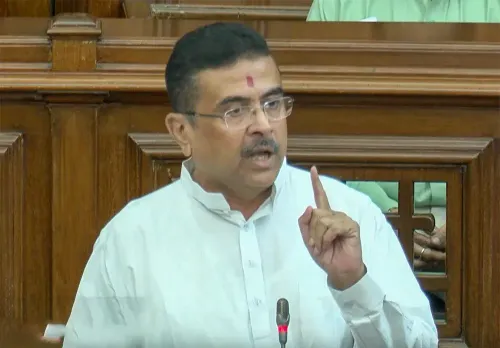
Chief Minister Suvendu Adhikari clarified the action applies to all religious places, not only mosques, amid opposition allegations of selective targeting.
A single-judge bench of the Calcutta High Court granted conditional permission for a protest rally on Tuesday against the state’s directive.
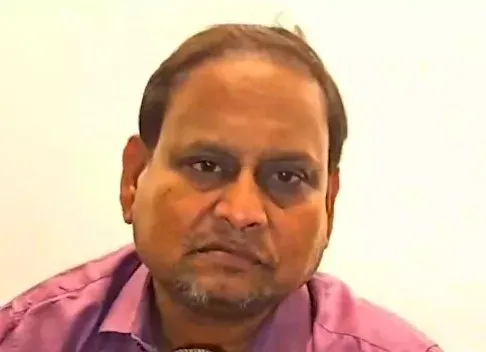
Aam Janata Unnayan Party (AJUP) chief Humayun Kabir on Tuesday called for uniform enforcement of noise regulations across all religious places in West Bengal, saying rules on loudspeaker use must apply equally to temples and mosques. His remarks came amid an alleged police crackdown on sound systems at places of worship across the state.
What Humayun Kabir Said
Speaking to reporters, Kabir cited the Supreme Court's standing order capping permissible noise at 65 decibels and said the limit must be respected universally. “The Pollution Control Board does not permit noise levels above 65 decibels. Everyone will agree with that. Even the Supreme Court has issued an order regarding the 65-decibel limit. So, what is the problem? However, there should be a proper notification,” he said.
Kabir added that without a formal notification, police should not forcibly remove equipment from places of worship. “If there is no notification, the police should not forcibly remove the microphones and loudspeakers. Everyone should follow the orders of the government and the judicial system. Everyone should follow the rules, whether it concerns a mosque or a temple because it can’t be that noise only from mosque create problems and not from temples,” he said.
The AJUP chief urged the Bharatiya Janata Party (BJP)-led West Bengal government to issue a formal notification grounded in the Supreme Court’s directions, which he said “should be followed by everyone.”
PIL Filed in Calcutta High Court
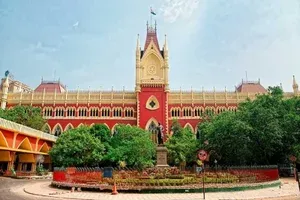
A public interest litigation was filed before a division bench of the Calcutta High Court on Monday, seeking withdrawal of the state government’s order on the removal of microphones and loudspeakers from all religious places in West Bengal. The petition was filed by four-time All India Trinamool Congress (TMC) Lok Sabha member and senior advocate Kalyan Banerjee on behalf of lawyer Danish Faruqi.
The petitioner questioned the legal basis for the order, particularly as it concerns mosques. Separately, a single-judge bench of the Calcutta High Court on Monday granted conditional permission for a protest rally on Tuesday against the government’s loudspeaker removal directive.
Government’s Position
Opposition parties had alleged that the BJP-led state government was selectively targeting mosques. However, Chief Minister Suvendu Adhikari clarified that the action was not limited to mosques and applied to all religious places, including temples. Several mosque and temple committees had reportedly claimed that police removed loudspeakers from their premises.
Broader Context
The loudspeaker controversy in West Bengal is part of a wider national debate over noise pollution norms at religious sites. The Supreme Court’s 65-decibel ceiling has been in force for years, yet enforcement has remained inconsistent across states and communities. This is not the first time the issue has sparked political and legal battles in India — similar disputes have unfolded in Uttar Pradesh and Maharashtra in recent years. The legal challenge before the Calcutta High Court is expected to test whether the state’s removal order had adequate statutory backing.
Point of View
It would expose the government to a significant legal reversal. More broadly, this episode underscores a recurring failure of Indian states to institutionalise noise-pollution enforcement through transparent, notified processes rather than ad hoc police action.
NationPress
12 Aug 2026
Frequently Asked Questions
What is the West Bengal loudspeaker controversy about?
West Bengal police allegedly removed loudspeakers and microphones from religious places — both mosques and temples — citing noise pollution norms. Opposition parties accused the BJP-led state government of selectively targeting mosques, while Chief Minister Suvendu Adhikari said the action applied to all religious places.
What did AJUP chief Humayun Kabir say about the loudspeaker row?
Kabir said noise rules must apply equally to temples and mosques, citing the Supreme Court’s 65-decibel limit. He added that police should not forcibly remove equipment without a formal government notification, and urged the state to issue one based on the court’s directions.
What is the PIL filed in the Calcutta High Court about?
A public interest litigation was filed on Monday by TMC MP and senior advocate Kalyan Banerjee on behalf of lawyer Danish Faruqi, challenging the legal basis of the state government’s order to remove loudspeakers and microphones from all religious places in West Bengal.
What is the Supreme Court’s rule on loudspeakers at religious places?
The Supreme Court has set a permissible noise limit of 65 decibels for religious places. The Pollution Control Board enforces the same ceiling. Humayun Kabir cited this order to argue that enforcement must be uniform and backed by a proper state notification.
Who filed the PIL and on whose behalf?
The PIL was filed by four-time TMC Lok Sabha member and senior advocate Kalyan Banerjee on behalf of Danish Faruqi, a lawyer, before a division bench of the Calcutta High Court on Monday.