Mosque loudspeaker removal in West Bengal draws opposition fire

Synopsis
The removal of loudspeakers from mosques in West Bengal by police has triggered a sharp political row, with opposition parties accusing the BJP of using noise-pollution rules as cover for communal targeting — while the BJP insists enforcement was uniform across all religious sites. The dispute reflects a recurring national fault line over how India regulates religious expression in public spaces.
Key Takeaways
West Bengal Police removed loudspeakers from several mosques, triggering political controversy on 6 August .
AJUP MLA Humayun Kabir , Congress MP Isha Khan Choudhary , SP MP Iqra Hassan , and TMC MP Saugata Roy condemned the move as communally motivated.
BJP West Bengal chief Samik Bhattacharya said religious practices must not cause noise pollution, regardless of faith.
BJP Bihar President Sanjay Saraogi stated the Pollution Control Board acted uniformly against high-volume loudspeakers at all religious places.
All India Imam Association President Maulana Sajid Rashidi said Muslims are complying with the Supreme Court ban on loudspeakers between 10 p.m. and 6 a.m.
Opposition leaders across party lines on Thursday, 6 August condemned the removal of loudspeakers from several mosques in West Bengal by the police, charging that the action was being used to stoke communal divisions rather than address development and governance priorities.
What the Opposition Said
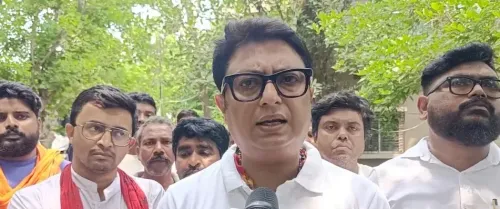
AJUP chief and MLA Humayun Kabir noted that the Constitution of India provides guidelines for all faiths and that the Supreme Court has issued clear directions on loudspeaker use. 'No one is against following the Supreme Court's directions. Since the BJP came to power, it should focus on development work. Instead, the focus keeps shifting to issues such as loudspeakers, animal sacrifice, and 'Azaan' rather than governance and public welfare,' Kabir said.
Congress MP Isha Khan Choudhary argued that any rule governing loudspeaker use must be applied uniformly across the country and must not single out any particular community. Samajwadi Party MP Iqra Hassan echoed that view, alleging that the Bharatiya Janata Party (BJP) builds its politics on deepening communal fault lines. 'It is a BJP government, so what else can you expect? Their politics is based on creating a Hindu-Muslim divide, and they are doing the same here,' she said.
Trinamool Congress (TMC) MP Saugata Roy called the action 'wrong' and accused the BJP of pursuing a communal agenda. 'They are doing this to prevent Muslims from living peacefully and want to erase their identity. We strongly condemn such actions,' Roy said.
BJP's Position
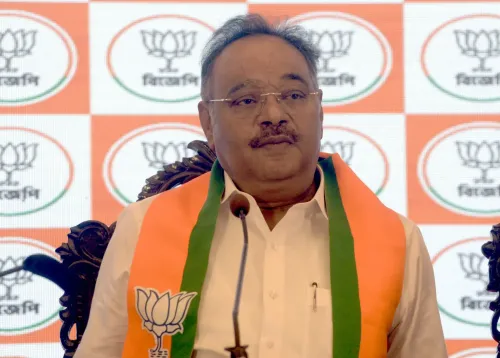
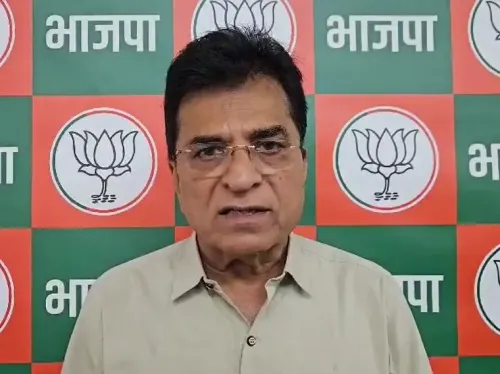
BJP West Bengal State President and MP Samik Bhattacharya deferred to the West Bengal Police and the state Home Department to explain the specifics of the action, while restating the party's broader stance. 'Our position is clear. Whether it is a temple or a mosque, people should be free to pray peacefully. Those offering 'Namaz' or giving the 'Azaan' should do so peacefully, and those reciting the 'Hanuman Chalisa' should do the same. Religious practices should not lead to noise pollution through the excessive use of loudspeakers,' he said.
BJP Bihar President Sanjay Saraogi rejected allegations of discrimination outright, stating that the action targeted noise pollution and not any single community. 'The claims are completely false. Excessive use of loudspeakers was causing inconvenience to elderly citizens and students. The Pollution Control Board has taken action uniformly against high-volume loudspeakers at all religious places, including mosques, temples, and other places of worship,' he said.
What the Supreme Court Guidelines Say
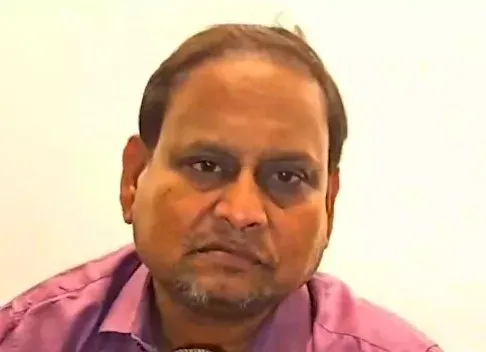
All India Imam Association President Maulana Sajid Rashidi stated that the Supreme Court's guidelines are unambiguous and that the Muslim community is complying with them, including during the early morning 'Azaan'. The court prohibits the use of loudspeakers and DJs between 10 p.m. and 6 a.m., and Rashidi noted that the community is adhering to those directions.
Broader Context
The controversy is not new to India's political landscape. Disputes over loudspeaker use at religious sites have periodically surfaced across multiple states, often intensifying ahead of elections or during periods of communal tension. This comes amid a broader national debate over noise pollution regulations and their selective or uniform application at places of worship. Critics argue that enforcement patterns tend to reflect political priorities rather than consistent rule of law — a charge the BJP has consistently denied. How the West Bengal government and courts respond to the competing claims will be closely watched in the weeks ahead.
Point of View
But it carries weight only if verified by independent data on action taken at temples, gurudwaras, and churches in the same jurisdiction. Opposition parties are right to demand uniformity, yet their blanket framing of the move as an 'identity erasure' effort risks overstating the case before the facts are fully established. What neither side is discussing is the underlying enforcement gap — India has had Supreme Court guidelines on loudspeaker decibel limits for years, and compliance has been patchy everywhere. Until state pollution control boards publish transparent, faith-neutral enforcement records, this debate will keep cycling through the same political grooves.
NationPress
21 Sept 2026
Frequently Asked Questions
Why were loudspeakers removed from mosques in West Bengal?
West Bengal Police removed loudspeakers from several mosques, with BJP leaders stating the action was aimed at controlling noise pollution and was carried out uniformly across all religious places, including temples. Opposition parties dispute this, alleging the move was communally targeted.
What does the Supreme Court say about loudspeaker use at religious sites?
The Supreme Court prohibits the use of loudspeakers and DJs between 10 p.m. and 6 a.m. The All India Imam Association has stated that the Muslim community is complying with these guidelines, including during the early morning Azaan.
Which opposition leaders criticised the West Bengal loudspeaker removal?
AJUP MLA Humayun Kabir, Congress MP Isha Khan Choudhary, Samajwadi Party MP Iqra Hassan, and TMC MP Saugata Roy all criticised the action, variously calling it communal, discriminatory, and politically motivated.
What is the BJP's stand on the loudspeaker controversy?
BJP West Bengal State President Samik Bhattacharya said the party believes all religious practices should be conducted peacefully and without causing noise pollution, regardless of faith. BJP Bihar President Sanjay Saraogi said the Pollution Control Board acted against high-volume loudspeakers at all places of worship, not just mosques.
Is this the first time loudspeaker use at religious sites has caused political controversy in India?
No. Disputes over loudspeaker use at religious sites have recurred across multiple states over the years, often intensifying during politically sensitive periods. The Supreme Court has had decibel-limit guidelines in place for years, but enforcement has been inconsistent across states and communities.