Calcutta HC permits CPI(M) rally against Bengal loudspeaker ban at religious places

Synopsis
The Calcutta High Court stepped in to override Kolkata Police's last-minute refusal and conditionally cleared a CPI(M)-backed rally against West Bengal's order banning loudspeakers at religious places — while a separate PIL challenging the order's constitutional validity has also been admitted. The court's rebuke of the police for sitting on the denial for four days adds a rule-of-law dimension to what is already a politically charged dispute.
Key Takeaways
Calcutta High Court granted conditional permission on 10 August for a protest rally on Tuesday against West Bengal's loudspeaker removal order.
Rally route restricted to Rajabazar–Moulali ; must begin at 11 am and end within one hour ; no microphones or loudspeakers permitted.
Justice Sougata Bhattacharya rebuked Kolkata Police for communicating the denial on 7 August despite the application being filed on 3 August .
A PIL challenging the state's loudspeaker order has been admitted before a division bench led by Acting Chief Justice Tapabrata Chakraborty .
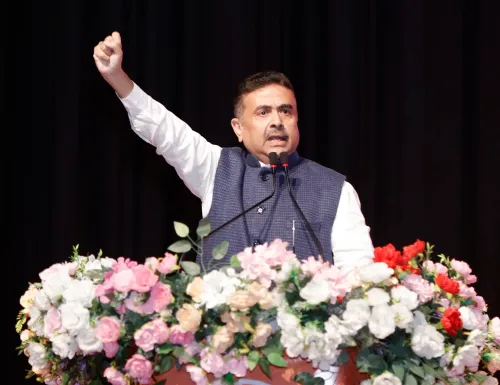
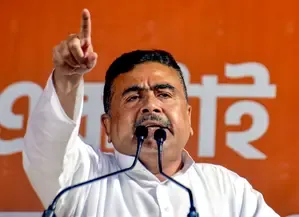
Chief Minister Shuvendu Adhikari has maintained the order applies to all religious places, not only mosques, amid opposition allegations of targeting.
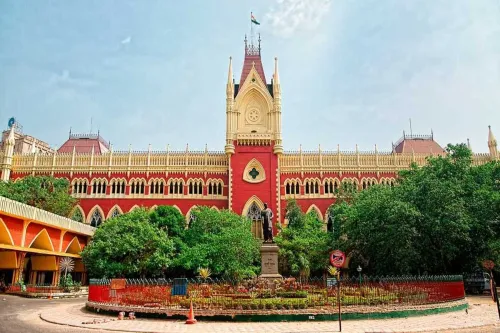
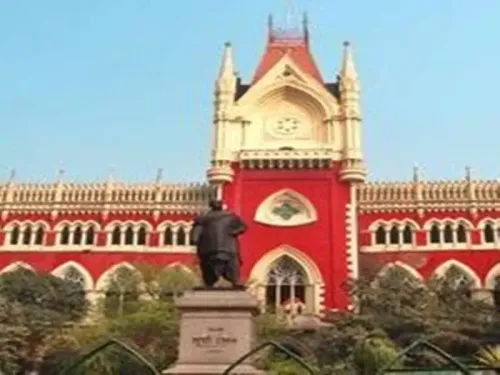
A single-judge bench of the Calcutta High Court on Monday, 10 August granted conditional permission for a protest rally on Tuesday against the West Bengal government's directive ordering the removal of microphones and loudspeakers from all religious places across the state. The court's intervention came after Kolkata Police denied permission for the demonstration at the last moment.
How the Court Permission Was Secured
A petition was moved before Justice Sougata Bhattacharya by Abdul Samad, represented by advocate and Communist Party of India (Marxist) leader Sabyasachi Chattopadhyay. The matter was taken up in the second half of Monday and concluded with conditional approval for the rally.
Justice Bhattacharya's bench curtailed the proposed route. The petitioner had sought permission for a march from Rajabazar in North Kolkata to Rani Rashmoni Road in Central Kolkata; the court restricted it to the Rajabazar–Moulali stretch. The rally must begin at 11 am and conclude within one hour. Notably, no microphones or loudspeakers will be permitted during the rally itself.
Court's Rebuke of Police Conduct
Justice Bhattacharya expressed sharp displeasure over the police's handling of the permission request. The application had been submitted on 3 August, yet the denial was communicated only on the evening of 7 August — four days later — which the judge described as rejection on 'flimsy grounds at the last moment.'
Advocate General Surajit Nath Mitra, appearing for the state, told the court that permission was denied because certain information had not been disclosed in the original application.
PIL Filed Seeking Withdrawal of State Order
Separately on Monday, a public interest litigation was filed before a division bench headed by Acting Chief Justice Tapabrata Chakraborty, seeking the withdrawal of the state government's order on the removal of microphones and loudspeakers from all religious places in West Bengal. The PIL has been admitted, though the date of the first hearing is yet to be announced.
Political Background and Government's Position
The West Bengal government's loudspeaker directive has sparked a political storm, with opposition parties alleging that the order disproportionately targets mosques. However, Chief Minister Shuvendu Adhikari clarified that the action was not limited to any single faith — it applies equally to all religious places, including temples. The government has maintained that the order is a uniform noise-regulation measure.
This comes amid a broader pattern of loudspeaker-related controversies across Indian states, where similar directives have repeatedly drawn legal and political challenges. With the PIL now admitted before the Calcutta High Court's division bench, the constitutional validity of West Bengal's order is set to face judicial scrutiny in the weeks ahead.
Point of View
Contested in perception. Chief Minister Adhikari's clarification that the ban covers temples too is politically necessary, but the opposition's mosque-targeting charge has already shaped the public narrative. With a PIL now admitted before a division bench, the judiciary will soon have to decide whether a state-wide noise-regulation order crosses into religious-practice territory — a question with implications well beyond West Bengal.
NationPress
25 Sept 2026
Frequently Asked Questions
Why did the Calcutta High Court grant permission for the rally?
The Calcutta High Court granted conditional permission after Kolkata Police denied the rally application on what Justice Sougata Bhattacharya described as 'flimsy grounds at the last moment.' The court found that the denial, communicated on 7 August for an application filed on 3 August, was procedurally unjustified.
What are the conditions placed on the rally?
The rally is restricted to the Rajabazar–Moulali route, must start at 11 am, and must conclude within one hour. No microphones or loudspeakers are permitted during the march — an ironic condition given that the protest is against a loudspeaker ban.
What is West Bengal's order on loudspeakers at religious places?
The West Bengal government issued a directive ordering the removal of microphones and loudspeakers from all religious places in the state. Chief Minister Shuvendu Adhikari has said the order applies uniformly to all faiths, including temples and mosques, framing it as a noise-regulation measure.
What is the PIL filed in the Calcutta High Court about?
A public interest litigation has been admitted before a division bench headed by Acting Chief Justice Tapabrata Chakraborty, seeking the withdrawal of the state government's loudspeaker removal order. The date of the first hearing has not yet been announced.
Who organised the rally against the loudspeaker order?
The rally was organised by Abdul Samad, a petitioner represented by advocate and CPI(M) leader Sabyasachi Chattopadhyay. The CPI(M) is among the opposition parties contesting the West Bengal government's directive.