CM Fadnavis Backs Charmakar Students, Pledges LIDCOM Revamp
Synopsis
Maharashtra CM Devendra Fadnavis attended the Charmakar Seva Sangh student felicitation in Nagpur, announcing LIDCOM restructuring on the BARTI model, state-level Sant Ravidas 650th anniversary celebrations, and government funding for a Babulkheda memorial, community hall, and competitive-exam e-library.
Key Takeaways
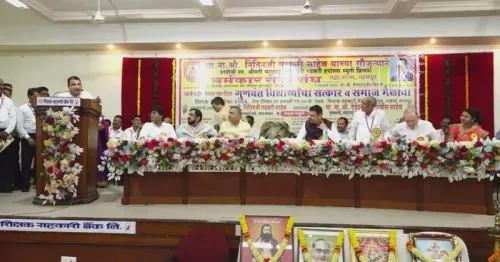
CM Devendra Fadnavis attended the Charmakar Seva Sangh student felicitation in Nagpur on 27 September 2026 , honouring students who excelled in 10th and 12th board examinations .
The Maharashtra government will fund a memorial, community hall, and e-library at Babulkheda near Nagpur to support students preparing for competitive exams.
LIDCOM (Sant Rohidas Leather Industries and Charmakar Development Corporation) will be restructured on the lines of BARTI and ARTI to expand skill development, entrepreneurship and employment access for Charmakar youth.
State-level celebrations are planned for the 650th birth anniversary year of Sant Ravidas Maharaj , reflecting the government's emphasis on cultural commemoration alongside material welfare.
The event was organised by Charmakar Seva Sangh in memory of the late Smt.
Bhanutai Gadkari , with MLA Krishna Khopde and former Mayor Dayashankar Tiwari present.
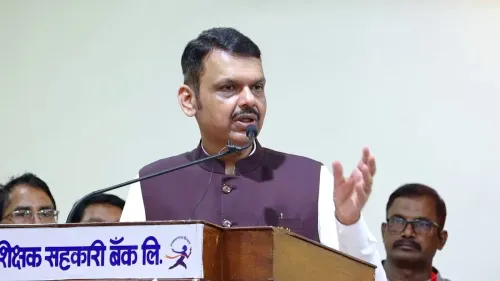
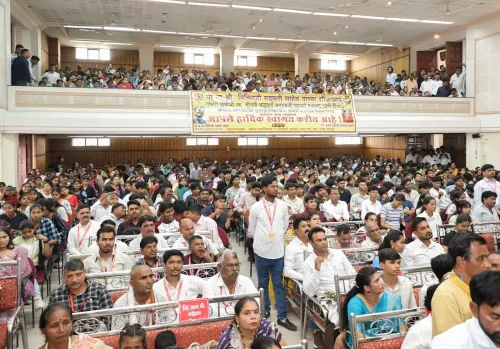
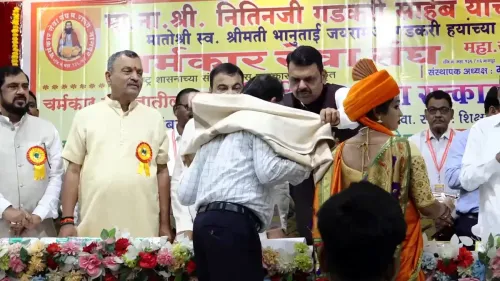
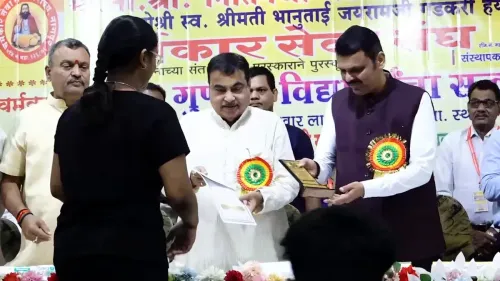
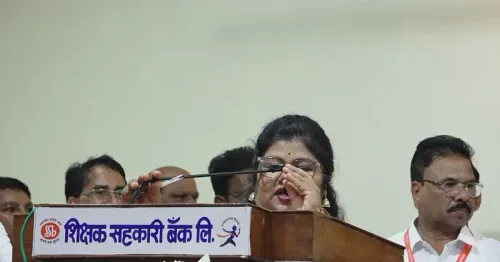
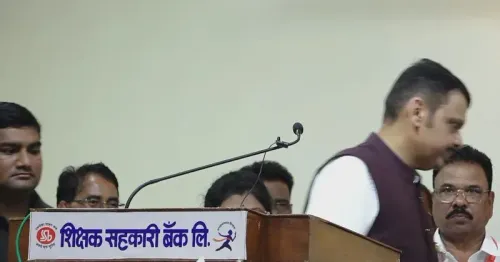
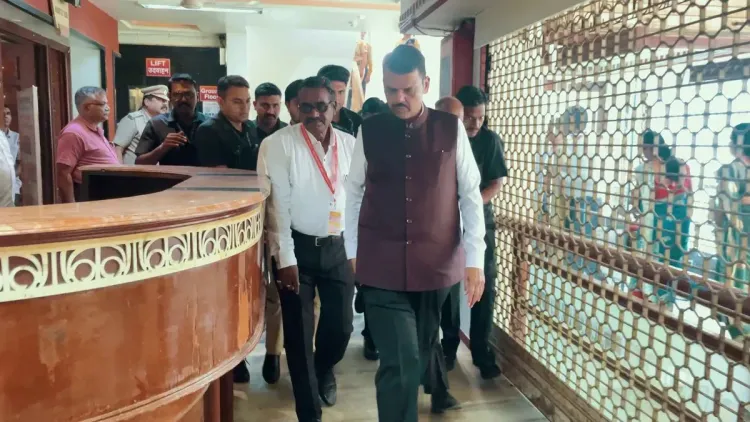
A felicitation ceremony in Nagpur on Sunday, 27 September 2026 carried a message that stretched well beyond its stage: Maharashtra Chief Minister Devendra Fadnavis showed up to honour meritorious students from the Charmakar community — and left behind a string of concrete government commitments that will shape the community's educational and economic future.
Medals, merit, and a moment on stage in Nagpur
The event, organised by Charmakar Seva Sangh in memory of the late Smt. Bhanutai Gadkari, brought together students who cleared their 10th and 12th board examinations with distinction. Fadnavis called it an act of recognition that goes deeper than trophies: 'Honouring meritorious students is a way of celebrating their hard work, recognising their achievements and inspiring them to dream bigger.' MLA Krishna Khopde, former Mayor Dayashankar Tiwari, and Charmakar Seva Sangh founder Bhaiyasaheb Bighane were among the dignitaries present.
Sant Ravidas at 650: a grand state commemoration in the works
The cultural centrepiece of Fadnavis's address was the forthcoming 650th birth anniversary year of Sant Ravidas Maharaj, the 15th-century Bhakti saint whose teachings on equality and dignity anchor the identity of Charmakar and Ravidasia communities across India. The Chief Minister confirmed that state-level celebrations will be organised on a grand scale — a signal that the government intends to match symbolic commemoration with institutional weight.
Sant Ravidas's philosophy is not decorative backdrop here. His insistence that progress is rooted in equality and education runs directly through every announcement Fadnavis made at the same podium.
Babulkheda memorial, community hall, and e-library: what's promised
The most tangible commitment: the State Government will provide funds for a dedicated memorial and community hall at Babulkheda, near Nagpur, along with an e-library aimed specifically at students preparing for competitive examinations. For a community whose youth often lack access to quality study infrastructure, a digital library with competitive-exam resources is not a minor addition — it is a direct intervention in the pipeline from board-exam topper to government-job candidate.
LIDCOM restructured on the BARTI-ARTI model
Perhaps the most consequential announcement is the restructuring of Sant Rohidas Leather Industries and Charmakar Development Corporation (LIDCOM). The government body, which has historically focused on the leather industry and basic socio-economic support, will be expanded 'on the lines of BARTI and ARTI' — a pointed institutional benchmark.
BARTI (Dr. Babasaheb Ambedkar Research and Training Institute, Pune) is Maharashtra's flagship capacity-building body for Scheduled Caste students, running competitive-exam coaching, fellowships, and research programmes that have become a template for similar bodies across the state. Aligning LIDCOM with that model means shifting it from a sectoral corporation into a multi-track youth-empowerment engine covering skill development, training, entrepreneurship, and employment. That is a structural upgrade, not just a budget line.
A pattern Maharashtra knows well — and what to watch next
Maharashtra has long combined community-specific development corporations with student felicitation events to signal state investment in Scheduled Caste advancement. The current round of announcements follows that established playbook, but the explicit BARTI benchmarking for LIDCOM gives it sharper institutional teeth than a routine commemorative ceremony. The real test will be the formal restructuring notification for LIDCOM, the implementation timeline for the Babulkheda memorial and e-library, and the budget allocations that follow. Announcements made from a felicitation stage become policy only when the gazette and the funds arrive together.
Point of View
An institutional upgrade to LIDCOM that benchmarks against the credible BARTI model, and a Sant Ravidas commemoration that frames the BJP as a steward of Dalit cultural identity in a state where that positioning matters electorally. The BARTI comparison is the telling detail — it raises accountability, because BARTI's track record is measurable and LIDCOM will now be held to a similar standard. Whether the restructuring produces a formal gazette notification and actual budget allocation before the anniversary year's celebrations begin will determine whether this is transformative policy or well-crafted ceremony.
NationPress
27 Sept 2026
Frequently Asked Questions
What did CM Fadnavis announce for the Charmakar community in Nagpur?
CM Fadnavis announced government funding for a memorial, community hall and e-library at Babulkheda near Nagpur, the restructuring of LIDCOM on the BARTI model for skill and employment development, and grand state-level celebrations for the 650th birth anniversary year of Sant Ravidas Maharaj.
What is LIDCOM and why is it being restructured?
LIDCOM — Sant Rohidas Leather Industries and Charmakar Development Corporation — is a Maharashtra government body supporting the Charmakar community's leather industry and socio-economic development. It is being restructured to broaden its scope to include skill development, training, entrepreneurship and employment, modelled on BARTI and ARTI.
What is BARTI and why is it a benchmark for LIDCOM?
BARTI (Dr. Babasaheb Ambedkar Research and Training Institute) in Pune is Maharashtra's flagship institute providing coaching, research and capacity building for Scheduled Caste students. Its model of multi-track youth support is now being used as the template for a restructured LIDCOM.
What is the significance of Sant Ravidas Maharaj's 650th birth anniversary?
Sant Ravidas Maharaj was a 15th-century Bhakti saint whose teachings on equality, dignity and education are foundational for Charmakar and Ravidasia communities across India. The Maharashtra government plans grand state-level celebrations to mark the 650th birth anniversary year.
What is the Babulkheda e-library announced by Fadnavis?
The Babulkheda e-library, to be funded by the Maharashtra State Government at Babulkheda near Nagpur, is a digital library resource specifically aimed at supporting Charmakar community students preparing for competitive examinations.