CM Fadnavis charts urban overhaul at World Mayors Forum
Synopsis
CM Devendra Fadnavis told the 3rd World Mayors Forum in Mumbai that cities drive 65 percent of GDP, hailed AIILSG's 100 years, and mapped Dharavi, Third Mumbai and a larger infrastructure pitch.
Key Takeaways
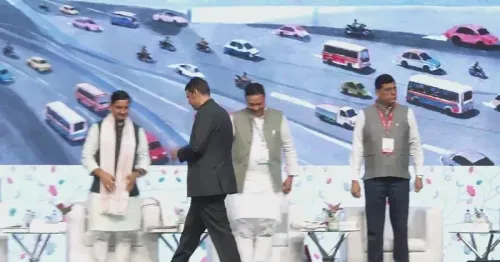
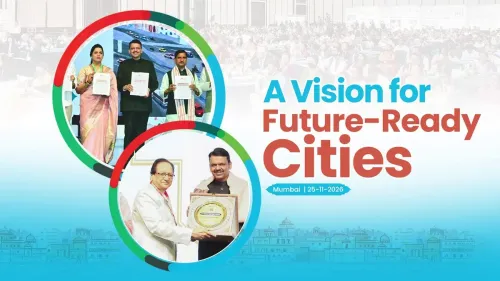
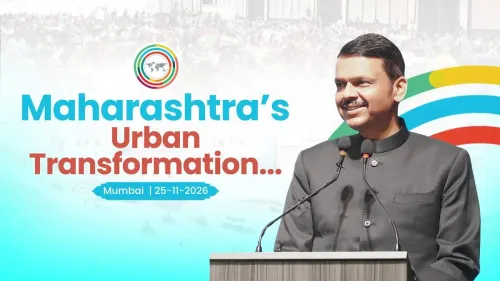
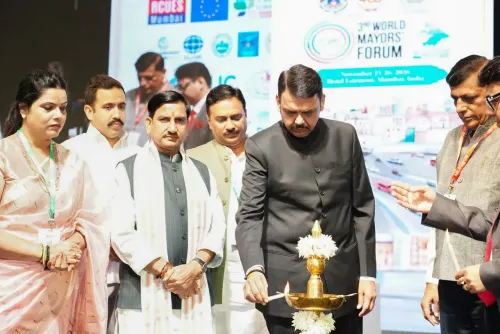
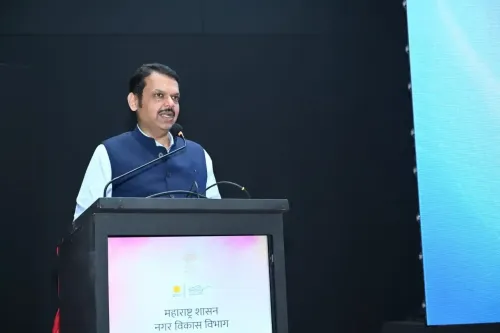
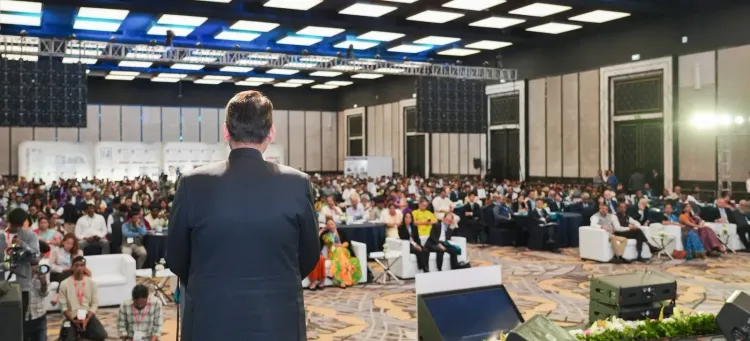
Chief Minister Devendra Fadnavis addressed the inaugural session of the 3rd World Mayors Forum in Mumbai on 25 November 2026.
He congratulated the All India Institute of Local Self Government on 100 years and said mayors are citizens' first contact on civic services.
He said cities contribute 65 percent of national GDP and that urbanisation has been treated as an opportunity since 2014.
He cited 50 billion dollars of MMR metro, road, flyover and tunnel work over 12 years and a 100-billion-dollar infrastructure target over five years.
He outlined Dharavi redevelopment, Third Mumbai around Navi Mumbai airport, and Fourth Mumbai with Vadhavan port in Palghar.
He pledged state cooperation to implement forum recommendations and asked cities to study Indore, Ahmedabad and Mumbai.
2.7 crore people now live in the Mumbai Metropolitan Region — more than several European countries. That scale is why the Chief Minister's Office of Maharashtra said Chief Minister Devendra Fadnavis used the inaugural session of the 3rd World Mayors Forum in Mumbai on Wednesday, 25 November 2026, to recast urbanisation as an engine of growth, not a crisis, and to congratulate the All India Institute of Local Self Government on 100 years of work with municipal bodies.
The office described the moment as Maharashtra's urban transformation through sustainable, developed cities — shashwat ani vikasit shahranchya nirmititun (through the creation of sustainable and developed cities). Fadnavis, drawing on his years as Mayor of Nagpur, said a mayor's role is both vital and punishing. Civic complaints land first at the municipal door, so the office must stay alert 24 hours a day and run city administration with real competence.
Cities as 65 percent of GDP, not a civic emergency
He told the forum that cities already account for 65 percent of national GDP and are the engines of development. After 2014, he said, Prime Minister Narendra Modi's approach had stopped treating urbanisation as a threat and started treating it as an opportunity, with policy weight shifting toward sustainable city growth.
That shift sits on a known central architecture. The Atal Mission for Rejuvenation and Urban Transformation, launched in 2015, channelled funds into water, sewerage and urban mobility across hundreds of cities. The Smart Cities Mission, also announced in 2015, picked 100 cities — including Pune, Nagpur and Nashik — for technology-led upgrades. Mumbai's metro master plan, approved in phases since 2004, saw construction accelerate after 2014. Fadnavis stitched those threads into a state story.
MMR's metro decade and a larger capital pitch
Reviewing Maharashtra's urban change, he put the Mumbai Metropolitan Region at the centre. With a population of 2.7 crore, he said the region had drawn 50 billion dollars over the past 12 years into metro lines, roads, flyovers and tunnels. He set a target of attracting 100 billion dollars for statewide infrastructure over the next five years. He presented those numbers as the scale of past work and of the capital the state now wants to pull in.
Half of Maharashtra's people already live in 400 cities, he noted. Mumbai, Pune, Nagpur, Nashik and Chhatrapati Sambhajinagar are, in his telling, already moving along that path. Capital, he argued, follows planning and political will. If those two are present, money is not the binding constraint.
Dharavi, Educity and a Fourth Mumbai at Vadhavan
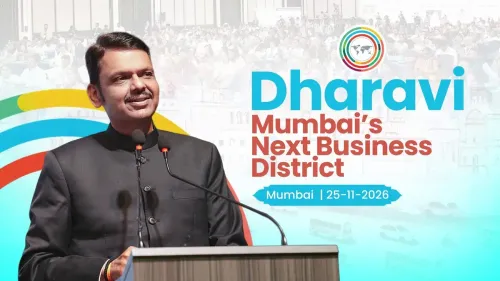
The most vivid piece of the map was Dharavi. Fadnavis said one of Asia's largest slum settlements is being comprehensively remade, with residents to receive rightful homes and essential amenities. Over the next 10 years, he said, Dharavi would grow into a major commercial hub on the lines of the Bandra-Kurla Complex.
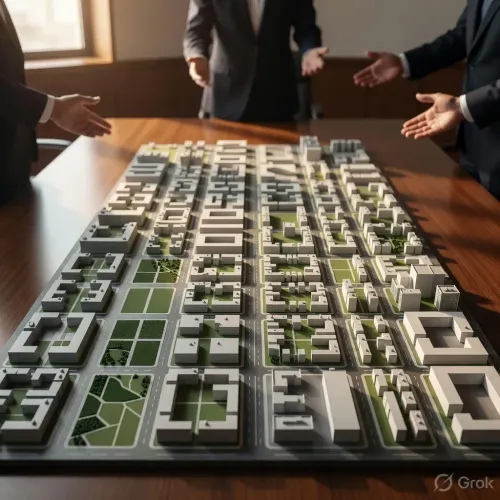
Around the Navi Mumbai airport, the state is building what he called Third Mumbai: an Educity with capacity for 1 lakh students and 12 global universities, plus a Sports City, a Medicity and an Innovation City. At Vadhavan port in Palghar, he said the harbour would be developed to global standards and a Fourth Mumbai would rise alongside it.
Indore, Ahmedabad and a pledge to the mayors
He asked cities to study successful urban experiments in Indore, Ahmedabad and Mumbai and to copy what actually makes places more liveable and sustainable. The state government, he pledged, would give full cooperation to implement important recommendations and ideas emerging from the 3rd World Mayors Forum.
Union Minister of State Tokhan Sahu, Himachal Pradesh minister Vikramaditya Singh, West Bengal minister of state Umesh Rai, Mumbai Mayor Ritu Tawde, AIILSG president Ranjeet Chavan, and delegates from several countries were present.
Mayors left the hall with a state on the record. The next test is whether Dharavi, the airport city, the port city and that five-year capital pipeline show up in the ward, not only on a forum stage.
Point of View
Not a governance burden. Fadnavis used his Nagpur mayoral past to speak to local heads, then scaled to MMR megaprojects, Dharavi and two new Mumbai-scale cities — a state-level translation of AMRUT and Smart Cities logic into ports, airports and slum redevelopment. The political signal is continuity: metro-and-tunnel capital in the west, and a claim that planning plus will can crowd in money. The speech now stands or falls on whether the five-year capital pipeline and Dharavi tenders actually move.
NationPress
25 Nov 2026
Frequently Asked Questions
What did CM Devendra Fadnavis say at the 3rd World Mayors Forum?
He told the inaugural session in Mumbai that cities are development engines contributing 65 percent of India's GDP, congratulated the All India Institute of Local Self Government on 100 years, and outlined Maharashtra's urban projects from Dharavi to new city clusters.
What is Third Mumbai according to Fadnavis?
Third Mumbai is the urban cluster being developed around Navi Mumbai airport, including an Educity for 1 lakh students with 12 global universities, plus a Sports City, a Medicity and an Innovation City.
What did Fadnavis say about Dharavi redevelopment?
He said Dharavi is undergoing a comprehensive makeover that will give residents rightful homes with essential amenities and, over 10 years, turn the area into a major commercial hub like the Bandra-Kurla Complex.
How much infrastructure investment did Fadnavis cite for Maharashtra?
He said 50 billion dollars had gone into MMR metro, road, flyover and tunnel projects over 12 years, and set a target of attracting 100 billion dollars for statewide infrastructure over the next five years.
Who attended the World Mayors Forum inaugural session in Mumbai?
Union Minister of State Tokhan Sahu, Himachal Pradesh minister Vikramaditya Singh, West Bengal minister of state Umesh Rai, Mumbai Mayor Ritu Tawde, AIILSG president Ranjeet Chavan and international delegates were present, according to the Chief Minister's Office.