CM Fadnavis Honours Warkari Couple at Pandharpur on Ashadhi Ekadashi
Synopsis
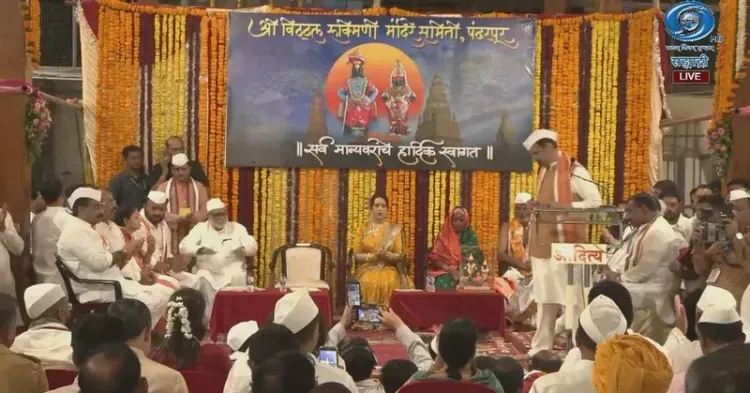
Maharashtra Chief Minister Devendra Fadnavis attended the pre-dawn felicitation of a Warkari couple at Pandharpur's state mahapuja on Ashadhi Ekadashi, 25 July 2026, continuing the government's longstanding tradition of formal participation in one of Maharashtra's most significant pilgrimages.
Key Takeaways
Chief Minister Devendra Fadnavis was present at Pandharpur for the shaskiya mahapuja on Ashadhi Ekadashi, 25 July 2026 .
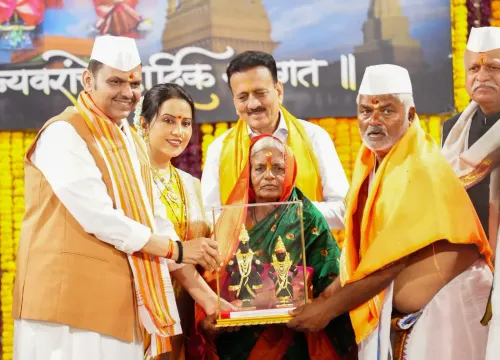
The ceremony began at 4:06 a.m. , with the Chief Minister personally honouring the designated Warkari couple.
The shaskiya mahapuja is a state-sponsored ritual in which the Maharashtra government formally designates a Warkari couple to lead the grand worship.
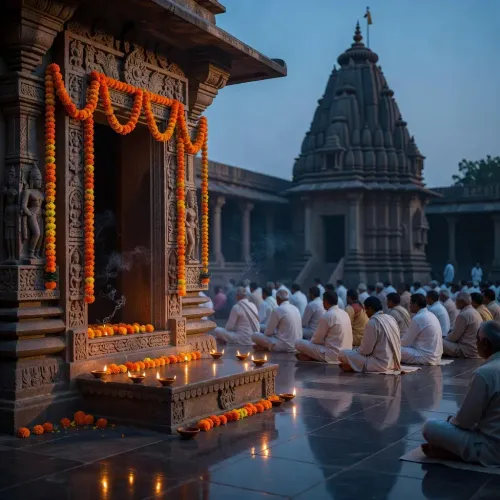
Pandharpur, home to the Vitthal-Rukmini temple in Solapur district , receives lakhs of pilgrims during Ashadhi Ekadashi every year.
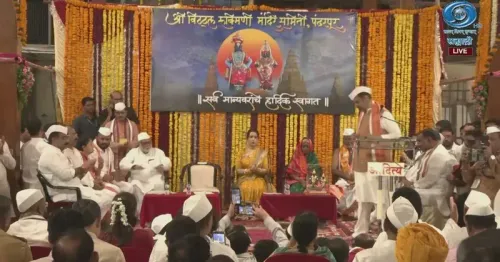
The event was livestreamed, extending access to devotees beyond the physical venue.
Maharashtra governments across successive administrations have maintained formal state participation in Ashadhi Ekadashi observances as part of cultural policy.
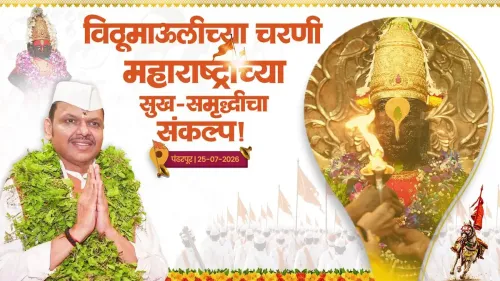
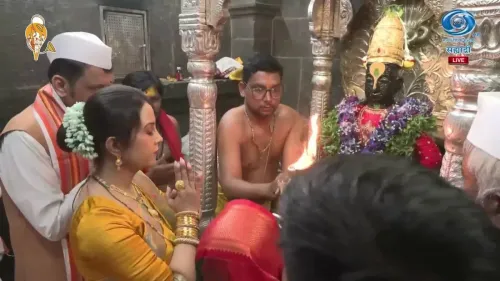
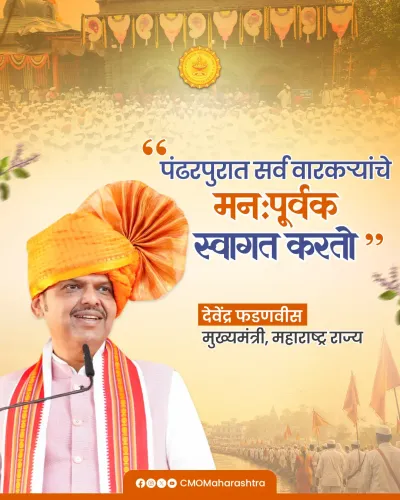
Maharashtra Chief Minister Devendra Fadnavis attended the ceremonial felicitation of a Warkari couple honoured as the designated participants of the shaskiya mahapuja (state grand worship) at Pandharpur in the early hours of Saturday, 25 July 2026, with the event beginning at 4:06 a.m. as part of the Ashadhi Ekadashi observances.
Context
Ashadhi Ekadashi, observed on the eleventh day of the bright fortnight in the Hindu month of Ashadh, is one of the most significant religious occasions in Maharashtra. Every year, lakhs of Warkari pilgrims walk hundreds of kilometres to reach the Vitthal-Rukmini temple in Pandharpur, located in Solapur district, for darshan and ritual participation. The shaskiya mahapuja — the state-sponsored grand worship — is a formal ceremony in which the government designates a Warkari couple to lead the ritual, a tradition that underscores the state's institutional engagement with the devotional heritage of Maharashtra.
Chief Minister Fadnavis was present at the venue and personally honoured the couple chosen for this year's ceremony. The event was livestreamed, reflecting the administration's effort to extend the occasion's reach to devotees across the state and beyond.
Policy Backdrop
Maharashtra governments across successive administrations have maintained formal participation in the Ashadhi Ekadashi observances at Pandharpur, treating the pilgrimage not merely as a religious event but as a matter of state cultural policy. The shaskiya mahapuja tradition institutionalises government involvement in the Warkari sampraday's most important annual gathering. The state typically deploys significant administrative machinery — including police, health services, and transport — to manage the massive pilgrim influx that Pandharpur receives during this period.
The Fadnavis administration has continued this engagement, with the Chief Minister's pre-dawn presence at the ceremony signalling the government's commitment to honouring the Warkari tradition at the highest level of the state executive.
Stakeholders and Impact
The Warkari community, one of Maharashtra's most widespread devotional movements rooted in the Bhakti tradition, forms the primary stakeholder group for this observance. The sampraday draws followers from across the state and from other parts of the country, cutting across caste and class lines. The state's formal recognition of a Warkari couple through the mahapuja honour carries deep symbolic weight within the community.
For Pandharpur and the surrounding region, Ashadhi Ekadashi represents a major logistical and economic moment, with the town hosting an extraordinary concentration of pilgrims. Temple administration staff and local authorities are central to the smooth conduct of the rituals and the safety of devotees.
What's Next
The Ashadhi Ekadashi observances at Pandharpur typically extend through the day, with the main rituals and palakhi processions drawing the largest crowds. The state government is expected to continue monitoring pilgrim management arrangements through the day. Looking ahead, any announcements on pilgrim infrastructure upgrades, improvements to facilities at the Vitthal-Rukmini temple, or reforms to temple administration are likely to be watched closely by the Warkari community and religious organisations associated with the Pandharpur yatra.
Point of View
One of the state's most politically and culturally significant devotional communities. The formal state honour to a Warkari couple is not merely ceremonial — it reinforces the government's positioning as a custodian of Maharashtra's Bhakti heritage at a time when religious cultural identity remains a live political current. For the BJP-led administration, visible participation in events like Ashadhi Ekadashi carries both symbolic and electoral resonance in a state with deep Warkari roots. The livestreaming of the event further signals an effort to amplify this engagement beyond the pilgrimage town itself.
NationPress
25 Jul 2026
Frequently Asked Questions
What is Ashadhi Ekadashi and why is it important in Maharashtra?
Ashadhi Ekadashi is a major Hindu observance on the eleventh day of the bright fortnight in the month of Ashadh, when lakhs of Warkari pilgrims converge on Pandharpur for darshan at the Vitthal-Rukmini temple. It is one of the most significant religious events in Maharashtra, central to the Warkari devotional tradition.
What is the shaskiya mahapuja at Pandharpur?
The shaskiya mahapuja is a state-sponsored grand worship ceremony conducted at Pandharpur during Ashadhi Ekadashi, in which the Maharashtra government formally designates a Warkari couple to lead the ritual as a mark of official honour.
Why did CM Devendra Fadnavis go to Pandharpur on 25 July 2026?
Chief Minister Devendra Fadnavis attended the early-morning shaskiya mahapuja ceremony to personally felicitate the Warkari couple chosen to lead the state worship on Ashadhi Ekadashi 2026.
Where is Pandharpur located?
Pandharpur is a pilgrimage town in Solapur district, Maharashtra, and is home to the revered Vitthal-Rukmini temple, the focal point of the annual Warkari yatra.
What is the Warkari sampraday?
The Warkari sampraday is a devotional movement rooted in Maharashtra's Bhakti tradition, with followers drawn from across caste and class lines who undertake periodic pilgrimages — called varis — to Pandharpur to worship Vitthal.