CM Fadnavis launches 50-acre police HQ project in Pimpri-Chinchwad

Synopsis
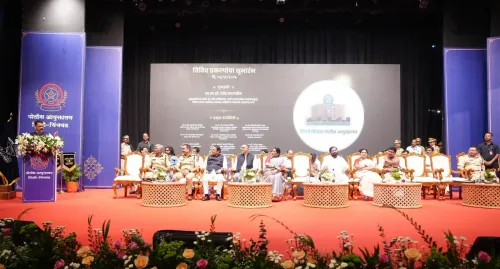
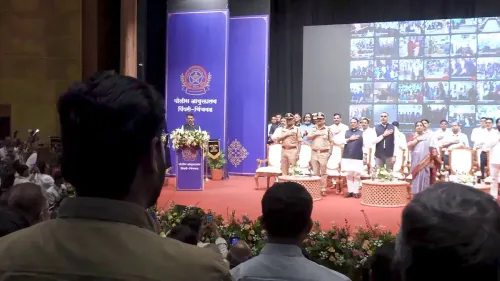
Maharashtra CM Devendra Fadnavis inaugurated multiple projects at the Pimpri-Chinchwad Police Commissionerate on 3 November 2026, headlined by a 50-acre state-of-the-art police headquarters — a major infrastructure push for the Pune region's industrial twin city.
Key Takeaways
CM Devendra Fadnavis launched several new projects under the Pimpri-Chinchwad Police Commissionerate on 3 November 2026 .
A state-of-the-art police headquarters will be built on a 50-acre site in Pimpri-Chinchwad .
The campus will include a modern police commissionerate building alongside the broader headquarters complex.
Pimpri-Chinchwad is a major automotive and industrial hub in the Pune metropolitan region , with a rapidly growing population.
The project follows Maharashtra's broader pattern of upgrading police infrastructure in high-growth urban and industrial zones.
A city that drives India's automotive heartbeat is now getting a police headquarters to match its scale. On Tuesday, 3 November 2026, Maharashtra Chief Minister Devendra Fadnavis announced the launch of a state-of-the-art police complex spanning 50 acres in Pimpri-Chinchwad, anchored by a modern commissionerate building — a landmark upgrade for one of western India's fastest-growing industrial corridors.
Posting on X, Fadnavis declared: 'पिंपरी-चिंचवडमध्ये आधुनिक पोलीस आयुक्तालयासह 50 एकर जागेवर अत्याधुनिक पोलीस मुख्यालय उभारण्यात येत आहे.' — 'A state-of-the-art police headquarters is being built on a 50-acre plot in Pimpri-Chinchwad, along with a modern police commissionerate.' The announcement was made at the inauguration ceremony for multiple new projects under the Pimpri-Chinchwad Police Commissionerate.Why Pimpri-Chinchwad needed this upgrade
Pimpri-Chinchwad, the industrial twin of Pune, is home to a dense cluster of automotive manufacturers, pharmaceutical firms, and engineering units that collectively employ hundreds of thousands of workers. The city's population has surged over successive decades, straining legacy police infrastructure built for a far smaller urban footprint. A commissionerate-level headquarters — with the land and logistics to host specialised units, training facilities, and command-and-control systems — brings the city's policing capacity in line with its economic weight.
Maharashtra has a documented pattern of upgrading police infrastructure in industrial and peri-urban zones as their populations cross critical thresholds. The grant or strengthening of commissionerate status in such zones is often paired with capital investment in physical infrastructure, signalling a shift from reactive policing to institutionalised, scale-ready law enforcement.
The 50-acre footprint and what it signals
A 50-acre campus is a significant land commitment for a city in the Pune metropolitan region, where industrial and residential pressure on available land is intense. That scale suggests the complex is designed not just for administrative offices but potentially for training grounds, detention facilities, a forensic wing, and residential quarters — the full architecture of a self-sufficient commissionerate. Multiple projects were inaugurated simultaneously under the commissionerate, indicating this is a coordinated infrastructure push rather than a single building tender.
For Chief Minister Fadnavis, the announcement reinforces his administration's positioning around urban development and public safety in Maharashtra's industrial belt — a region that is both economically critical and politically significant for the BJP-led state government.
The watch now is on timelines: how fast the 50-acre campus breaks ground and whether similar commissionerate infrastructure drives follow in other rapidly urbanising Pune-region towns.
Point of View
On par with roads and utilities. For Chief Minister Fadnavis, inaugurating multiple commissionerate projects simultaneously in Pimpri-Chinchwad consolidates his administration's urban-development narrative in a region that is both an economic engine and an electoral battleground. The scale of the campus suggests long-term institutional intent: a self-sufficient commissionerate built for the city's next two decades of growth, not just its present needs. If delivered on schedule, it could become a template for similar upgrades in other fast-urbanising Pune-belt towns.
NationPress
3 Nov 2026
Frequently Asked Questions
What is the new police headquarters being built in Pimpri-Chinchwad?
A state-of-the-art police headquarters is being constructed on a 50-acre plot in Pimpri-Chinchwad, along with a modern police commissionerate building. The project was launched by Maharashtra CM Devendra Fadnavis on 3 November 2026.
Why is Pimpri-Chinchwad getting a new police commissionerate headquarters?
Pimpri-Chinchwad is one of India's largest industrial and automotive hubs in the Pune region, with a rapidly growing population that has outpaced existing police infrastructure. The new 50-acre campus is designed to bring policing capacity in line with the city's scale.
Who inaugurated the Pimpri-Chinchwad police commissionerate projects?
Maharashtra Chief Minister Devendra Fadnavis inaugurated multiple projects under the Pimpri-Chinchwad Police Commissionerate on 3 November 2026.
How big is the new Pimpri-Chinchwad police headquarters?
The new police headquarters will be spread across 50 acres and will include a modern commissionerate building as its centrepiece.
What does a police commissionerate mean for a city like Pimpri-Chinchwad?
A commissionerate gives a city its own senior police command structure with greater autonomy and specialised units. For an industrial city like Pimpri-Chinchwad, a dedicated commissionerate with a large headquarters campus means faster, more coordinated law enforcement for a high-density urban-industrial population.