CM Fadnavis Launches Maha Indus AI Portal and 126 New Digital Services
Synopsis
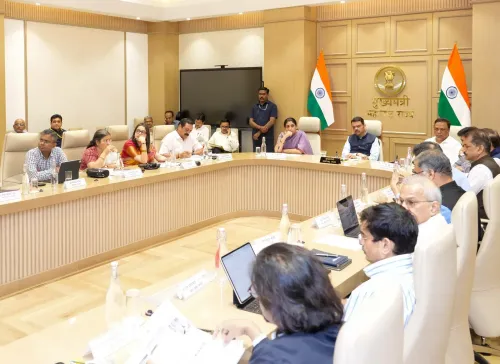
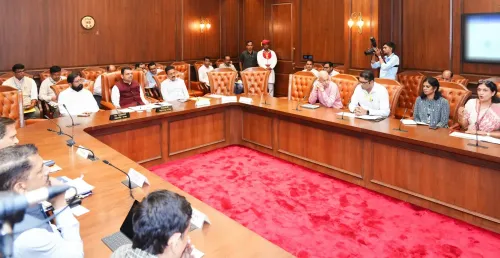
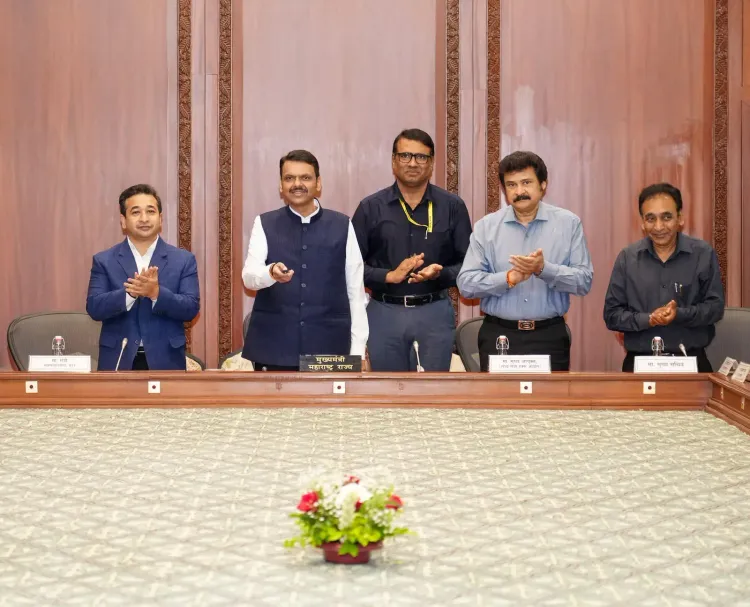
Chief Minister Devendra Fadnavis launched the Maha Indus sovereign AI workspace, 36 Maha-DBT 2.0 welfare schemes, 77 Aaple Sarkar 2.0 services, and 13 Maitri Portal services at Sahyadri Guest House, Mumbai, on 28 October 2026, marking a major expansion of Maharashtra's digital governance infrastructure.
Key Takeaways
Maha Indus portal launched as Maharashtra's sovereign AI workspace, keeping government data within state-controlled infrastructure.
36 welfare schemes onboarded onto the upgraded Maha-DBT 2.0 direct benefit transfer platform.
77 citizen services activated on Aaple Sarkar 2.0 , the state's flagship e-governance portal.
13 services added to the Maitri Portal , bringing the single-day total to 126 new digital services and schemes .
The event was held at Sahyadri Guest House, Mumbai , with Minister Nitesh Rane in attendance.
The launch aligns with Maharashtra's broader push to embed AI in routine governance, paralleling national Digital India priorities while asserting state-level data sovereignty.
Maharashtra just switched on its most ambitious digital governance stack yet. Chief Minister Devendra Fadnavis on Wednesday, 28 October 2026 inaugurated a clutch of landmark portals and services at Sahyadri Guest House, Mumbai — headlined by the 'Maha Indus' portal, the state's own sovereign AI workspace, a move that signals Maharashtra is no longer waiting for the Centre to set the pace on artificial intelligence in public administration.
Maha Indus: Maharashtra's Sovereign AI Workspace
The centrepiece of the launch is the Maha Indus portal, described by the Chief Minister's Office as a 'sovereign AI workspace developed for the Maharashtra government.' In plain terms: a state-built AI environment designed to keep government data within its own infrastructure, shielding it from dependence on third-party commercial platforms. For a government that processes millions of citizen interactions annually, data sovereignty is not an abstract principle — it is an operational necessity.
Minister Nitesh Rane, who oversees Electronics, Information Technology, and Artificial Intelligence, was present at the event. The launch spans his entire portfolio, making this as much a ministerial milestone as a technological one.
36 Schemes on Maha-DBT 2.0, 77 Services on Aaple Sarkar 2.0
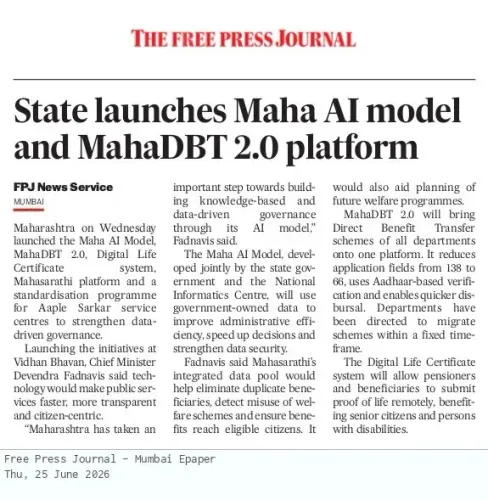
The numbers behind the announcement are substantial. 36 welfare schemes have been onboarded onto the upgraded Maha-DBT 2.0 platform — Maharashtra's direct benefit transfer engine — bringing more subsidy and welfare flows into a digitally auditable pipeline. Simultaneously, 77 citizen services have gone live on Aaple Sarkar 2.0, the revamped version of the state's flagship e-governance portal that has been a cornerstone of Maharashtra's Digital India alignment since 2015.
A further 13 services have been activated on the Maitri Portal, rounding out a single-day addition of 126 services and schemes across four platforms. For citizens, that means fewer queues, fewer offices, and fewer intermediaries standing between a government entitlement and the person it is meant for.
Maharashtra's AI Push in a National Race
The launch fits a sharper pattern: Indian states are no longer content to be passive adopters of central technology frameworks. Several have begun building their own AI layers, their own data centres, and their own sovereign cloud infrastructure. Maharashtra, with its concentration of tech talent in Pune and Mumbai and its large industrial base, is positioning itself near the front of that race.
The Maha-DBT upgrade is particularly significant. Direct benefit transfers have historically been vulnerable to leakage and duplication; a modernised, AI-assisted backend can flag anomalies in real time and tighten the pipeline from state treasury to beneficiary bank account.
The real test, as always, will be in the rollout: whether adoption metrics climb, whether the sovereign AI workspace earns trust across departments, and whether the 126 new digital touchpoints actually reduce the friction that ordinary Maharashtrians experience every day. Today, the state made the bet. The scoreboard starts now.
Point of View
' the government is staking a position on data governance that resonates with both security-minded bureaucrats and a tech industry eager for state contracts. The Maha-DBT 2.0 expansion is the more quietly consequential move: every additional scheme digitised reduces the leakage and intermediary-dependence that have historically undercut welfare delivery in India. If Maharashtra can demonstrate measurable efficiency gains, it hands Chief Minister Fadnavis a policy narrative well suited to a state that prizes both fiscal discipline and social reach.
NationPress
28 Oct 2026
Frequently Asked Questions
What is the Maha Indus portal?
Maha Indus is a sovereign AI workspace developed specifically for the Maharashtra government, designed to handle artificial intelligence applications within state-controlled infrastructure rather than relying on third-party commercial platforms.
What is Aaple Sarkar 2.0?
Aaple Sarkar 2.0 is the upgraded version of Maharashtra's flagship e-governance portal for delivering citizen services online. The 2.0 version added 77 new services at the 28 October 2026 launch event.
How many services were launched on the Maha-DBT 2.0 platform?
36 welfare schemes were onboarded onto Maha-DBT 2.0 at the event, expanding the state's direct benefit transfer pipeline for subsidy and welfare delivery.
Who attended the digital governance launch in Mumbai?
Chief Minister Devendra Fadnavis presided over the launch at Sahyadri Guest House, Mumbai , and Minister Nitesh Rane , who oversees Electronics, IT, and AI, was also present.
What is the Maitri Portal Maharashtra?
The Maitri Portal is a Maharashtra government platform on which 13 new services were activated at the 28 October 2026 launch, as part of a broader single-day rollout of 126 digital services and schemes .