CM Fadnavis Launches Rojgar Mahakumbh for Maharashtra Youth
Synopsis
CM Devendra Fadnavis launched the Vishwavikrami Rojgar Mahakumbh in Mumbai under the Seva Sankalp Abhiyan, with 1,500-plus job fairs planned statewide, targeting placement of 50,000 youth in the first phase as Maharashtra links skilling to India's global economic rise.
Key Takeaways
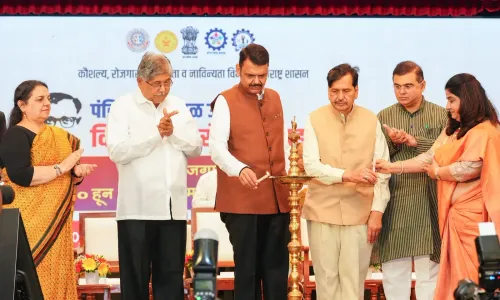
CM Devendra Fadnavis inaugurated the Pandit Deendayal Upadhyaya Vishwavikrami Rojgar Mahakumbh in Mumbai on 29 September 2026 .
Over 1,500 Rojgar Melavas are planned statewide; more than 400 were held on the same day as the inauguration.
Around 1 lakh (100,000) youth have registered, with employment targeted for 50,000 in the first phase.
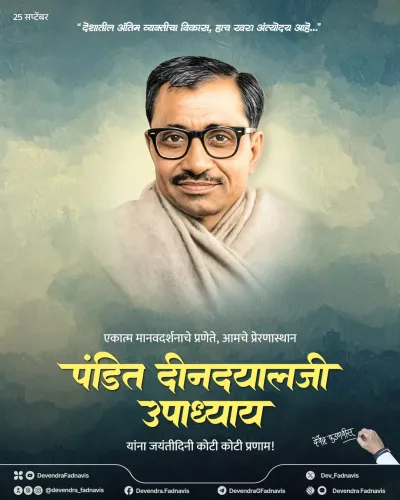
The initiative is part of the Seva Sankalp Abhiyan , launched on PM Modi's birthday, inspired by Pandit Deendayal Upadhyaya's Antyodaya philosophy.
CM Fadnavis cited India's agreements with 28 countries and the global demand for skilled manpower as key opportunities for Maharashtra's youth.
Deputy CM Eknath Shinde and multiple state ministers attended, signalling unified Mahayuti coalition backing for the drive.
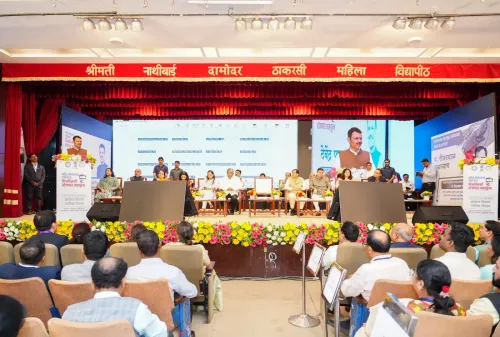
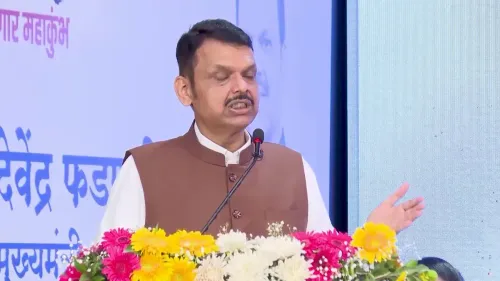
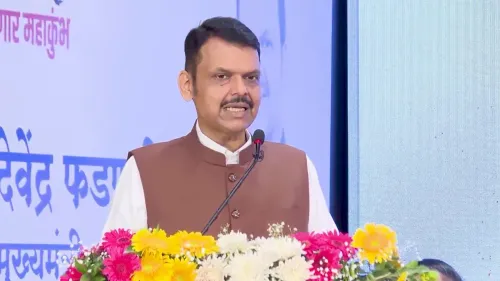
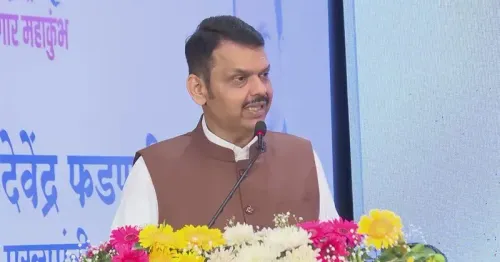
A hundred thousand young job-seekers. More than 1,500 employment fairs planned across Maharashtra. And a single day — 29 September 2026 — on which over 400 Rojgar Melavas fired up simultaneously. Maharashtra Chief Minister Devendra Fadnavis inaugurated the 'Pandit Deendayal Upadhyaya Vishwavikrami Rojgar Mahakumbh' in Mumbai on Tuesday, marking one of the state's most ambitious job-placement drives in recent memory.
A Mahakumbh born on a Prime Minister's birthday
The event is the centrepiece of the Seva Sankalp Abhiyan, a Maharashtra government campaign launched on the occasion of Prime Minister Narendra Modi's birthday to roll out employment and public-service activities statewide. The Department of Skill Development, Employment, Entrepreneurship and Innovation — the nodal agency — has planned over 1,500 Rojgar Melavas across the state in this phase, with 50,000 youth targeted for placement in the first round alone. Opportunities for the remaining registered candidates, CM Fadnavis assured, will be created through a continued series of fairs.
The ideological anchor is deliberate: naming the initiative after Pandit Deendayal Upadhyaya invokes his twin doctrines of Antyodaya — lifting the last person in the queue — and Integral Humanism, which positions economic empowerment as inseparable from human dignity. For the BJP, it is also a political statement: welfare through work, not just welfare through subsidy.
India's global manpower moment — and why Maharashtra is leaning into it
CM Fadnavis framed the drive within a larger economic arc, citing India's rise as the world's fourth-largest economy and one of its fastest-growing. He pointed to agreements India has signed with 28 countries to facilitate skilled-worker mobility, arguing that the growing global appetite for trained manpower creates a direct runway for Maharashtra's youth — if the skilling infrastructure keeps pace.
That 'if' is the crux. Rapid advances in AI, quantum computing, and other emerging technologies mean that the skills valued today may be obsolete within a decade. The Maharashtra department's pitch is continuous, adaptive skilling — not a one-time placement fair but a sustained pipeline. The Skill India Mission, launched nationally in 2015, laid the institutional groundwork; state-level Rojgar Melavas have since become the delivery mechanism closest to the job-seeker's doorstep.
Who was in the room — and what it signals
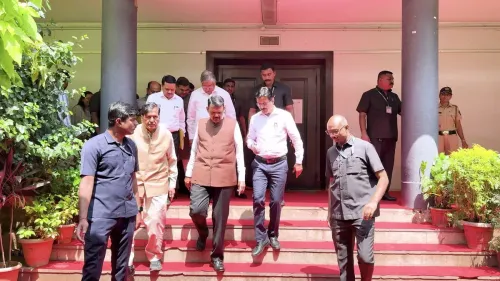
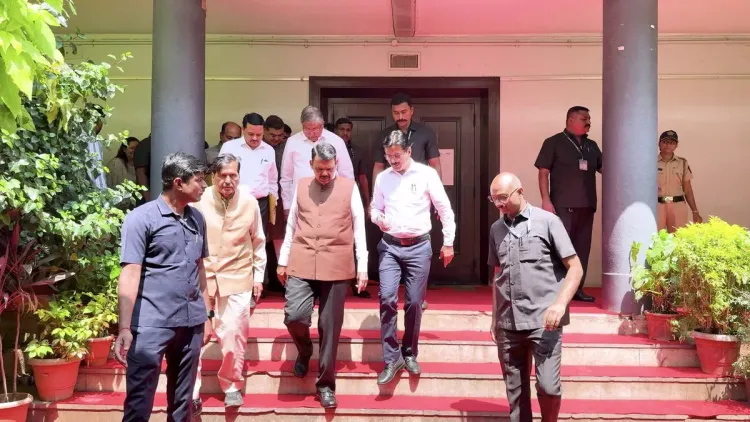
The inauguration brought together the state's political weight in one venue. Deputy Chief Minister Eknath Shinde, Minister Chandrakantdada Patil, Minister Mangal Prabhat Lodha, Minister Jaykumar Rawal, Minister Aditi Tatkare, MLC Dr. Manishatai Kayande, and Dr. Hemlata Bagla, Vice-Chancellor of SNDT Women's University, were all present — a coalition of the ruling Mahayuti alliance visibly aligned behind a youth-employment agenda ahead of what will be a closely watched delivery test.
The real verdict on Vishwavikrami — meaning 'world-record-breaking' — will come from the placement data that emerges from those 400-plus simultaneous fairs. For now, Maharashtra has placed its bet: a skilled, employed youth force, CM Fadnavis declared, is a 'key strength in the journey towards Viksit Maharashtra and Viksit Bharat.'
The countdown to that proof has begun.
Point of View
A positioning consistent with the ruling alliance's broader 'growth-with-dignity' pitch. By invoking Pandit Deendayal Upadhyaya's Antyodaya framework and tying the drive to PM Modi's birthday, the state government fuses ideological lineage with electoral optics ahead of future assembly cycles. The 28-country mobility-agreement figure, if substantiated, would represent a significant foreign-labour diplomacy asset that Maharashtra could leverage for skilled emigration. The true test is whether placement data from the 1,500-plus fairs translates into durable employment — a metric that will define whether this mahakumbh is a milestone or a spectacle.
NationPress
29 Sept 2026
Frequently Asked Questions
What is the Vishwavikrami Rojgar Mahakumbh in Maharashtra?
It is a large-scale employment fair drive organised by Maharashtra's Department of Skill Development, Employment, Entrepreneurship and Innovation, officially named the 'Pandit Deendayal Upadhyaya Vishwavikrami Rojgar Mahakumbh.' More than 1,500 Rojgar Melavas are planned statewide, with the aim of placing 50,000 youth in the first phase.
What is the Seva Sankalp Abhiyan launched in Maharashtra?
The Seva Sankalp Abhiyan is a Maharashtra government campaign launched on the occasion of Prime Minister Narendra Modi's birthday to roll out employment and public-service activities across the state, with the Rojgar Mahakumbh as its flagship initiative.
How many youth registered for the Maharashtra Rojgar Mahakumbh 2026?
Around 1 lakh, or 100,000, youth registered for the Vishwavikrami Rojgar Mahakumbh. The first phase targets placements for 50,000 candidates, with continued fairs planned for the remaining registrants.
What is Antyodaya and why is it linked to this employment scheme?
Antyodaya — meaning 'rise of the last person' — is a welfare philosophy articulated by Bharatiya Jana Sangh leader Pandit Deendayal Upadhyaya, emphasising that development must reach the most marginalised first. The Maharashtra government named the mahakumbh after him to signal that the employment drive is rooted in this bottom-up, inclusive approach.
How many countries has India signed skill or labour agreements with?
CM Fadnavis stated that India has signed agreements with 28 countries to facilitate the movement of skilled manpower, opening international employment opportunities for Indian youth as part of the broader Viksit Bharat vision.