Giriraj Singh at UP Trade Show: ODOP Eyes $1 Trillion
Synopsis
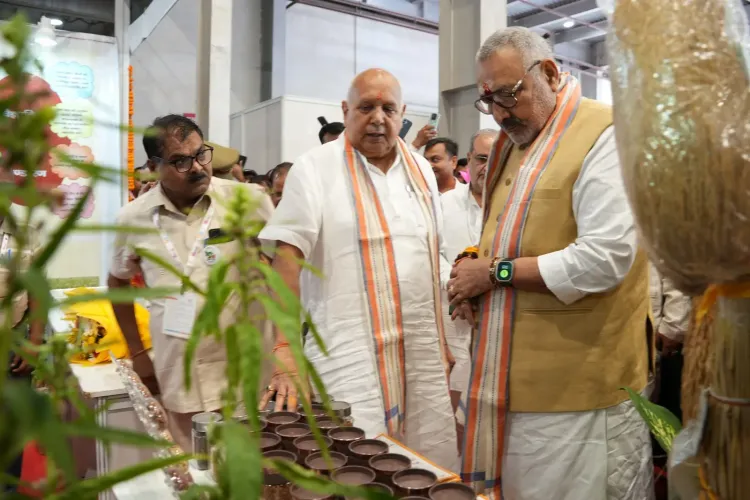
Union Textiles Minister Giriraj Singh toured the UP International Trade Show 2026, highlighting the state's ODOP scheme and MSME push as key pillars of Uttar Pradesh's ambitious goal to become a 1 trillion dollar economy through expanded trade and exports.
Key Takeaways
Union Textiles Minister Giriraj Singh visited the UP International Trade Show 2026 on September 29, 2026 and noted strong public participation.
The One District One Product (ODOP) scheme, launched in 2018 , promotes district-specific products from Uttar Pradesh and links artisans to global markets.
The MSME sector is central to UP's export strategy, with the trade show serving as a direct pipeline to domestic and international buyers.
Uttar Pradesh has targeted becoming a 1 trillion dollar economy , a goal embedded in state policy since 2022 .
Singh framed the trade show as advancing trade, investment and exports simultaneously — all three levers of the trillion-dollar target.
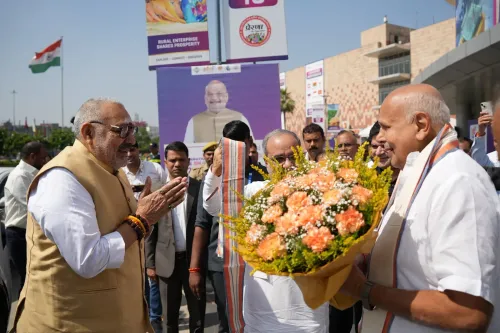
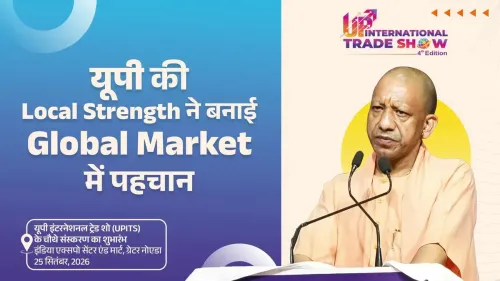
India's most populous state is pitching local crafts and cottage industries to the world — and Union Textiles Minister Giriraj Singh was on the floor of the UP International Trade Show 2026 on Tuesday, September 29 to see it firsthand. The minister toured the exhibition in Uttar Pradesh, where the energy of a large, enthusiastic crowd, he noted, gave the event a rare pulse.
Posting on X after his visit, Singh observed: 'The enthusiastic participation of a large number of people made the event even more vibrant. Through MSMEs and the One District One Product scheme, the effort to connect local products and entrepreneurs of Uttar Pradesh to the global market has intensified.'
What ODOP actually does on the ground
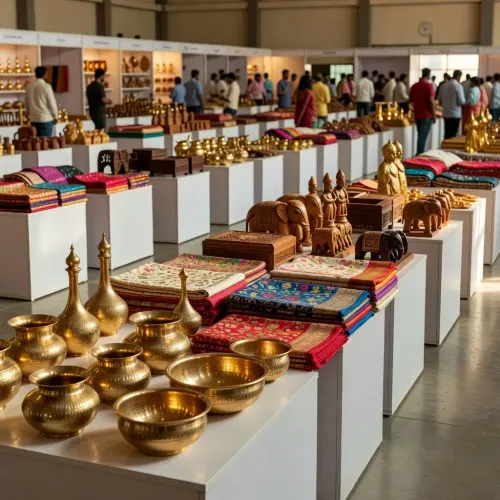
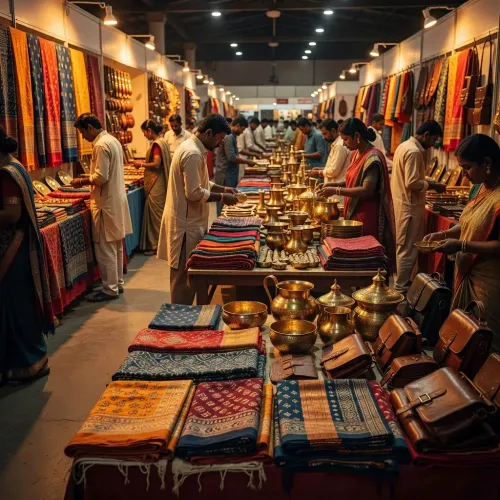
The One District One Product (ODOP) scheme, launched by the Uttar Pradesh government in 2018, is built around a simple but powerful idea: every district has a signature product — Varanasi's silk, Agra's leather, Moradabad's brassware, Lucknow's chikankari — and the state's job is to clear the runway so that product reaches buyers in Tokyo, Dubai, or Detroit, not just the nearest mandi. The scheme links artisans and small manufacturers to packaging support, branding, credit, and trade fair platforms exactly like the one Singh visited.
The MSME sector is the backbone here. It employs tens of millions of workers across Uttar Pradesh and contributes significantly to the state's manufacturing output. Integrating these units into export supply chains — rather than letting them serve only local demand — is the structural ambition behind every edition of the trade show.
The $1 trillion target and why the trade show fits in
Singh framed the exhibition explicitly within Uttar Pradesh's stated goal of becoming a 1 trillion dollar economy — a target the state government has anchored its policy documents to since 2022. 'Such efforts are playing an important role in advancing the goal of making Uttar Pradesh a 1 trillion dollar economy by giving momentum to trade, investment and exports,' he wrote.
At current size, Uttar Pradesh is one of India's largest state economies, but also one with significant headroom. Closing that gap requires exactly the kind of pipeline the ODOP-to-export chain is designed to build: formalised small producers, differentiated products with geographic identity, and a direct line to international buyers. Trade shows that bring those buyers into the same hall as a Varanasi weaver or a Kanpur leather artisan compress years of supply-chain development into a few conversations.
A national pattern, led from the states
Uttar Pradesh's approach is not unique — but it is among the most ambitious in scale. Across India, large states have increasingly used district-level product schemes to pull MSMEs into global value chains, running parallel to central government programmes on MSME formalisation, export credit, and trade-fair participation. What distinguishes UP's ODOP is the breadth of its product portfolio and the explicit link to a headline economic target that gives every scheme a scoreboard.
For Giriraj Singh — who as Union Textiles Minister oversees sectors including handlooms, handicrafts, and apparel that are deeply embedded in UP's district economy — the trade show visit is also a policy signal: central and state governments are aligned on using international platforms to move Indian artisan goods upstream in the value chain.
The next test is whether this year's footfall and buyer meetings translate into measurable export orders — the only metric that will move the trillion-dollar needle.
Point of View
Now in its eighth year, is evolving from a branding exercise into a serious export-integration tool, but its ultimate credibility will rest on verifiable export data rather than trade-show attendance. Singh's presence also reinforces the Textiles Ministry's stake in UP's artisan economy, signalling that handloom and handicraft exports remain a shared priority across Lucknow and New Delhi. The trillion-dollar framing, repeated consistently since 2022, is both a governance target and a political narrative — and events like this trade show are how that narrative gets grounded in tangible activity.
NationPress
29 Sept 2026
Frequently Asked Questions
What is the UP International Trade Show 2026?
It is a state-level exhibition platform organised in Uttar Pradesh to showcase local products — especially those promoted under the ODOP scheme — to domestic and international buyers, with the goal of boosting trade, investment and exports.
What is the One District One Product (ODOP) scheme?
ODOP is a Uttar Pradesh government initiative launched in 2018 that identifies a signature product for each district — such as Varanasi silk or Moradabad brassware — and connects local artisans and MSMEs to wider markets through branding, credit, and trade-fair support.
Why is Uttar Pradesh targeting a 1 trillion dollar economy?
Uttar Pradesh, India's most populous state, set a 1 trillion dollar economy target in policy documents from 2022 onward to drive industrial growth, export expansion, and employment — with MSME formalisation and schemes like ODOP serving as key levers.
Why did Union Textiles Minister Giriraj Singh visit the UP trade show?
As Union Minister of Textiles, Giriraj Singh oversees sectors like handlooms, handicrafts and apparel that are closely tied to UP's district economy; his visit signals central-government backing for the state's export-led growth strategy.
How does ODOP connect to India's broader MSME export push?
ODOP is part of a wider pattern across Indian states of using district-level product schemes to integrate MSMEs into global value chains, running alongside central government programmes on MSME formalisation, export credit and international trade-fair participation.