CM Fadnavis Pays Tribute to Deendayal Upadhyaya on Birth Anniversary
Synopsis
Maharashtra CM Devendra Fadnavis marked Pandit Deendayal Upadhyaya's birth anniversary on September 25, celebrating the Jana Sangh philosopher's twin legacies — Integral Humanism and Antyodaya — that continue to define BJP's ideological identity and welfare governance framework.
Key Takeaways
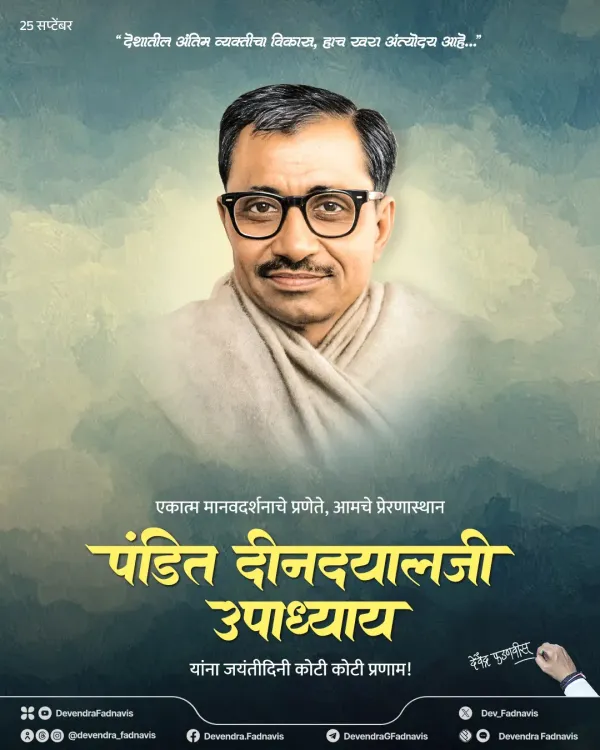
Maharashtra Chief Minister Devendra Fadnavis paid tribute to Pandit Deendayal Upadhyaya on his birth anniversary, September 25, 2026 .
Upadhyaya outlined Integral Humanism in four lectures in 1965 , which the BJP later adopted as its official ideology.
His Antyodaya concept — focusing on the upliftment of the poorest person — inspired the Antyodaya Anna Yojana launched by the NDA government in 2000 .
Fadnavis offered tribute in both English and Marathi, tagging the occasion as #AntyodayDivas .
BJP leaders across the country mark September 25 annually to reaffirm ideological continuity from the Jana Sangh era to present governance.
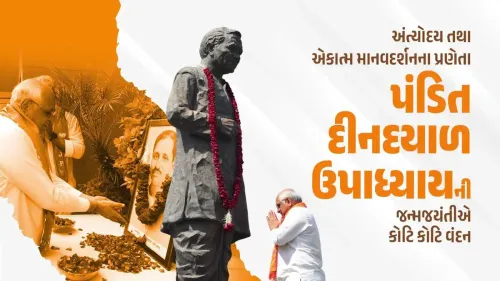
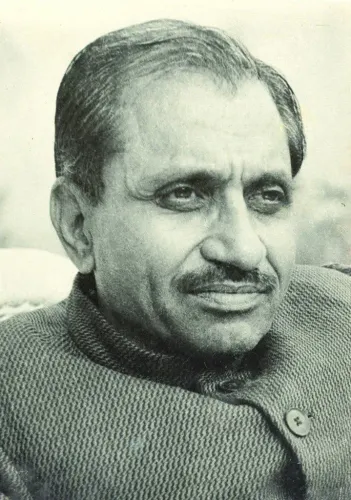
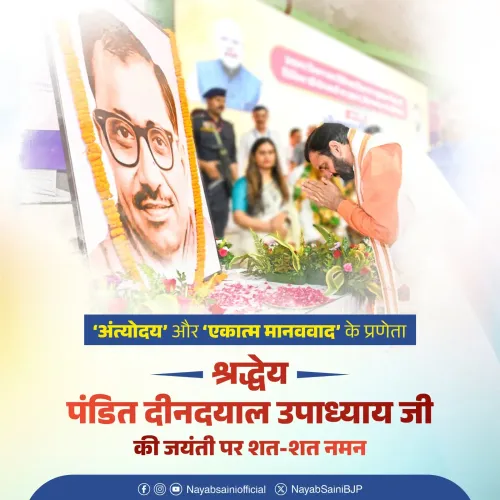
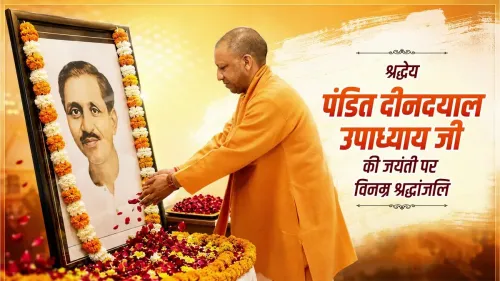
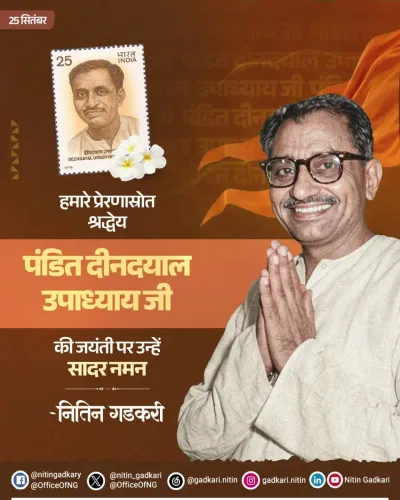
On the birth anniversary of one of independent India's most consequential ideological architects, Maharashtra Chief Minister Devendra Fadnavis on Friday, September 25, 2026 paid tribute to Pandit Deendayal Upadhyaya, hailing him as the visionary thinker behind Antyodaya and a lifelong inspiration to generations of public servants.
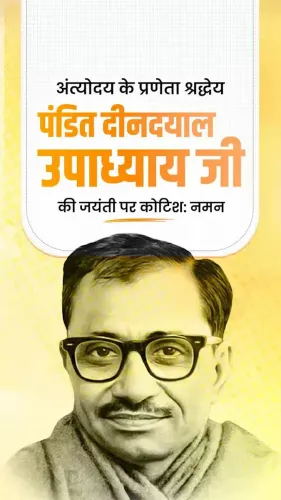
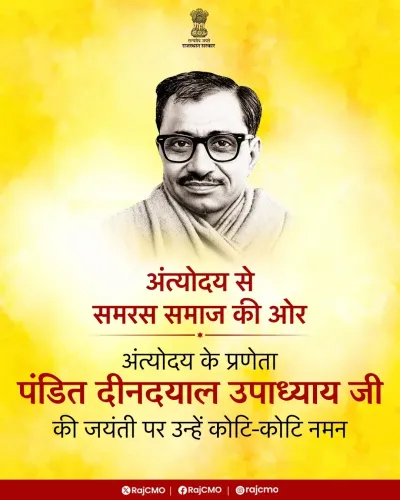
In his post, Fadnavis described Upadhyaya as 'a visionary thinker behind the concept of Antyodaya, a proponent of Integral Humanism, and a source of inspiration for generations.' In Marathi, he offered koti koti pranam — 'countless salutations' — to the philosopher on his birth anniversary, tagging the occasion with #AntyodayDivas.
The philosophy that shaped a party's identity
Pandit Deendayal Upadhyaya delivered four landmark lectures in 1965 that outlined his doctrine of Integral Humanism — a framework arguing that political and economic life must be anchored in the cultural and spiritual reality of Indian civilisation, not imported Western models. The Bharatiya Janata Party formally adopted Integral Humanism as its official guiding philosophy, making Upadhyaya's thought the ideological spine connecting the old Bharatiya Jana Sangh to the party's present form.
Equally enduring is his Antyodaya concept: the idea that the measure of any governance is what it delivers to the very last person — the poorest, most marginalised citizen. That principle later gave its name to the Antyodaya Anna Yojana, launched by the NDA government in 2000, which extended food-grain support to the most destitute households across the country.
Anniversary as a moment of ideological reaffirmation
Each year on September 25, BJP leaders from the Prime Minister's office down to state chief ministers mark Upadhyaya's birth anniversary with tributes that do more than honour a historical figure. The commemorations serve as a deliberate act of continuity — linking the party's current welfare agenda directly to a 60-year-old philosophical tradition. For Fadnavis, leading a state government in Maharashtra, invoking Antyodaya carries particular weight: it frames social-welfare outreach not as electoral calculation but as ideological obligation.
The annual ritual also signals to party workers and ideological fellow-travellers that the Jana Sangh roots remain central, even as the BJP governs at national scale. That narrative thread — from Upadhyaya's lecture halls to district-level welfare camps — is precisely what occasions like Antyodaya Divas are designed to keep visible.
Upadhyaya's thought may be six decades old, but the political grammar built around his name is very much a living instrument — one Maharashtra's chief minister invokes with deliberate intention every September.
Point of View
A BJP chief minister signals ideological continuity from the party's Jana Sangh origins to its current governance model. The Antyodaya framing is particularly useful in Maharashtra, where welfare outreach is a live political battleground. These commemorations function less as nostalgia and more as a restatement of governing philosophy — anchoring welfare spending in cultural-nationalist ideology rather than pure redistributive politics. Across BJP-governed states, the uniformity of such tributes on September 25 also reinforces intra-party cohesion around a shared ideological canon.
NationPress
25 Sept 2026
Frequently Asked Questions
Who was Pandit Deendayal Upadhyaya?
Pandit Deendayal Upadhyaya was an Indian political thinker and leader of the Bharatiya Jana Sangh who formulated the doctrine of Integral Humanism in 1965 and developed the Antyodaya concept focused on uplifting the poorest citizens.
What is Integral Humanism?
Integral Humanism is a political philosophy outlined by Upadhyaya in four lectures in 1965, arguing that governance must be rooted in India's cultural and civilisational identity rather than Western ideological frameworks. It was later adopted as the BJP's official guiding ideology.
What is Antyodaya Divas?
Antyodaya Divas is observed on September 25, the birth anniversary of Pandit Deendayal Upadhyaya, to commemorate his vision of uplifting the last and most marginalised person in society — the core of his Antyodaya philosophy.
What is the Antyodaya Anna Yojana?
Antyodaya Anna Yojana is a central government food-security scheme launched in 2000 by the NDA government, inspired by Upadhyaya's Antyodaya principle, to provide subsidised food grains to the poorest households in India.
Why does CM Devendra Fadnavis pay tribute to Deendayal Upadhyaya?
As a senior BJP leader, Fadnavis honours Upadhyaya because the party adopted his Integral Humanism as its foundational ideology. The tribute on his birth anniversary reinforces the BJP's ideological lineage and links current welfare governance in Maharashtra to Upadhyaya's Antyodaya vision.