CM Fadnavis: Maharashtra is GST Capital of India

Synopsis
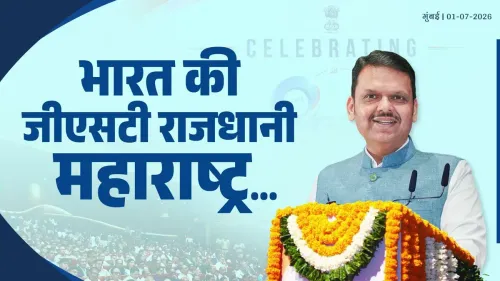
Maharashtra Chief Minister Devendra Fadnavis attended the 9th GST Day Celebrations in Mumbai on 1 July 2026, declaring Maharashtra the GST Capital of India. The state received nearly ₹1.87 lakh crore as its GST share last financial year, surpassing the combined collections of Karnataka and Gujarat.
Key Takeaways
CM Devendra Fadnavis attended the 9th GST Day Celebrations 2026 in Mumbai on 1 July 2026 .
Maharashtra received nearly ₹1.87 lakh crore as its GST share in the last financial year.
Maharashtra 's GST collections exceed the combined totals of Karnataka and Gujarat , ranked second and third nationally.
The late Union Finance Minister Arun Jaitley was credited for shaping the landmark GST reform.
GST 2.0 was highlighted as a structural step simplifying compliance and rationalising tax slabs for businesses.
Minister of State Adv.
Ashish Jaiswal and Mayor of Mumbai Ritutai Tawde were present at the event.
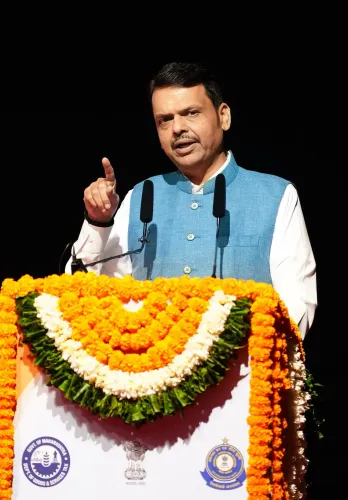
Maharashtra Chief Minister Devendra Fadnavis attended the 9th GST Day Celebrations 2026 in Mumbai on 1 July 2026, marking nine years since the Goods and Services Tax came into force, and declared Maharashtra the 'GST Capital of India' citing the state's record collections and consistent leadership in compliance.
Context
GST was introduced across India on 1 July 2017 through the 101st Constitutional Amendment, replacing a patchwork of central and state indirect taxes with a unified destination-based consumption tax under the slogan 'One Nation, One Tax'. The reform was steered under the leadership of Prime Minister Narendra Modi and piloted in Parliament by the late Union Finance Minister Arun Jaitley, whose contribution CM Fadnavis specifically acknowledged at the event. 'The invaluable contribution of the late Union Finance Minister Arun Jaitley ji in shaping this landmark reform will always be remembered,' he said.
The GST Council, constituted under Article 279A of the Constitution, serves as the apex decision-making body where the Centre and all state governments collectively arrive at consensus-based decisions on rates, exemptions, and compliance procedures. CM Fadnavis described the Council as 'one of the most significant pillars of the GST framework and a true example of cooperative federalism.'
Policy Backdrop
Maharashtra received nearly ₹1.87 lakh crore as its GST share during the last financial year, according to figures cited by CM Fadnavis. He stated that Maharashtra's GST collections exceed the combined collections of Karnataka and Gujarat, the states ranked second and third nationally — underscoring the state's outsized contribution to the national tax pool.
The Chief Minister also referenced GST 2.0, describing it as 'a bold and significant step wherein structural changes and rationalisation of tax slabs have benefited businesses by simplifying compliance and creating greater opportunities for growth.' Ongoing reforms aimed at improving the Ease of Doing Business were highlighted as a continuing priority for the administration.
Stakeholders and Impact
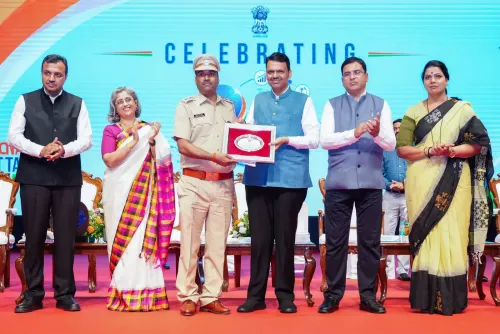
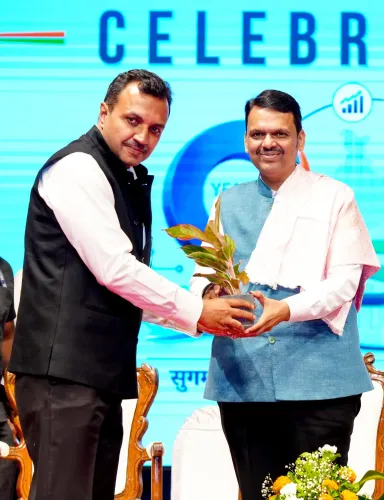
At the event, CM Fadnavis felicitated taxpayers and tax officers who received awards in recognition of their contributions to the taxation ecosystem. Minister of State Adv. Ashish Jaiswal and Mayor of Mumbai Ritutai Tawde were present alongside senior officials, signalling cross-institutional participation in marking the milestone.
For businesses operating in Maharashtra — which houses a dense concentration of large enterprises, MSMEs, and financial institutions — the emphasis on compliance simplification and slab rationalisation under GST 2.0 is directly relevant. Taxpayers who have navigated nine years of evolving GST norms stand to benefit from further procedural easing if the reforms articulated at the event are carried through.
What's Next
Attention will now turn to forthcoming GST Council meetings, where further rate rationalisation and compliance reforms under the GST 2.0 agenda are expected to be deliberated. Maharashtra's state budget presentations will also be watched closely for how the updated GST share feeds into fiscal planning. As the highest-contributing state, Maharashtra's revenue trajectory will remain a key indicator of the health of India's indirect tax architecture in its second decade.
Point of View
Reinforcing the state's fiscal primacy at a moment when the BJP-led government is keen to showcase developmental governance ahead of future electoral cycles. Citing collections that outpace Karnataka and Gujarat combined, the Chief Minister positions Maharashtra not merely as a revenue engine but as a model of compliance culture — a narrative that dovetails with the Centre's broader push for GST 2.0 reforms. The public tribute to Arun Jaitley also serves to anchor the reform's legacy firmly within the BJP's institutional memory. Taken together, the event signals that cooperative federalism in tax policy, long a talking point, is being actively leveraged as political capital by the ruling dispensation in India's richest state.
NationPress
2 Jul 2026
Frequently Asked Questions
Why is Maharashtra called the GST Capital of India?
Maharashtra is called the GST Capital of India because it is the highest GST-contributing state in the country, with collections that exceed the combined GST revenues of Karnataka and Gujarat, the second and third ranked states. CM Devendra Fadnavis made this declaration at the 9th GST Day Celebrations in Mumbai on 1 July 2026.
How much GST did Maharashtra collect in the last financial year?
According to CM Devendra Fadnavis, Maharashtra received nearly ₹1.87 lakh crore as its GST share during the last financial year, reflecting unprecedented growth in state-level GST collections.
When was GST introduced in India?
GST was introduced in India on 1 July 2017, following the 101st Constitutional Amendment, replacing multiple central and state indirect taxes with a single unified tax under the concept of 'One Nation, One Tax.' The 9th GST Day on 1 July 2026 marks nine years since its launch.
What is the GST Council and what role does it play?
The GST Council is the apex federal body constituted under Article 279A of the Constitution, comprising representatives of the Central Government and all state governments. It takes consensus-based decisions on GST rates, exemptions, and compliance rules, and is considered a key institution of cooperative federalism in India.