CM Fadnavis: Mahayuti has done more for Marathas than any past govt

Synopsis
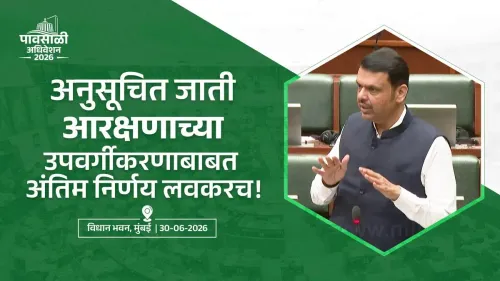
Maharashtra CM Devendra Fadnavis, speaking in Nagpur on 29 July 2026, claimed the Mahayuti government has taken more decisions for the Maratha community than any prior state government — a politically charged assertion set against the backdrop of the struck-down SEBC Act and ongoing reservation debates.
Key Takeaways
Devendra Fadnavis made the statement in Nagpur on 29 July 2026 , delivering it in both Marathi and Hindi.
He claimed the Mahayuti government has taken more decisions for the Maratha community than any previous Maharashtra government.
The SEBC Act 2018 , passed during Fadnavis's first term, granted 16% reservation for Marathas but was struck down by the Supreme Court for breaching the 50% ceiling .
The claim is part of ongoing political competition among Maharashtra's major alliances to demonstrate delivery on Maratha welfare.
No specific new schemes or verified statistics beyond the SEBC Act were cited in the post.
Court proceedings on any fresh reservation measures remain the next critical test of these claims.
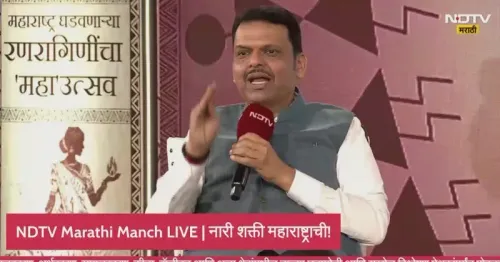
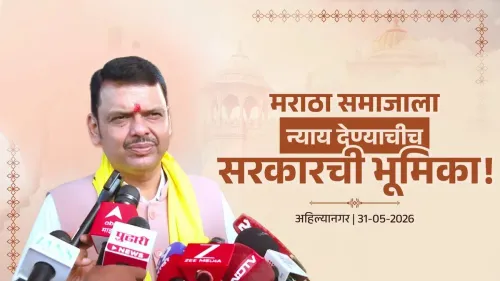
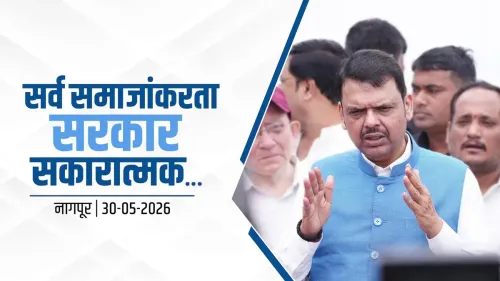
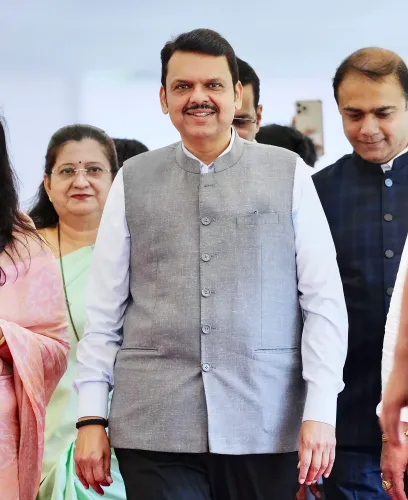
Speaking in Nagpur on 29 July 2026, Maharashtra Chief Minister Devendra Fadnavis made a sweeping claim that the Mahayuti government has delivered more decisions for the Maratha community than any previous administration in the state's history — a statement that lands squarely in the middle of one of Maharashtra's most contested political fault lines.
Addressing the gathering in both Marathi and Hindi, Fadnavis said: 'Mahayuti sarkarane Maratha samajasathi jevadhe nirnay ghetle, tevadhe nirnay yapurvi kontyahi sarkarane ghetale nahit' — 'The decisions taken by the Mahayuti government for the Maratha community have not been matched by any government before it.' The bilingual delivery — Marathi first, then Hindi — was deliberate, pitching the message simultaneously at a local audience and a national one.
The long shadow of the SEBC Act
The claim carries historical weight. During Fadnavis's first term as Chief Minister, the state enacted the Socially and Educationally Backward Classes (SEBC) Act, 2018, which carved out 16% reservation for Marathas in education and government jobs. The Supreme Court of India struck it down, ruling that it breached the constitutionally mandated 50% ceiling on total reservations — a blow that reignited community frustration and kept the issue politically alive.
Multiple state governments across different alliance configurations have since constituted committees to assess Maratha backwardness, each attempting to build a legally defensible case for reservation while managing fierce pushback from OBC groups who see any Maratha quota as a threat to their own entitlements.
A political contest over who delivered
Fadnavis's assertion is not made in a vacuum. It is a direct counter-narrative to opposition claims that the Mahayuti alliance — comprising BJP and its partners — has failed to secure lasting, court-proof relief for the community. The competitive politics of Maratha welfare have defined Maharashtra's electoral arithmetic for nearly a decade, with every major party racing to plant its flag as the community's true champion.
What specific decisions the Chief Minister is pointing to beyond the 2018 SEBC Act was not detailed in the post. Court proceedings on any fresh reservation measures and their implementation through government orders remain the next critical test of whether the political claim can be translated into durable legal reality.
The Maratha reservation question has never been just a welfare debate — it is a stress test for India's entire reservation architecture. How Fadnavis backs this claim with verifiable, court-proof action will determine whether it lands as a legacy or as another promise absorbed by the long, unresolved struggle.
Point of View
Positioning the BJP's Maharashtra chapter as a model for caste-sensitive governance nationally. Yet the assertion is legally and politically vulnerable: the flagship SEBC Act was annulled by the Supreme Court, and without a verifiable list of new, court-proof measures, the claim risks being contested as rhetoric. The real test is whether the Mahayuti government can convert this political narrative into durable policy that survives judicial scrutiny — the one arena where past governments, including Fadnavis's own first term, have fallen short.
NationPress
29 Jul 2026
Frequently Asked Questions
What did CM Devendra Fadnavis say about the Maratha community in Nagpur?
On 29 July 2026 in Nagpur , CM Fadnavis claimed that the Mahayuti government has taken more decisions for the Maratha community than any previous Maharashtra government, delivering the statement in both Marathi and Hindi.
What is the SEBC Act 2018 and why was it struck down?
The Socially and Educationally Backward Classes (SEBC) Act, 2018 was passed during Fadnavis's first term as CM, granting 16% reservation for Marathas in education and government jobs. The Supreme Court of India struck it down because it pushed total reservations beyond the constitutionally mandated 50% ceiling .
What is the Mahayuti alliance in Maharashtra?
Mahayuti is the ruling political alliance in Maharashtra, anchored by the BJP and its partner parties. It has been in power in the state and has made Maratha welfare a central plank of its governance agenda.
Why is Maratha reservation such a sensitive issue in Maharashtra?
Marathas are a numerically dominant community in Maharashtra who have long demanded reservations in education and government jobs. Their demand conflicts with OBC groups who fear erosion of their own quotas, and any reservation measure must also survive Supreme Court scrutiny on the 50% ceiling — making it one of Maharashtra's most complex political and legal challenges.
What happens next on Maratha reservation after Fadnavis's statement?
The key developments to watch are further Supreme Court proceedings on any fresh reservation legislation and the release of specific government orders or schemes that back Fadnavis's claim of unprecedented decisions for the Maratha community.