CM Fadnavis Marks Modi's 25 Years of Public Service
Synopsis
Maharashtra CM Devendra Fadnavis marked PM Narendra Modi's 25 years in executive office on 7 October 2026, invoking 'unshakeable public faith' in the Viksit Bharat vision and framing the milestone as inspiration for India's 2047 development goal.
Key Takeaways
Maharashtra CM Devendra Fadnavis posted a tribute on 7 October 2026 marking 25 years of PM Modi in executive public office under #25YearsOfSeva .
Fadnavis wrote in both Marathi and Hindi , signalling outreach to Maharashtra's vernacular base and a broader national audience.
The post invokes Viksit Bharat — the BJP government's 'Developed India' target for 2047 — linking the anniversary to a forward national goal.
Modi's 25-year run in executive roles spans Chief Ministership of Gujarat from 2001 and Prime Ministership from 2014 .
The tribute, accompanied by a video, is part of a coordinated BJP anniversary push across state leaderships.
Twenty-five years in public office is a milestone that demands reckoning — and on Wednesday, 7 October 2026, Maharashtra Chief Minister Devendra Fadnavis used the occasion to underscore what he called the people's 'unshakeable faith' in Prime Minister Narendra Modi's vision of a developed India, as the hashtag #25YearsOfSeva marked a quarter-century since Modi first assumed elected executive office.
Writing in both Marathi and Hindi, Fadnavis declared: 'Sevā, samarpaṇ āṇi vikāsācyā pravāsāsoh... vikasit Bhāratavcā saṅkalp sākār karṇyāsāṭhī preraṇādāyī ṭharaṭo āhe' — 'The people's trust in the journey of service, dedication and development, and in the resolve of Viksit Bharat, has once again been underlined today. This very trust of the people is the inspiration for realising the Viksit Bharat resolve.'
A Quarter-Century of Modi in Executive Office
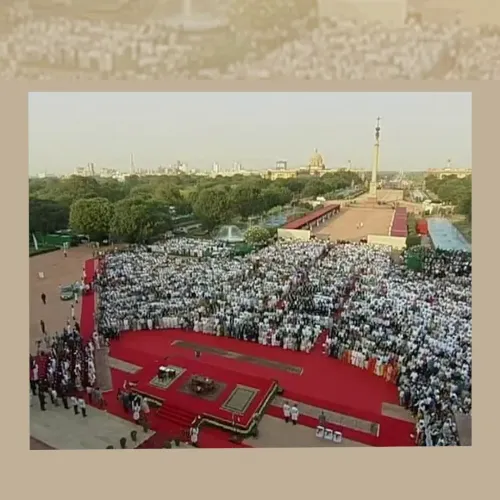
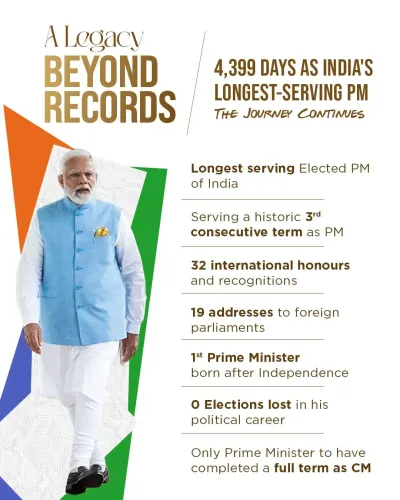
Narendra Modi was sworn in as Chief Minister of Gujarat in October 2001, beginning an unbroken run in top executive roles that would eventually carry him to South Block as Prime Minister in May 2014. The 25-year mark — spanning two terms as Gujarat CM and now over a decade as PM — is being commemorated by the BJP as a symbol of sustained governance continuity, a deliberate contrast with what the party has long described as the instability of coalition governments before 2014.
Viksit Bharat and the Sentiment Behind the Post
The phrase Viksit Bharat — 'Developed India' — is the overarching policy ambition the Modi government has set for 2047, India's centenary of independence. Fadnavis's invocation of the phrase links the anniversary moment to a forward-looking national target, framing the past 25 years not as nostalgia but as foundation. As a senior BJP leader and the chief minister of India's most economically significant state, Fadnavis's endorsement carries political weight that travels beyond a routine congratulatory post.
The post, accompanied by a video, is part of a coordinated BJP ecosystem tribute rolling out across the party's state leaderships. Fadnavis's choice to write simultaneously in Marathi and Hindi signals a deliberate outreach — to Maharashtra's vernacular base and to a broader Hindi-speaking national audience — on a day the party is treating as a moment of institutional reflection.
Twenty-five years on, the question the BJP is daring its critics to answer is simple: has the faith held? Fadnavis's answer, at least today, is an emphatic yes — and he is betting that Maharashtra's electorate agrees.
Point of View
By design, electorally untestable today. As Maharashtra's CM, Fadnavis is also quietly burnishing his own credentials as one of Modi's most reliable second-tier voices, a positioning that matters in any future leadership calculus within the BJP.
NationPress
7 Oct 2026
Frequently Asked Questions
Why is BJP celebrating Modi's 25 years of seva in 2026?
PM Narendra Modi first took oath as Chief Minister of Gujarat in October 2001, making October 2026 the 25th anniversary of his unbroken tenure in executive public office. The BJP is marking this as '25 Years of Seva' across its leadership.
What is Viksit Bharat that Fadnavis mentions?
Viksit Bharat, meaning 'Developed India', is the Modi government's long-term policy ambition to make India a fully developed nation by 2047, the centenary of independence.
Why did Fadnavis write the post in both Marathi and Hindi?
As Maharashtra's Chief Minister, Fadnavis addressed both the state's Marathi-speaking electorate and the broader Hindi-speaking national audience — a dual-language strategy common in Maharashtra's political communications.
What does #25YearsOfSeva mean?
'Seva' means service. The hashtag #25YearsOfSeva marks 25 years since PM Modi entered executive public life as Gujarat's Chief Minister in October 2001.
How long has Narendra Modi been Prime Minister of India?
Narendra Modi has been Prime Minister of India since May 2014, currently serving his third consecutive term. Before that he served as Chief Minister of Gujarat from 2001 to 2014.