CM Fadnavis meets student delegation on MPSC offline exams
Synopsis
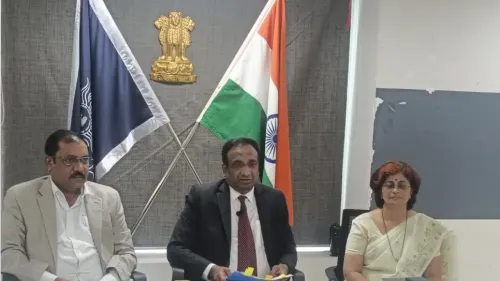
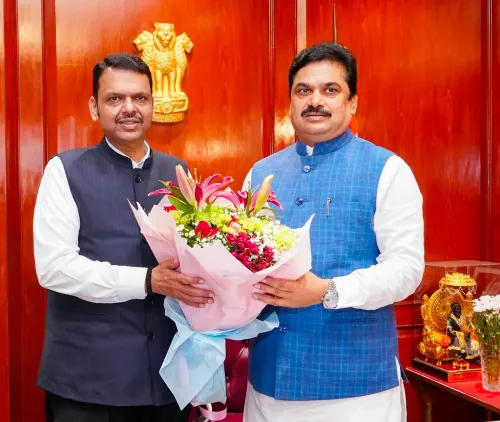
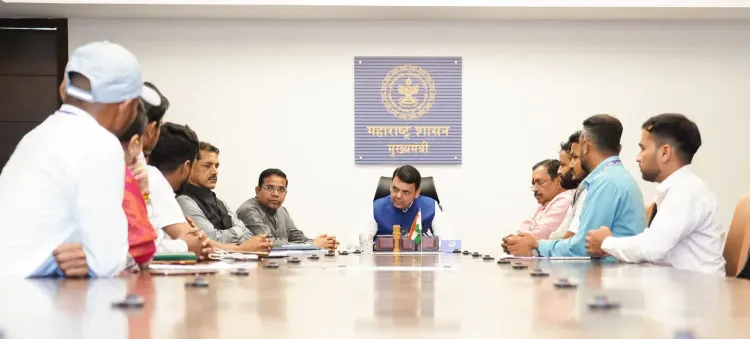
A student delegation met Chief Minister Devendra Fadnavis at Mantralaya, Mumbai, on 14 July 2026, urging that Maharashtra Public Service Commission exams be conducted offline. MLA Abhimanyu Pawar was among those present, adding legislative weight to the aspirants' long-standing demand over exam-mode equity.
Key Takeaways
A student delegation met CM Devendra Fadnavis at Mantralaya, Mumbai on 14 July 2026 at 1:35 PM .
The delegation urged that Maharashtra Public Service Commission (MPSC) examinations be held in offline (pen-and-paper) mode .
MLA Abhimanyu Pawar and other dignitaries accompanied the student delegation, lending legislative support to the demand.
The MPSC has alternated between online and offline exam formats since 2020 , with recurring equity concerns from rural aspirants.
A formal government directive or fresh MPSC notification on examination mode for upcoming recruitment cycles is now awaited.
The issue affects lakh of aspirants across Maharashtra, particularly those from regions with limited digital infrastructure.
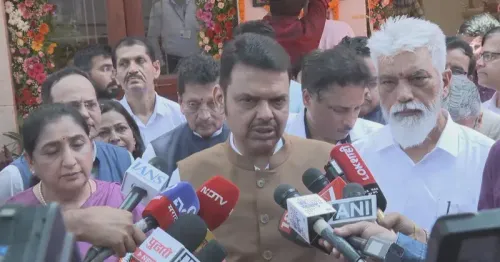
The Chief Minister's Office of Maharashtra announced on Tuesday, 14 July 2026, that a student delegation called on Chief Minister Devendra Fadnavis at Mantralaya, Mumbai, to press for the Maharashtra Public Service Commission (MPSC) examinations to be conducted in offline mode. MLA Abhimanyu Pawar and other dignitaries were present at the meeting, which took place at 1:35 PM.
Context
The delegation's visit centred on a long-standing demand among MPSC aspirants: that competitive recruitment examinations be held in the traditional pen-and-paper (offline) format rather than computer-based online mode. The Chief Minister's Office confirmed the meeting in a trilingual post — in English, Marathi, and Hindi — underscoring the broad public interest the issue commands across Maharashtra's linguistic communities.
The post quoted the official account: 'विद्यार्थ्यांच्या शिष्टमंडळाने भेट घेतली' ('a student delegation called on [the Chief Minister]'), with MLA Abhimanyu Pawar accompanying the students as a legislative representative of their concerns.
Policy Backdrop
The Maharashtra Public Service Commission, a constitutional body that recruits candidates for state civil services, has alternated between online and offline examination formats since 2020, responding to recurring feedback about technical failures, digital infrastructure gaps, and equity concerns. Each shift in exam mode has triggered fresh representations from aspirant communities, particularly from rural Maharashtra where reliable internet access and familiarity with computer-based testing remain uneven.
The broader national pattern mirrors Maharashtra's experience: state public service commissions across India have faced similar pressure from student groups arguing that online exams disadvantage candidates from areas with poor digital infrastructure. For MPSC, which manages recruitment to thousands of Class A, B, and C posts annually, the choice of examination mode carries significant implications for who can effectively compete.
Stakeholders and Impact
MPSC aspirants — numbering in the lakhs across Maharashtra — are the primary stakeholders. Rural and semi-urban candidates, who often lack reliable access to computers and high-speed internet, have consistently advocated for offline exams on grounds of fairness. Coaching institutes and student organisations in cities such as Pune, Nashik, Aurangabad, and Nagpur have periodically rallied behind this demand.
MLA Abhimanyu Pawar's presence at the meeting signals legislative backing for the student position, adding political weight to what has historically been framed as an administrative or logistical question. The involvement of elected representatives often accelerates government response on examination-policy matters.
What's Next
Observers will watch for any formal policy directive from the state government or a fresh notification from the MPSC clarifying the examination mode for upcoming recruitment cycles. A government decision in favour of offline exams would require the commission to arrange physical examination centres across Maharashtra's 36 districts — a logistically intensive exercise but one that has been executed successfully in previous cycles.
The outcome of this meeting could set a precedent for how the Fadnavis government balances its administrative modernisation agenda with the equity demands of a large and politically active aspirant community ahead of future state recruitment drives.
Point of View
Suggesting the ruling alliance is attuned to the electoral salience of the issue. The MPSC exam-mode debate sits at the intersection of Maharashtra's digital-infrastructure ambitions and the ground reality of unequal access, a tension that state governments across India have struggled to resolve cleanly. How the Fadnavis administration responds will be read as a litmus test of its commitment to inclusive recruitment policy.
NationPress
14 Jul 2026
Frequently Asked Questions
Why are students demanding MPSC exams be held offline?
Students argue that online computer-based exams disadvantage candidates from rural Maharashtra where internet access and computer familiarity are limited, making offline pen-and-paper exams a fairer option for all aspirants.
What is the Maharashtra Public Service Commission (MPSC)?
The Maharashtra Public Service Commission is a constitutional body responsible for recruiting candidates to state civil service posts through competitive examinations, covering Class A, B, and C government positions across Maharashtra.
Who met CM Devendra Fadnavis on 14 July 2026 regarding MPSC exams?
A student delegation met CM Devendra Fadnavis at Mantralaya, Mumbai, on 14 July 2026, with BJP MLA Abhimanyu Pawar and other dignitaries also present at the meeting.
Has MPSC conducted exams offline before?
Yes, the MPSC has alternated between online and offline examination formats since 2020, conducting offline exams in previous recruitment cycles before shifting to computer-based testing amid periodic reviews.
What happens next after the student delegation met CM Fadnavis?
A formal policy directive from the Maharashtra government or a fresh MPSC notification clarifying the examination mode for upcoming recruitment cycles is now awaited following the meeting.