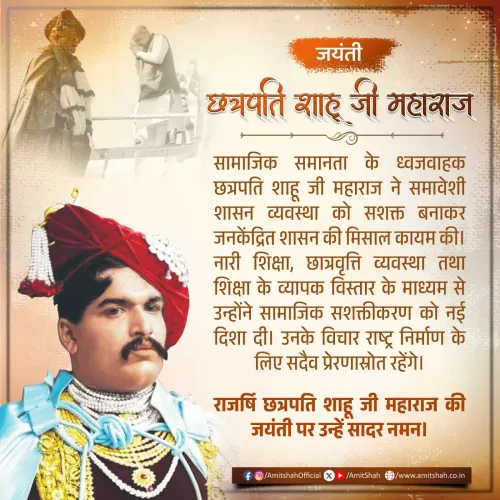
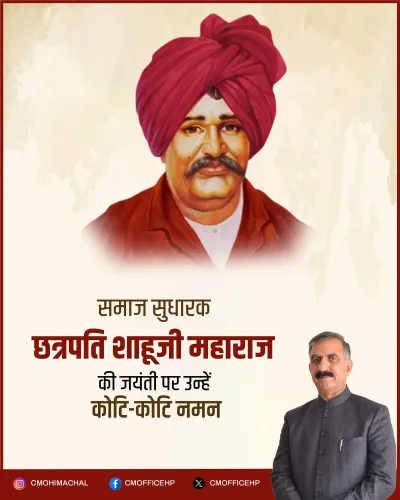
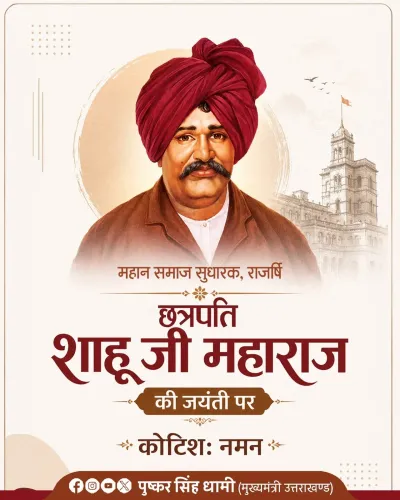
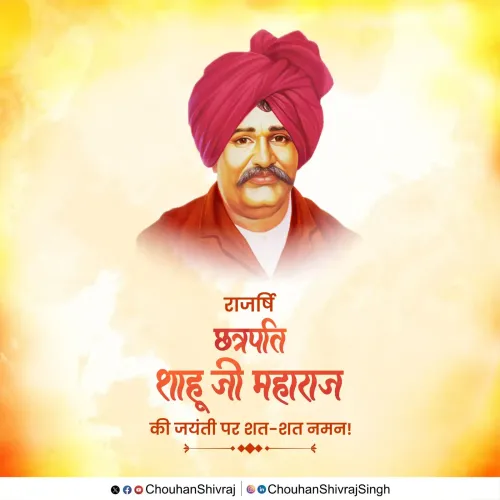
CM Fadnavis Pays Tribute to Chhatrapati Shahu Maharaj
Synopsis
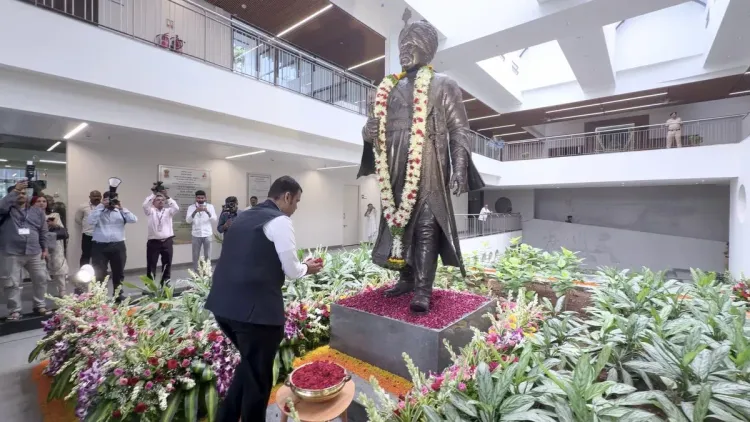
The Chief Minister's Office of Maharashtra on 26 June 2026 paid tribute to Chhatrapati Shahu Maharaj, the Kolhapur ruler who pioneered reservation policies and education access for backward classes in the early 20th century, invoking his legacy alongside CM Devendra Fadnavis.
Key Takeaways
The Chief Minister's Office of Maharashtra posted a tribute to Chhatrapati Shahu Maharaj on 26 June 2026 .
Chhatrapati Shahu Maharaj (1874–1922) was the ruler of Kolhapur and is credited with introducing some of India's earliest reservation policies for backward classes.
Chief Minister Devendra Fadnavis was associated with the tribute in the official post.
Maharashtra governments have a consistent pattern of commemorating Shahu Maharaj's legacy, particularly in the context of social justice and education.
The tribute is significant for the Maratha community and OBCs , whose institutional protections trace back to Shahu Maharaj's reforms.
Policy announcements linked to backward-class welfare or education may follow in the coming weeks.
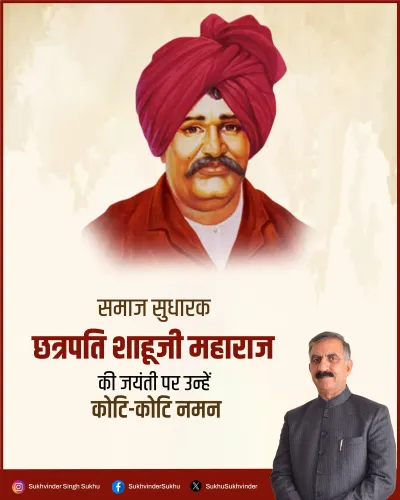
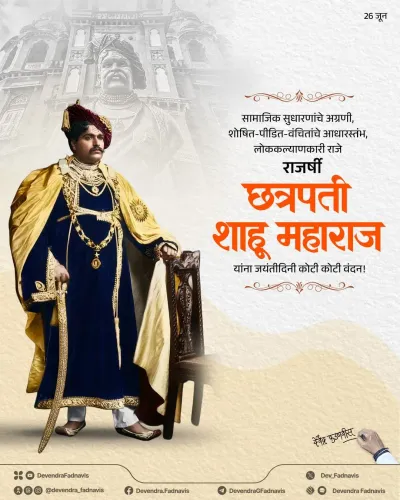
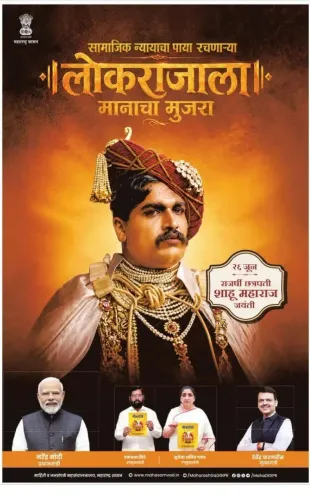
The Chief Minister's Office of Maharashtra on Friday, 26 June 2026 posted a tribute on X honouring Chhatrapati Shahu Maharaj, invoking the legacy of the reformist ruler of Kolhapur alongside Chief Minister Devendra Fadnavis.
Context
Chhatrapati Shahu Maharaj (1874–1922) was the ruler of the princely state of Kolhapur in present-day Maharashtra. He is widely regarded as a pioneering champion of social justice in the region, having introduced some of India's earliest reservation policies for backward classes and actively promoted access to education for marginalised communities.
His reign is credited with dismantling caste-based barriers in state employment and public institutions at a time when such reforms were rare across the subcontinent. His legacy remains deeply significant to the Maratha community and Other Backward Classes (OBCs) across Maharashtra.
Policy Backdrop
Maharashtra governments across political formations have observed annual commemorations of Shahu Maharaj's birth and death anniversaries, using such occasions to reaffirm commitments to social welfare and educational equity. These observances are embedded in the state's broader political culture of invoking pre-independence reformist figures.
The tribute comes amid ongoing state-level debates around reservation policies, access to higher education for backward classes, and the Maratha quota question — issues that directly trace their ideological lineage to Shahu Maharaj's foundational reforms. Official messaging that references such historical figures is a consistent pattern in Maharashtra's political communications, connecting contemporary governance with a regional identity rooted in social justice.
Stakeholders and Impact
The tribute carries resonance for several communities across Maharashtra, particularly the Maratha community, OBCs, and Scheduled Castes who trace the origins of their institutional protections to Shahu Maharaj's era. For these groups, state-level recognition of his legacy is both symbolic affirmation and a signal of policy intent.
Chief Minister Devendra Fadnavis, who heads the current state government, has previously aligned his administration with the legacies of Maharashtra's historical reformers as part of a broader governance narrative. Such commemorations also carry political weight in a state where questions of social representation remain electorally sensitive.
What's Next
Observers will watch for any policy announcements or scheme launches in the coming weeks that the state government may link to Shahu Maharaj's reform legacy — particularly in the domains of education access, backward-class welfare, or reservation implementation. State-level commemorative events tied to the tribute may follow in subsequent days.
The broader pattern of invoking Maharashtra's reformist rulers suggests that such messaging often precedes or accompanies substantive policy steps, making this tribute worth tracking in the context of the state's social welfare agenda.
Point of View
The government seeks to position itself within Maharashtra's long reformist tradition — a tradition that cuts across caste lines and carries broad popular legitimacy. Such commemorations rarely exist in isolation; they often serve as ideological scaffolding for forthcoming policy moves on OBC welfare or educational access. Tracking what follows this tribute in terms of scheme announcements will be as important as the tribute itself.
NationPress
26 Jun 2026
Frequently Asked Questions
Who was Chhatrapati Shahu Maharaj?
Chhatrapati Shahu Maharaj (1874–1922) was the ruler of the princely state of Kolhapur in Maharashtra. He is celebrated for introducing early reservation policies for backward classes and promoting education access for marginalised communities, making him a foundational figure in India's social justice movement.
Why did Maharashtra's CMO pay tribute to Shahu Maharaj?
The Chief Minister's Office of Maharashtra posted a tribute on 26 June 2026 to honour Chhatrapati Shahu Maharaj's legacy of social reform. Maharashtra governments regularly commemorate historical reformist rulers to connect contemporary governance with the state's social justice tradition.
What is Devendra Fadnavis's connection to the Shahu Maharaj tribute?
Devendra Fadnavis is the Chief Minister of Maharashtra, and the tribute was posted by his official office. The CMO's post associated Fadnavis with the commemoration, reflecting the government's alignment with Shahu Maharaj's reformist legacy.
What reforms is Chhatrapati Shahu Maharaj known for?
Shahu Maharaj is known for introducing some of India's earliest reservation policies in state employment and public institutions, actively supporting education for backward classes and Scheduled Castes, and dismantling caste-based barriers in Kolhapur state during his reign in the early 20th century.
Which communities does Shahu Maharaj's legacy matter to in Maharashtra?
His legacy is particularly significant to the Maratha community, Other Backward Classes (OBCs), and Scheduled Castes in Maharashtra, whose access to institutional protections and education has historical roots in the reforms Shahu Maharaj implemented during his rule of Kolhapur.