Kishan Reddy Hails India's Rise as Defence Manufacturing Power
Synopsis
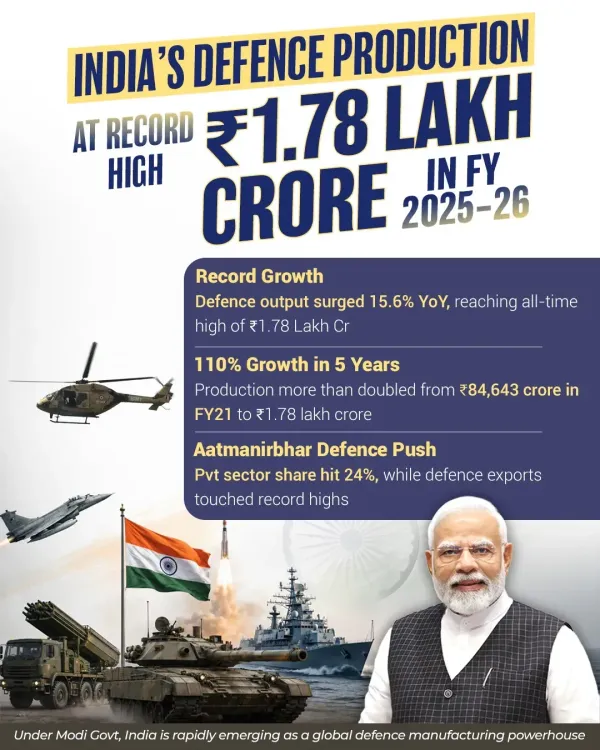
Union Minister G. Kishan Reddy on 26 June 2026 praised India's emergence as a global defence manufacturing hub, attributing the shift from top importer to self-sufficient producer to PM Modi's Aatmanirbhar Bharat initiative and the government's Defence Production and Export Promotion Policy.
Key Takeaways
Kishan Reddy , Union Coal and Mines Minister and BJP Telangana president, on 26 June 2026 posted on X highlighting India's defence manufacturing transformation.
India was historically over 70 per cent import-dependent for defence requirements before the current policy push began in 2014 .
The Aatmanirbhar Bharat initiative, announced in May 2020 , placed defence indigenisation at its core, including import bans on specified items and increased R&D funding.
The Defence Production and Export Promotion Policy (2020) set a target of $5 billion in annual defence exports, with private sector participation as a key driver.
Defence corridors in Uttar Pradesh and Tamil Nadu and liberalised FDI norms have been central structural enablers of the policy.
The next Union Budget and upcoming defence expos will be key indicators of sustained policy momentum.
Union Coal and Mines Minister and BJP Telangana state president G. Kishan Reddy on Friday, 26 June 2026, championed India's growing stature as a global defence manufacturing powerhouse, crediting Prime Minister Narendra Modi's Aatmanirbhar Bharat initiative for driving the country's shift from a top arms importer to an increasingly self-sufficient producer and exporter.
Context
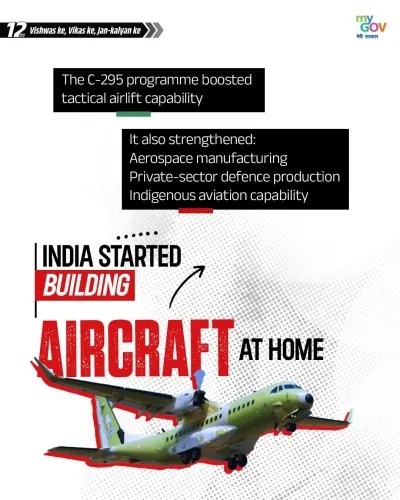
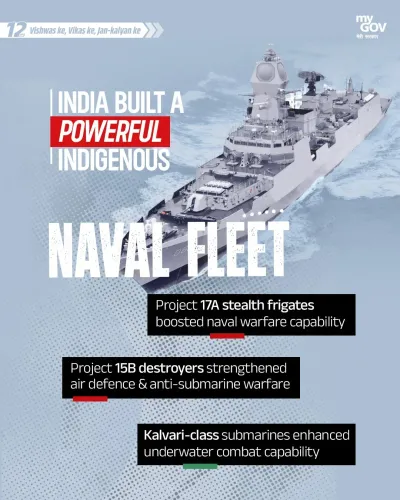
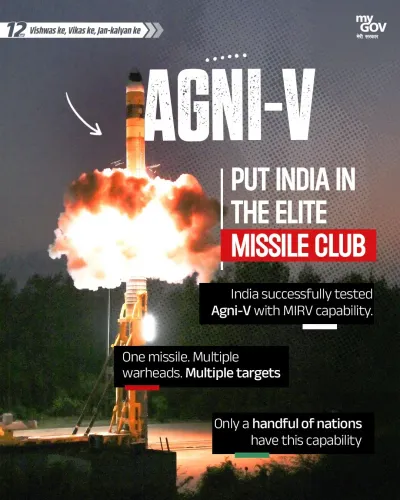
In his post on X, Kishan Reddy outlined two pillars of the transformation: 'Self-Reliance' — described as a shift from being a top importer to a self-sufficient domestic manufacturer — and 'Global Footprint', framed as scaling 'record-breaking exports and empowering private sector innovation.' He attributed this trajectory to the Modi government's 'foresight' in securing borders while building a stronger economy.
The minister's remarks reflect a broader messaging effort by the ruling Bharatiya Janata Party to highlight defence indigenisation as a flagship achievement of the Modi government, particularly under the Aatmanirbhar Bharat banner announced in May 2020.
Policy Backdrop
India's defence self-reliance push has deep policy roots. The Make in India programme, launched in September 2014, explicitly included defence manufacturing to reduce dependence on foreign suppliers. Successive revisions to defence procurement procedures, beginning in 2016, introduced higher indigenous content requirements and gave priority to domestic firms.
The Aatmanirbhar Bharat announcement of May 2020 earmarked additional funding for domestic defence research and development and imposed import bans on a growing list of items. The Defence Production and Export Promotion Policy, released in August 2020, set an ambitious target of $5 billion in annual defence exports by 2024. Before 2014, India was among the world's largest arms importers, with over 70 per cent of its defence requirements met through foreign procurement.
Private sector participation has been a key structural shift, with the government opening up defence corridors in Uttar Pradesh and Tamil Nadu and easing foreign direct investment norms to attract domestic and global manufacturers.
Stakeholders and Impact
The policy arc directly affects India's armed forces, which are the primary consumers of indigenously developed equipment, as well as domestic defence manufacturers — both public-sector undertakings and a fast-growing private sector ecosystem. For private firms, expanded procurement pipelines and export clearances have opened new revenue streams.
Strategically, reduced import dependence is framed as enhancing India's autonomy in foreign and security policy, reducing vulnerability to supply disruptions during regional tensions. Kishan Reddy's framing — 'securing our borders' alongside 'driving a stronger, self-reliant India' — underscores the dual economic and strategic rationale the government consistently advances.
What's Next
Analysts and industry watchers will look to the next Union Budget for allocations to defence capital procurement and research and development as a measure of the government's continued commitment. Major defence exhibitions such as DefExpo and Aero India serve as periodic showcases for new export orders and private-sector project announcements, and are likely to be cited as evidence of the policy's momentum. As India positions itself as a credible defence exporter to friendly nations, the scale and diversity of its export order book will be the clearest test of whether the Aatmanirbhar Bharat vision has translated into durable industrial capacity.
Point of View
Self-reliant India' narrative ahead of any electoral or budgetary cycle. The choice of defence — a domain that blends national security sentiment with economic nationalism — maximises the message's resonance across voter segments. As a minister whose portfolio is in coal and mines, not defence, his amplification signals a coordinated party-wide messaging push rather than a ministry-specific announcement. The post's emphasis on 'record-breaking exports' and 'private sector innovation' also tracks the government's effort to credit its reforms with outcomes that were set in motion by a multi-year policy pipeline, a framing that opposition parties are likely to contest by pointing to gaps between targets and verified outcomes.
NationPress
26 Jun 2026
Frequently Asked Questions
What is Aatmanirbhar Bharat in defence?
Aatmanirbhar Bharat in defence refers to India's self-reliance initiative announced in May 2020 that aims to reduce import dependence by boosting domestic manufacturing, banning imports of specified items, increasing R&D funding, and promoting private sector participation in defence production.
Is India now a defence exporter?
Yes, India has been growing its defence exports since the launch of the Make in India programme in 2014 and the Defence Production and Export Promotion Policy of 2020, which set a target of $5 billion in annual exports; however, specific current export figures for 2026 are not independently verified in this report.
What did G. Kishan Reddy say about India's defence sector?
On 26 June 2026, Union Minister G. Kishan Reddy posted on X stating that India is 'rapidly emerging as a global defence manufacturing powerhouse,' crediting PM Modi's Aatmanirbhar Bharat vision for shifting India from a top importer to a self-sufficient manufacturer with a growing global export footprint.
What is India's Defence Production and Export Promotion Policy?
The Defence Production and Export Promotion Policy, released in August 2020, is a government policy document that sets targets for domestic defence manufacturing and exports, including a $5 billion annual export target by 2024, and outlines steps to encourage private sector involvement.
How has India reduced defence imports under Modi government?
Since 2014, the government has revised defence procurement procedures to mandate higher indigenous content, banned imports of over 300 items, established defence industrial corridors, and liberalised FDI norms — reducing a historic over-70-per-cent import dependence through a series of structural reforms.