Kishan Reddy Highlights 12 Years of India's Defence Self-Reliance
Synopsis
Union Minister G. Kishan Reddy on June 17, 2026 highlighted India's 12-year defence indigenisation journey, citing INS Arihant, INS Vikrant and hypersonic missile technology as milestones in building strategic self-reliance and safeguarding national sovereignty.
Key Takeaways
Kishan Reddy , Union Coal and Mines Minister and BJP Telangana president, posted on June 17, 2026 about India's defence self-reliance gains over the last 12 years.
INS Arihant , India's first nuclear-powered ballistic missile submarine, was commissioned in August 2016 , completing the country's nuclear triad.
INS Vikrant , India's first indigenously built aircraft carrier, was commissioned in September 2022 after construction at Cochin Shipyard .
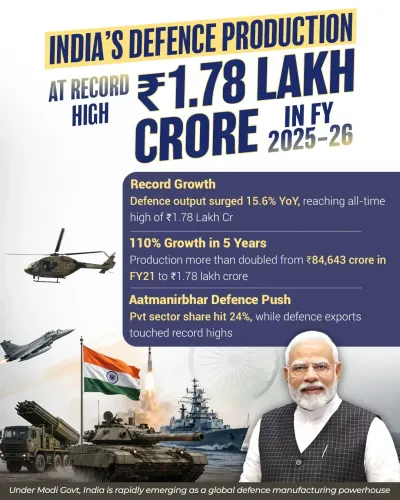
The Atmanirbhar Bharat initiative launched in 2020 formalised defence-production reforms, prioritising domestic manufacturing over imports.
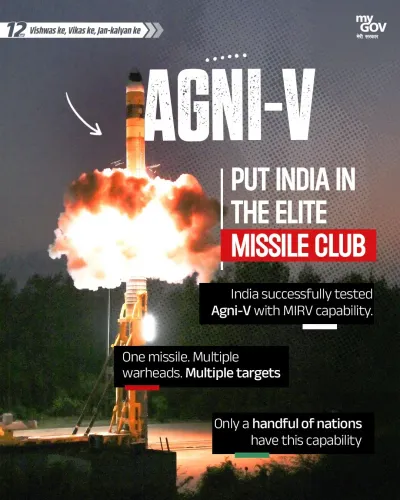
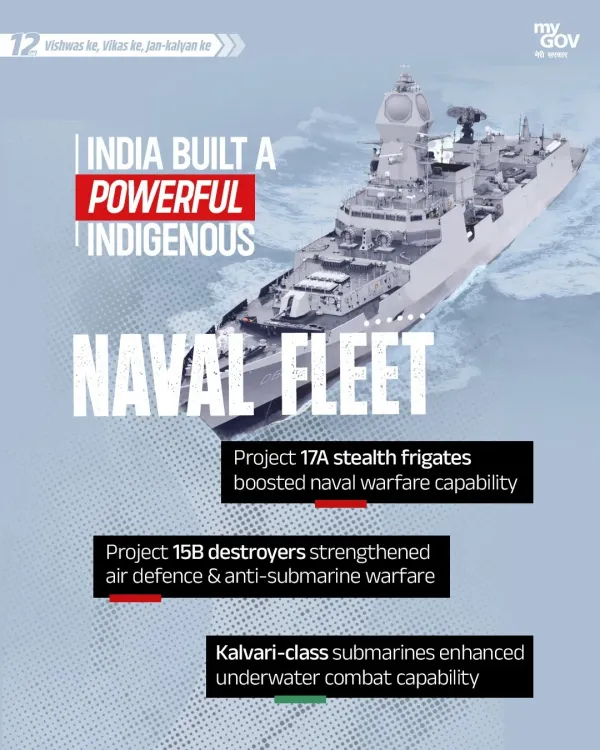
Reddy's post references hypersonic missile technology and advanced naval platforms as additional markers of India's growing strategic capability.
Parliamentary debates on the next defence budget are expected to focus on additional Arihant-class submarines and carrier-based fighter inductions.
Union Coal and Mines Minister and BJP Telangana president G. Kishan Reddy on Wednesday, June 17, 2026, highlighted India's growing maritime and strategic capabilities, pointing to platforms such as INS Arihant and INS Vikrant as evidence of a decisive shift toward defence self-reliance over the last 12 years.
Context
In his post on X, Reddy stated: 'From INS Arihant and INS Vikrant to hypersonic missile technology and advanced naval platforms, India has significantly strengthened its strategic and maritime capabilities.' He added that 'the last 12 years have witnessed a decisive push towards defence self-reliance, ensuring that India is better prepared to safeguard its sovereignty and national interests.'
The remarks come as India's defence establishment continues to receive heightened public attention, with indigenisation of military hardware remaining a central theme in the government's policy communication.
Policy Backdrop
INS Arihant, India's first indigenously built nuclear-powered ballistic missile submarine, was commissioned in August 2016, establishing the country's sea-based nuclear deterrent and completing the nuclear triad. Its induction was a landmark moment for the Indian Navy and for India's strategic autonomy doctrine.
INS Vikrant, India's first domestically built aircraft carrier, was commissioned in September 2022 after construction at Cochin Shipyard. The carrier project demonstrated India's ability to design and build large, complex naval platforms within its own borders. Successive revisions to the Defence Procurement Procedure from 2016 onward progressively prioritised indigenous design and 'Make in India' categories across procurement.
The broader Atmanirbhar Bharat initiative, launched in 2020, formalised and accelerated these defence-production reforms, setting targets for domestic manufacturing and capping imports of certain weapons systems.
Stakeholders and Impact
The Indian Navy stands as the primary beneficiary of this indigenisation push, having received both a nuclear submarine and a domestically built carrier within the span of a decade. Defence manufacturers — public sector units as well as private firms entering the sector under liberalised rules — have seen expanded order books as procurement policy shifted away from off-the-shelf foreign purchases.
For Telangana, the political dimension is notable: Reddy, as BJP's state president, uses national-security milestones to reinforce the party's governance narrative ahead of electoral cycles in the state. The post's framing of a '12-year' arc aligns with the period since the Narendra Modi-led government assumed office in 2014.
What's Next
Parliamentary discussions on the next defence budget are expected to revisit allocations for additional Arihant-class submarines and carrier-based fighter programmes. The government's stated goal of strategic autonomy in the Indian Ocean Region will likely keep indigenous naval platforms at the centre of defence policy debates in the months ahead.
As India's hypersonic and advanced missile programmes continue to develop, further announcements on induction timelines could reinforce the self-reliance narrative that ministers such as Reddy are already amplifying.
Point of View
Anchoring the BJP's decade-plus record to tangible, high-visibility military hardware that resonates with a security-conscious electorate. By invoking INS Arihant and INS Vikrant — both widely celebrated as indigenous achievements — he frames the last 12 years as a period of strategic transformation rather than incremental improvement. The timing, well ahead of any immediate defence announcement, suggests the party is building a sustained narrative around self-reliance as an electoral asset in Telangana and nationally. It also signals that defence indigenisation will remain a core BJP communication pillar as budget season and potential procurement milestones approach.
NationPress
18 Sept 2026
Frequently Asked Questions
What is INS Arihant and why is it significant for India?
INS Arihant is India's first indigenously built nuclear-powered ballistic missile submarine, commissioned in August 2016. It completed India's nuclear triad — the ability to launch nuclear weapons from land, air and sea — giving the country a credible second-strike capability.
When was INS Vikrant commissioned and where was it built?
INS Vikrant was commissioned in September 2022. It was built at Cochin Shipyard in Kerala, making it India's first domestically constructed aircraft carrier.
What is Atmanirbhar Bharat's role in Indian defence?
Atmanirbhar Bharat, launched in 2020, is a self-reliance initiative that includes targeted defence-production reforms, import restrictions on certain weapons systems, and incentives for domestic manufacturing to reduce India's dependence on foreign arms suppliers.
What did G. Kishan Reddy say about India's defence capabilities?
Kishan Reddy stated that India has significantly strengthened its strategic and maritime capabilities over the last 12 years, citing INS Arihant, INS Vikrant, hypersonic missile technology and advanced naval platforms as evidence of a decisive push toward defence self-reliance.
What are India's next steps in naval indigenisation?
Parliamentary debates on the next defence budget are expected to address funding for additional Arihant-class submarines and carrier-based fighter aircraft programmes as India pursues strategic autonomy in the Indian Ocean Region.