Kishan Reddy Hails 12 Years of India's Global Rise
Synopsis
Union Minister G. Kishan Reddy on June 19, 2026, credited 12 years of governance with transforming India's global standing — citing a historic G20 consensus, record foreign investment, defence export growth, and India's emergence as the voice of the Global South.
Key Takeaways
Union Coal and Mines Minister G.
Kishan Reddy posted on June 19, 2026 , highlighting India's global transformation over the last 12 years .
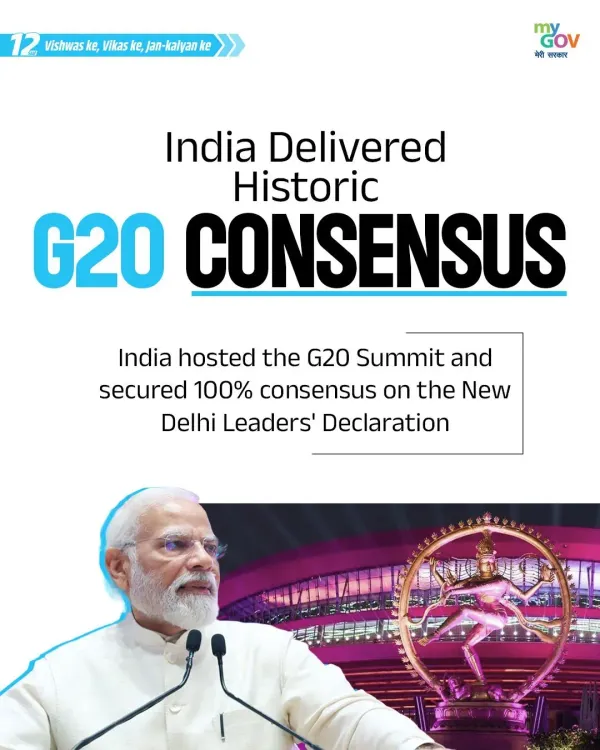
India secured a consensus on the G20 Leaders' Declaration during its presidency, culminating in the New Delhi Summit of September 2023 .
The government has positioned India as the voice of the Global South through its G20 presidency and multilateral diplomacy.
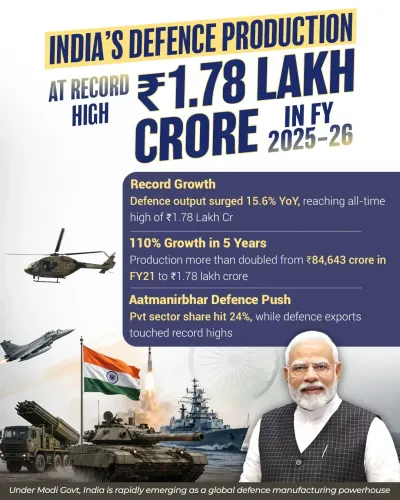
Successive FDI liberalisation rounds since 2014 and the Atmanirbhar Bharat initiative have underpinned record foreign investment and defence export growth.
The Defence Export Promotion Policy (2020) streamlined licensing to boost indigenous production for overseas sales.
Reddy's remarks signal the BJP's intent to keep India's foreign policy record central to its political narrative.
Union Coal and Mines Minister and BJP Telangana president G. Kishan Reddy on Friday, June 19, 2026, highlighted what he described as a transformative decade-plus of Indian foreign policy, citing the country's G20 leadership, record foreign investment, and unprecedented growth in defence exports as markers of India's rising global stature.
Context
Responding to a post by his own handle @kishanreddybjp, the minister pointed to four pillars of India's international ascent over the last 12 years: delivering a 'historic G20 consensus,' positioning India as the 'voice of the Global South,' attracting record foreign direct investment, and achieving unprecedented growth in defence exports. The remarks come as the ruling BJP continues to frame the post-2014 era as a watershed in India's diplomatic and economic trajectory.
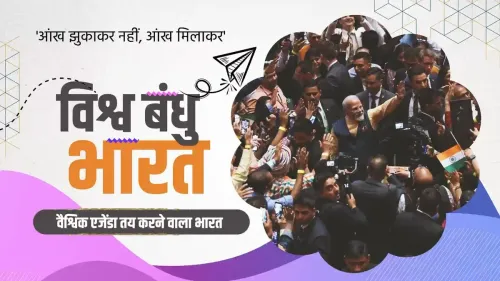
The reference to a 'historic G20 consensus' alludes to India's presidency of the G20 — the intergovernmental forum of 19 nations plus the European Union — which culminated in the New Delhi Summit of September 2023. India secured a consensus on the Leaders' Declaration at that summit, a feat widely regarded as a diplomatic achievement given sharp divisions among member states over the Russia-Ukraine conflict.
Policy Backdrop
India assumed the G20 presidency in December 2022 and used the platform to champion the interests of developing nations, branding itself the voice of the Global South. The presidency involved over 200 meetings across more than 60 cities, culminating in the New Delhi Declaration that was adopted by consensus — a significant outcome given the geopolitical tensions of the time.
On the economic front, successive rounds of foreign direct investment (FDI) liberalisation beginning in 2014 opened up sectors ranging from defence and insurance to retail and space. The government's Atmanirbhar Bharat initiative, launched in 2020, combined domestic manufacturing incentives with a dedicated Defence Export Promotion Policy to reduce India's historically high import dependence while building an outward-facing defence industrial base.
These policy moves have been paired with assertive multilateral diplomacy — from the Quad and the Indo-Pacific Economic Framework to bilateral strategic partnerships — as part of a broader effort to reposition India among the leading actors in global governance.
Stakeholders and Impact
The beneficiaries of this policy arc span several constituencies. Global South countries — particularly in Africa, Latin America, and Southeast Asia — have looked to India as an interlocutor in multilateral forums where their voices have historically been marginalised. Indian defence manufacturers, both public-sector undertakings and private firms, have gained from liberalised export licensing under the Defence Export Promotion Policy.
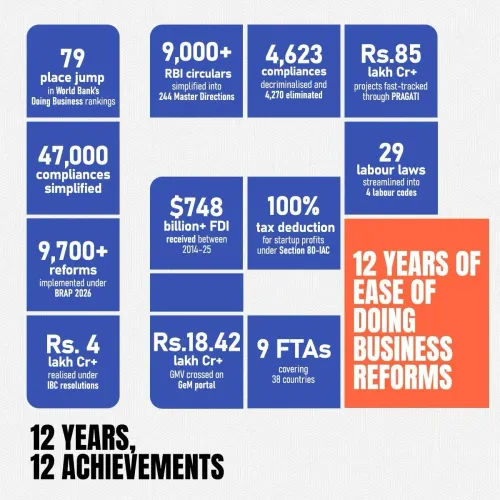
Foreign investors have been the other key stakeholder group, with successive FDI reforms aimed at improving the ease of doing business and channelling capital into manufacturing, infrastructure, and technology. The minister's remarks implicitly credit these cumulative policy decisions with elevating India's standing in a manner that is both economic and diplomatic.
What's Next
With India's G20 presidency now concluded, attention has shifted to how New Delhi sustains its Global South leadership role under rotating presidencies held by other nations. Parliamentary deliberations on updated defence production targets and further FDI norm revisions are expected to keep this policy agenda in the legislative spotlight. Minister Reddy's post signals that the BJP intends to keep India's foreign policy and economic achievements central to its political narrative in the months ahead.
Point of View
Cumulative foreign policy success story rather than a series of discrete events. By linking the G20 presidency, Global South advocacy, FDI records, and defence exports into a single 12-year arc, the BJP is constructing a grand narrative of national resurgence ahead of future electoral cycles. The invocation of the 'Global South' is particularly strategic: it positions India not merely as a rising power but as a moral champion of the developing world, a framing that resonates domestically and internationally. This kind of retrospective stocktaking from a senior minister typically precedes a fresh policy push or a political campaign, suggesting the party is preparing to run hard on its foreign and economic policy record.
NationPress
25 Sept 2026
Frequently Asked Questions
What did G. Kishan Reddy say about India's global standing?
On June 19, 2026, Minister G. Kishan Reddy stated that the last 12 years have transformed India's standing on the world stage, citing a historic G20 consensus, India's role as the voice of the Global South, record foreign investment, and unprecedented growth in defence exports.
What was India's achievement at the G20 summit?
India, during its G20 presidency that culminated in the New Delhi Summit of September 2023, secured a consensus on the Leaders' Declaration — a significant diplomatic feat given geopolitical divisions among member states at the time.
What is Atmanirbhar Bharat and how does it relate to defence exports?
Atmanirbhar Bharat is a self-reliance initiative launched in 2020 that includes measures to expand domestic defence manufacturing. It was accompanied by a Defence Export Promotion Policy to streamline licensing and boost indigenous production for overseas sales.
What is India's claim to being the voice of the Global South?
India used its G20 presidency (December 2022 to November 2023) to champion the interests of developing nations in Africa, Latin America, and Southeast Asia, positioning itself as their key interlocutor in global governance forums.
What FDI reforms has India undertaken since 2014?
The Indian government has liberalised foreign direct investment norms across multiple sectors — including defence, insurance, retail, and space — through successive rounds of reforms beginning in 2014, aimed at attracting greater overseas capital.