Kishan Reddy Hails 12 Years of India's Global Partnerships
Synopsis
Union Minister G. Kishan Reddy on June 19, 2026 shared a post crediting 12 years of governance with strengthening India's global partnerships across energy security, landmark trade deals, humanitarian missions, and diaspora mobility — reinforcing the BJP's foreign-policy narrative.
Key Takeaways
Kishan Reddy , Union Coal and Mines Minister and BJP Telangana president, amplified a post on June 19, 2026 highlighting India's global partnerships over 12 years .
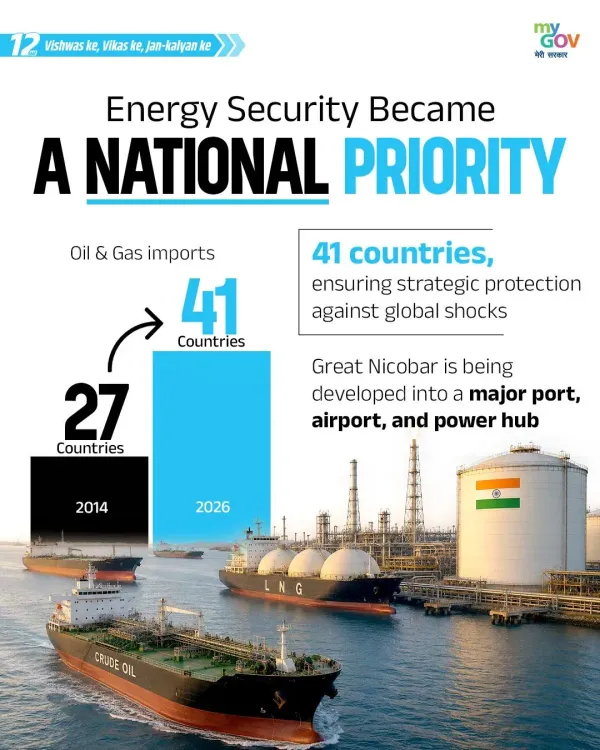
The post cites four pillars: energy security, strategic supply diversification, trade agreements, humanitarian assistance, and easier global mobility for Indians.
India's Vaccine Maitri initiative supplied over 300 million doses to more than 100 countries during the COVID-19 pandemic.
Landmark trade pacts include the India-UAE CEPA (February 2022) and India-Australia ECTA (April 2022), which cut tariffs on 90 per cent of Indian exports to Australia.
Operation Dost in February 2023 saw India dispatch rescue teams and medical aid to earthquake-hit Turkey and Syria .
The India-EU trade agreement and new diaspora mobility pacts remain key milestones to watch in 2025-26 .
Union Coal and Mines Minister G. Kishan Reddy on Friday, June 19, 2026, amplified a post on X that credited the past 12 years of governance with cementing India's standing as a 'reliable and trusted global partner,' citing advances in energy security, strategic supply diversification, trade agreements, humanitarian outreach, and diaspora mobility.
Context
The post, shared by the BJP Telangana state president, states: 'A stronger India means stronger partnerships with the world.' It lists four pillars — energy security, landmark trade agreements, humanitarian assistance, and global mobility for Indians — as evidence of a transformed foreign-policy posture over 12 years. The timeline points squarely to the period since May 2014, when Prime Minister Narendra Modi took office.
The framing is consistent with the ruling party's broader narrative ahead of ongoing diplomatic engagements, positioning India not merely as a beneficiary of global order but as an active shaper of it.
Policy Backdrop
India's shift from traditional non-alignment to active multi-alignment has been the defining arc of its foreign policy since 2014. On the energy front, New Delhi has pursued long-term contracts and overseas mining investments to reduce import dependence, while simultaneously co-founding the International Solar Alliance at COP21 in Paris in 2015 to mobilise global solar investment.
Trade momentum accelerated sharply after 2021. The India-UAE Comprehensive Economic Partnership Agreement (CEPA), signed in February 2022, became a template for subsequent pacts, including the India-Australia Economic Cooperation and Trade Agreement (ECTA) signed in April 2022, which cut tariffs on 90 per cent of Indian exports to Australia. Negotiations for an India-EU Broad-based Trade and Investment Agreement remain a closely watched milestone.
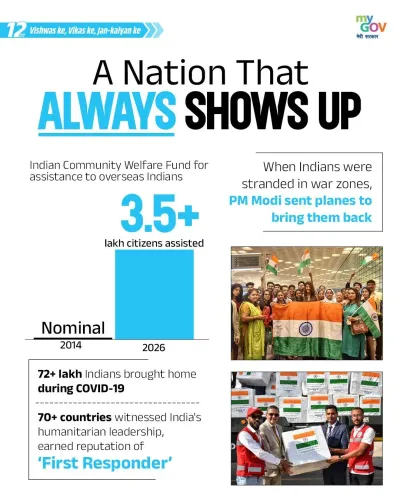
The humanitarian pillar referenced in the post draws on episodes such as Vaccine Maitri, under which India supplied over 300 million vaccine doses to more than 100 countries during the COVID-19 pandemic, and Operation Dost in February 2023, which dispatched Indian search-and-rescue teams and medical supplies to earthquake-hit Turkey and Syria.
India's G20 presidency in 2023, culminating in the New Delhi Summit in September 2023, further entrenched this image: the summit produced the New Delhi Declaration and expanded the grouping to include the African Union, a diplomatic win credited to Indian stewardship.
Stakeholders and Impact
The constituencies most directly touched by these policy shifts are Indian diaspora communities worldwide, who benefit from easier mobility frameworks and bilateral social-security agreements; MSME exporters, who gain preferential market access under new trade pacts; and developing nations in the Global South, which have received Indian humanitarian and vaccine assistance.
Energy importers and strategic partners in the Quad — comprising India, the United States, Japan, and Australia — also feature in the supply-chain resilience and critical-minerals diversification agenda that has gained urgency since 2022.
What's Next
The conclusion and ratification of the long-negotiated India-EU trade agreement remains the most consequential near-term marker for the trade pillar highlighted in the post. Any new bilateral mobility or social-security pacts announced in 2025-26 will test whether the momentum on diaspora-focused diplomacy continues.
With Kishan Reddy amplifying this foreign-policy narrative from his platform as a senior BJP leader and Union Minister, the messaging signals that India's global partnerships will remain a central electoral and governance talking point as the government approaches the midpoint of its current term.
Point of View
Trade pacts, and humanitarian missions as a unified 'Brand India' narrative ahead of continued diplomatic activity in 2026. The choice of a senior BJP leader with a state-level base to push this messaging suggests a deliberate effort to connect national foreign-policy achievements to the party's regional electoral identity. The 12-year framing is strategically precise: it anchors the entire arc of India's multi-alignment shift to the Modi era, making the foreign-policy record inseparable from the ruling party's political legacy. Whether the momentum on the pending India-EU trade deal and diaspora mobility agreements delivers tangible outcomes will ultimately determine how durable this narrative proves.
NationPress
20 Sept 2026
Frequently Asked Questions
What did G. Kishan Reddy say about India's foreign policy?
G. Kishan Reddy shared a post on June 19, 2026 stating that the last 12 years have reinforced India's position as a reliable and trusted global partner, citing progress in energy security, trade agreements, humanitarian assistance, and mobility for the Indian diaspora.
What is India's Vaccine Maitri initiative?
Vaccine Maitri was India's 2020-2022 programme under which it supplied over 300 million COVID-19 vaccine doses to more than 100 countries, establishing India as a major contributor to global pandemic relief.
What trade agreements has India signed in recent years?
India signed the Comprehensive Economic Partnership Agreement (CEPA) with the UAE in February 2022 and the Economic Cooperation and Trade Agreement (ECTA) with Australia in April 2022, the latter cutting tariffs on 90 per cent of Indian exports to Australia. An India-EU trade deal remains under negotiation.
What was Operation Dost?
Operation Dost was India's humanitarian mission in February 2023 that sent search-and-rescue teams and medical supplies to Turkey and Syria following a devastating earthquake, showcasing India's capacity for rapid international disaster response.
What is India's multi-alignment foreign policy?
Multi-alignment is India's approach since 2014 of simultaneously deepening ties with the United States, Europe, and the Quad while maintaining energy and defence links with Russia and expanding engagement with the Global South, rather than aligning exclusively with any single bloc.