Pakistan graduate quality crisis: Universities expand but skills gap widens
Synopsis
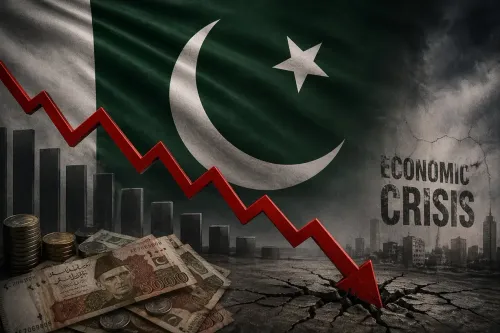
Pakistan's universities are multiplying and enrolment is rising — but only 5 in every 100 primary school students ever reach a university classroom, and those who do are increasingly seen as unfit for the job market. With education spending at just 0.8% of GDP against a UNESCO-recommended 4–6%, the system is caught between a quantity illusion and a quality crisis.
Key Takeaways
Pakistan's higher education sector has expanded significantly over two decades, but employers routinely cite skill gaps among graduates.
The country's education spending has fallen to just 0.8 per cent of GDP , against a UNESCO and UNICEF benchmark of 4–6 per cent .
Pakistan's overall literacy rate stands at 60 per cent ; Balochistan records the lowest provincial rate at 42 per cent .
An estimated 26.8 million children in Pakistan are currently out of school.
University enrolment has dropped by 13 per cent in recent years; only 5 in every 100 primary school students reach university.
Rising tuition fees and shrinking scholarships have made higher education increasingly unaffordable for working-class families.
Pakistan's higher education sector is producing more graduates than ever before, yet the quality of those graduates continues to draw sharp criticism from employers and international assessors alike, according to a report and editorial published in The Express Tribune. The disconnect between expanding university enrolment and actual workforce readiness has emerged as one of the country's most pressing educational challenges.
Quantity Without Quality
Over the past two decades, new universities have emerged across Pakistan and enrolment figures have climbed steadily, with thousands of graduates entering the job market each year. Yet, according to the editorial in The Express Tribune, employers routinely report significant skill gaps among fresh graduates, while international rankings continue to expose weaknesses in research output and innovation.
A core part of the problem, critics argue, lies in how institutions approach quality assurance — treating it as a bureaucratic compliance exercise rather than a genuine commitment to learning outcomes. Many universities focus on satisfying regulatory requirements while paying inadequate attention to what students actually learn.
Outdated Curriculum and Rote Learning
The curriculum at many Pakistani higher education institutions remains outdated, and teaching methods continue to rely heavily on rote learning, creating a widening mismatch between what students are taught and what the economy actually demands, the editorial noted. Universities, the report argues, should be functioning as centres of innovation and problem-solving — conducting research that addresses national challenges such as water scarcity, climate change, and technological advancement.
Institutions are being urged to keep learning outcomes at the centre of academic planning and to regularly review programmes for contemporary relevance.
Alarming Literacy and Enrolment Figures
The structural weaknesses run deeper than university-level concerns. Pakistan's overall literacy rate stands at 60 per cent, with male literacy at 68 per cent and female literacy at 52 per cent, according to Assistant Professor Mujeeb Ali, writing in The Express Tribune. Among the four provinces, Punjab records the highest literacy rate at 66 per cent, while Balochistan trails at 42 per cent.
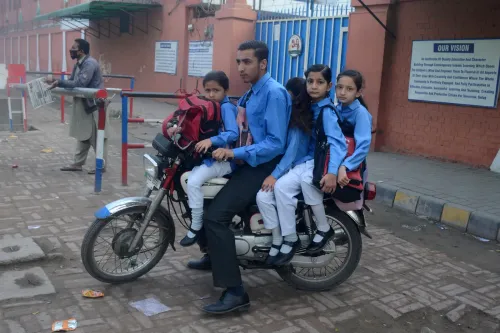
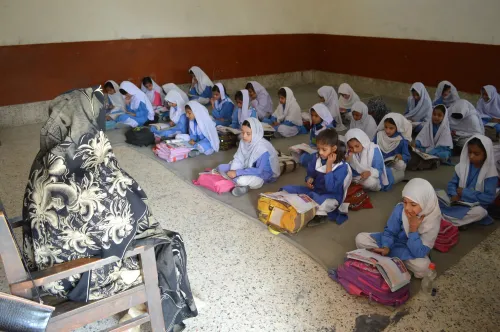
Various reports have revealed that 26.8 million children in Pakistan are currently out of school. University enrolment has also dropped by 13 per cent in recent years, and only five out of every 100 students who begin primary school ultimately reach a university classroom.
Education Spending Far Below Global Benchmarks
Pakistan's education spending has fallen to just 0.8 per cent of GDP — a figure starkly at odds with the 4–6 per cent of GDP recommended by the United Nations Educational, Scientific and Cultural Organisation (UNESCO) and the United Nations Children's Fund (UNICEF). A separate report earlier this month flagged the same shortfall, warning that the gap is leaving the education system chronically underfunded.
Rising tuition fees combined with shrinking scholarship availability have turned higher education into an unaffordable option for many working-class families, further widening access inequalities.
'Countries that neglect education are left vulnerable to poverty, corruption and instability,' Professor Mujeeb Ali wrote in The Express Tribune. 'To achieve the highest educational standards, Pakistan needs to raise its education spending to international levels — at least 4–6 per cent of the GDP, as recommended by UNESCO and UNICEF.' He also called for safe and inclusive learning environments for both girls and boys across rural and urban areas, and for strict monitoring of not just enrolment but also attendance and actual learning outcomes.
What Needs to Change
Analysts and educators broadly agree that Pakistan's higher education reform must move beyond headline enrolment numbers toward measurable competency outcomes. Without a credible shift in funding, curriculum design, and teaching methodology, the gap between degree holders and job-ready graduates is unlikely to close. The next policy cycle will be critical in determining whether the sector can course-correct before the skills deficit deepens further.
Point of View
The quality debate at the university level is almost beside the point. The more urgent failure is the 0.8% of GDP allocated to education: no curriculum reform or quality assurance framework can compensate for that level of chronic underfunding. The gender and provincial disparities — female literacy at 52%, Balochistan at 42% — point to structural exclusion that predates any recent policy misstep. Until Pakistan treats education spending as a fiscal priority rather than a discretionary line item, graduate quality will remain a symptom of a much deeper systemic neglect.
NationPress
26 Jun 2026
Frequently Asked Questions
Why are Pakistani graduates considered low quality by employers?
Employers in Pakistan routinely report significant skill gaps among university graduates, largely because curricula remain outdated and teaching methods rely heavily on rote learning. This creates a mismatch between what universities teach and what the economy actually requires, according to an editorial in The Express Tribune.
How much does Pakistan spend on education compared to global benchmarks?
Pakistan currently spends just 0.8 per cent of its GDP on education, far below the 4–6 per cent recommended by UNESCO and UNICEF. This chronic underfunding has contributed to rising tuition fees, shrinking scholarships, and deteriorating learning outcomes across the country.
How many children in Pakistan are out of school?
Various reports have revealed that approximately 26.8 million children in Pakistan are currently out of school. Additionally, university enrolment has dropped by 13 per cent in recent years, and only 5 out of every 100 students who begin primary school go on to reach university.
What is Pakistan's literacy rate and how does it vary by province?
Pakistan's overall literacy rate stands at 60 per cent, with male literacy at 68 per cent and female literacy at 52 per cent. Among the four provinces, Punjab has the highest literacy rate at 66 per cent, while Balochistan records the lowest at 42 per cent.
What reforms are being recommended for Pakistan's higher education sector?
Experts and editorials are calling for universities to move beyond regulatory compliance and focus on measurable learning outcomes. Key recommendations include updating curricula, replacing rote learning with critical thinking, raising education spending to at least 4–6 per cent of GDP, and ensuring safe, inclusive learning environments for girls and boys in both rural and urban areas.