Khattar Chairs Forum of Regulators Meet on Power Sector Reforms
Synopsis
Union Power Minister Manohar Lal Khattar chaired the Forum of Regulators at CERC on 26 June 2026, meeting Chairpersons of all State and Joint Electricity Regulatory Commissions to push regulatory reforms aimed at fixing DISCOM finances, improving consumer services, and building a future-ready power sector.
Key Takeaways
Manohar Lal Khattar chaired the Forum of Regulators meeting at CERC, New Delhi on 26 June 2026 .
Chairpersons of all State Electricity Regulatory Commissions and Joint Electricity Regulatory Commissions attended.
Key agenda: advancing regulatory reforms to improve DISCOM financial and operational performance .
Minister emphasised a 'transparent, predictable, and responsive regulatory framework' for reliable power and faster grievance redressal.
The meeting builds on a policy lineage that includes UDAY (2015) and the Revamped Distribution Sector Scheme (2021) .
Follow-up model regulations from CERC or the Forum, and progress on the pending Electricity (Amendment) Bill , are the next milestones to watch.
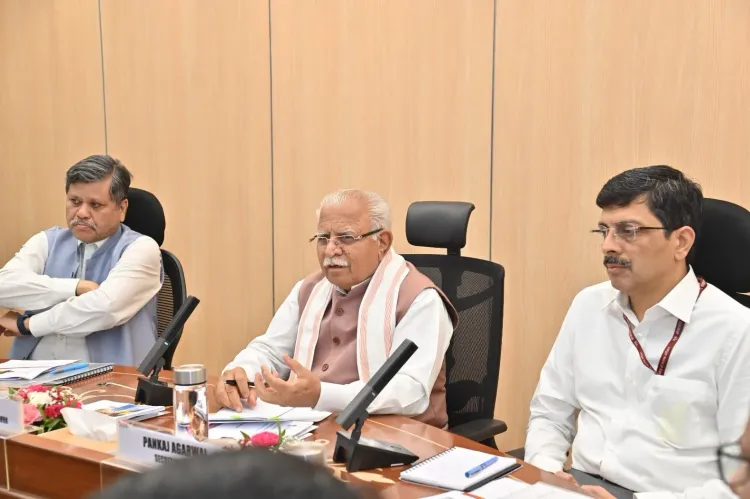
Union Power Minister Manohar Lal Khattar on Friday, 26 June 2026, chaired a high-level meeting of the Forum of Regulators at the offices of the Central Electricity Regulatory Commission (CERC) in New Delhi, bringing together Chairpersons of all State Electricity Regulatory Commissions (SERCs) and Joint Electricity Regulatory Commissions (JERCs) to deliberate on accelerating regulatory reforms across India's power sector.
Context
Khattar stated that the meeting focused on 'advancing key regulatory reforms to strengthen the power sector, improve the financial and operational performance of DISCOMs, and ensure timely, consumer-centric service delivery.' He underscored the need for a 'transparent, predictable, and responsive regulatory framework' as essential to reliable power supply, faster grievance redressal, and improvements in Ease of Doing Business and Ease of Living. The minister concluded that 'a strong regulatory ecosystem will be instrumental in building an efficient, resilient, and future-ready power sector.'
Policy Backdrop
The Forum of Regulators was established under the Electricity Act, 2003 as a coordinating body to harmonise regulatory approaches between the CERC and state-level commissions. It has served as a key platform since the mid-2000s to reduce inter-state regulatory divergence and align state regulators with national policy goals such as 24×7 power supply and improved business environment rankings.
The chronic financial stress of Distribution Companies (DISCOMs) has been a persistent concern for successive governments. The Ujjwal DISCOM Assurance Yojana (UDAY), launched in 2015, sought to restructure DISCOM debt, while the Revamped Distribution Sector Scheme (RDSS), approved in 2021, linked modernisation funding directly to DISCOM performance benchmarks. Friday's meeting signals a continued push to use the regulatory architecture — not just scheme-based incentives — to drive DISCOM accountability.
Stakeholders and Impact
The most direct stakeholders are India's electricity consumers, who bear the consequences of DISCOM inefficiency through unreliable supply, billing disputes, and delayed grievance resolution. A more predictable regulatory environment also matters for private investors in generation and distribution infrastructure, as tariff uncertainty has historically deterred long-term capital commitments.
For SERCs and JERCs, the meeting represents a push from the Union government to align state-level regulatory timelines and standards with central objectives. States with persistently loss-making DISCOMs face particular pressure to adopt performance-linked frameworks that regulators can enforce independently of political considerations.
What's Next
The immediate focus will be on any follow-up model regulations or advisory guidelines that CERC or the Forum of Regulators may issue following the deliberations. Separately, provisions of the pending Electricity (Amendment) Bill — which seeks to introduce greater competition in distribution and strengthen regulatory independence — remain a legislative variable that could reshape the framework being discussed at such forums.
With India's peak power demand continuing to rise and the integration of renewable energy adding complexity to grid management, the pressure on regulators to modernise tariff-setting, grievance mechanisms, and licensing norms will only intensify in the months ahead.
Point of View
Khattar is using institutional architecture — rather than just scheme-based funding — to press for uniformity in tariff timelines, grievance norms, and DISCOM accountability. The explicit invocation of 'Ease of Doing Business' signals that the power ministry is framing regulatory quality as an investment-climate issue, not merely a consumer welfare one. Whether the meeting translates into binding model regulations or remains advisory will determine its real-world impact on the sector's chronic structural problems.
NationPress
26 Jun 2026
Frequently Asked Questions
What is the Forum of Regulators in India's power sector?
The Forum of Regulators is a coordinating body established under the Electricity Act, 2003, comprising the Chairperson of CERC and the Chairpersons of all State Electricity Regulatory Commissions, tasked with harmonising regulatory approaches across India's power sector.
Why are DISCOM finances a concern for India's power sector?
Distribution Companies (DISCOMs) have long carried large accumulated losses due to factors such as subsidised tariffs, high transmission and distribution losses, and delayed payments, which undermine their ability to invest in infrastructure and pay power generators on time.
What is the Revamped Distribution Sector Scheme (RDSS)?
The RDSS, approved in 2021, is a central government scheme that links funding for modernising electricity distribution infrastructure directly to the operational and financial performance of DISCOMs, incentivising efficiency improvements.
What did Manohar Lal Khattar say at the Forum of Regulators meeting on 26 June 2026?
Khattar emphasised the need for a transparent, predictable, and responsive regulatory framework to ensure reliable power supply, faster grievance redressal, and improvements in Ease of Doing Business and Ease of Living, calling a strong regulatory ecosystem vital to a future-ready power sector.
What is the Electricity Amendment Bill and how does it relate to regulatory reforms?
The pending Electricity (Amendment) Bill proposes to introduce greater competition in electricity distribution and strengthen the independence of regulators, making it a key legislative complement to the administrative reforms being discussed at forums like the one chaired by Khattar.