CM Fadnavis Pays Tribute to Freedom Fighter Krantisinh Nanasaheb Patil
Synopsis
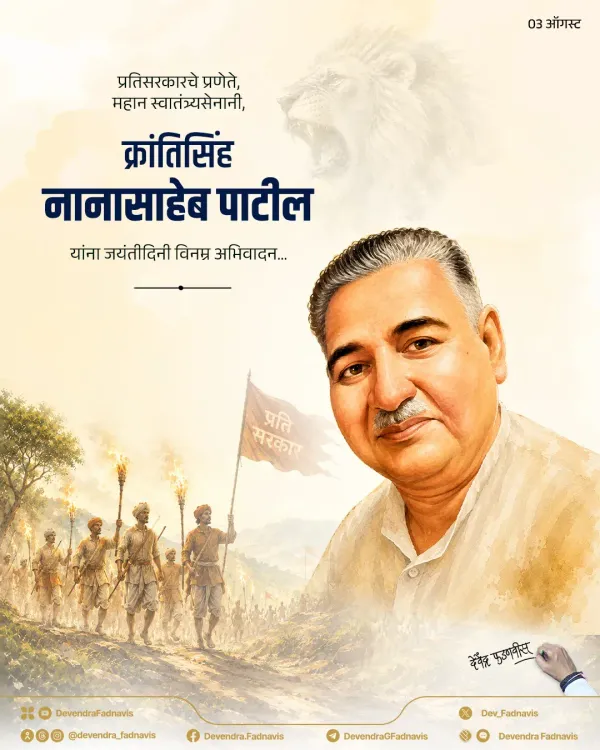
Maharashtra CM Devendra Fadnavis remembered freedom fighter Krantisinh Nanasaheb Patil on his birth anniversary, honouring the leader who established a Prati Sarkar — a parallel government — to resist British colonial rule in western Maharashtra.
Key Takeaways
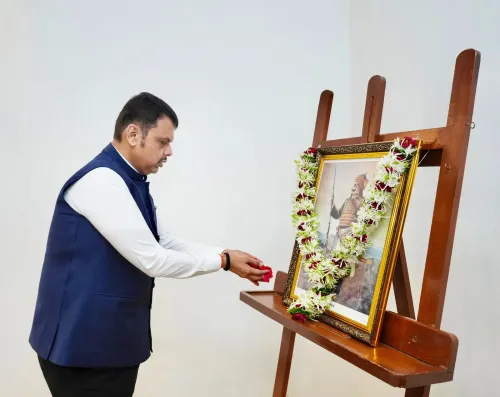
Maharashtra CM Devendra Fadnavis paid tribute to freedom fighter Krantisinh Nanasaheb Patil on his birth anniversary on August 3, 2026 .
Nanasaheb Patil established a Prati Sarkar (parallel government) in parts of western Maharashtra to directly oppose British colonial authority.
Fadnavis described Patil's efforts for Swarajya as 'a proud chapter in India's independence movement.' The tribute reflects Maharashtra's strong tradition of honouring figures associated with organised and armed resistance to British rule.
Maharashtra leaders across party lines regularly mark such anniversaries, connecting regional anti-colonial history to contemporary governance.
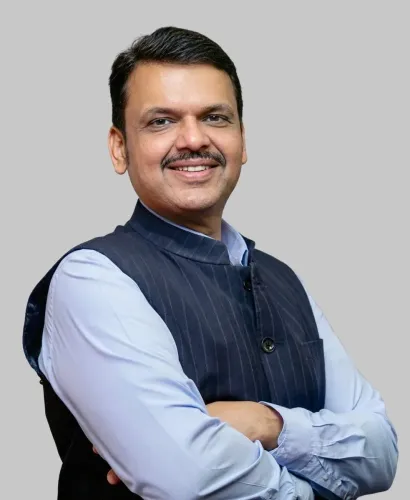
A man who dared to build a government within a government — defying the British Empire on its own soil — Krantisinh Nanasaheb Patil is remembered on his birth anniversary today, Monday, August 3, 2026. Maharashtra Chief Minister Devendra Fadnavis led the state's tributes to the legendary freedom fighter, honouring his extraordinary legacy of resistance.
Posting in both English and Marathi, CM Fadnavis called Patil's efforts for Swarajya (self-rule) 'a proud chapter in India's independence movement,' offering a vinamra abhivadan — a humble salute — to the freedom fighter on his birth anniversary.
The Man Who Built a Parallel Government
What set Krantisinh Nanasaheb Patil apart from many of his contemporaries was audacity of a rare kind. At a time when British authority appeared unassailable across the subcontinent, Patil established a Prati Sarkar — a parallel government — in parts of western Maharashtra, directly challenging the colonial administration's claim to legitimacy. The very name by which history remembers him, Krantisinh (Lion of Revolution), was earned, not bestowed. His movement gave ordinary people in rural Maharashtra an alternative structure of authority rooted in their own aspirations for freedom — a living, breathing act of defiance against what Fadnavis today called the julmi Ingrej sarkar, the 'oppressive British government.'Maharashtra's Deep Anti-Colonial Memory
In a state with one of India's richest traditions of armed and organised resistance to British rule, marking such anniversaries carries weight beyond ceremony. Maharashtra's political culture has long drawn sustenance from figures who chose confrontation over compliance. Chief ministers and leaders across party lines regularly invoke these legacies — connecting contemporary governance to the sacrifices that made self-rule possible. For Fadnavis, the tribute is also a reminder that the idea of Swarajya — a word inseparable from Chhatrapati Shivaji Maharaj's own political philosophy — runs as a continuous thread through Maharashtra's history, from the Maratha era through the independence struggle and into the present.Point of View
Where the concept of Swarajya carries deep historical and cultural resonance — rooted in Maratha political tradition and carried forward through the freedom struggle — such gestures are not merely ceremonial. They signal a continuity of political identity. For the BJP in Maharashtra, invoking anti-colonial resistance figures also serves to anchor the party within the state's own nationalist narrative, distinct from any single political lineage.
NationPress
3 Aug 2026
Frequently Asked Questions
Who was Krantisinh Nanasaheb Patil?
Krantisinh Nanasaheb Patil was a Maharashtrian freedom fighter who established a Prati Sarkar — a parallel government — in parts of western Maharashtra to resist British colonial rule during India's independence movement. He is remembered as a symbol of organised defiance against British authority.
What was the Prati Sarkar established by Nanasaheb Patil?
The Prati Sarkar, meaning 'parallel government,' was an alternative administrative structure set up by Krantisinh Nanasaheb Patil in parts of western Maharashtra. It was a direct challenge to British rule, giving local people a self-governed alternative during the independence struggle.
Why did CM Devendra Fadnavis pay tribute to Nanasaheb Patil?
CM Devendra Fadnavis paid tribute to mark Krantisinh Nanasaheb Patil's birth anniversary on August 3, 2026, honouring his contributions to India's freedom movement and his legacy of resistance against British colonial rule in Maharashtra.
What does Swarajya mean in the context of Maharashtra's freedom movement?
Swarajya means 'self-rule' and is a concept deeply embedded in Maharashtra's political and historical identity, tracing back to Chhatrapati Shivaji Maharaj. In the context of the freedom movement, it represented the aspiration for independence from British colonial authority.
How does Maharashtra remember its freedom fighters?
Maharashtra has a rich tradition of honouring regional freedom fighters through state government tributes, school programmes, and public commemorations on birth and death anniversaries. Leaders across party lines regularly mark these occasions, reflecting the state's strong anti-colonial legacy.