Cuba hit by total nationwide blackout, power system collapses again
Synopsis
Cuba's national power grid went dark again on the night of 3 August — a total disconnection just hours after a partial western-province outage the day before. With blackouts recurring since October 2024 and fuel imports choked by US sanctions, Cuba's electricity crisis is no longer episodic; it is structural.
Key Takeaways
Cuba suffered a total nationwide blackout at 22:43 local time on 3 August , confirmed by the National Electric Union .
A separate partial collapse on 1 August had already cut power to provinces from Matanzas to Pinar del Rio .
Cuba has experienced repeated nationwide blackouts since October 2024 , caused by facility failures, hurricanes, and infrastructure decay.
The National Electric Union cited US sanctions as a key factor limiting fuel imports and grid repairs.
President Miguel Diaz-Canel linked the crisis to the decades-long US embargo and a recent fuel ban in a post on X .
Cuba rejected a July 2025 US State Department report accusing Havana of shaping extremist movements and running espionage networks in the US.
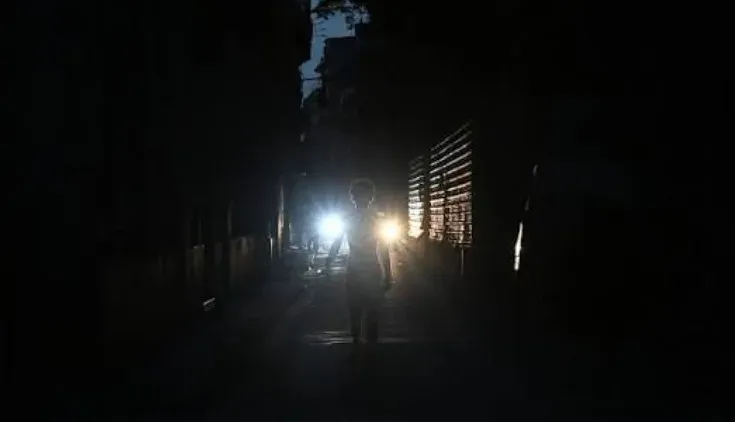
Cuba suffered another total nationwide blackout on Sunday, 3 August, after its national power grid experienced a complete disconnection at 22:43 local time (02:43 GMT), the National Electric Union announced in a social media statement. The collapse marks the latest in a string of crippling power failures that have plagued the island since October 2024.
What Happened
The National Electric Union confirmed the grid suffered a total disconnection late Sunday night, plunging the entire country into darkness. This came just hours after a separate partial collapse on Saturday, 1 August, which cut power to western provinces stretching from Matanzas to Pinar del Rio. That earlier failure, triggered by the tripping of transmission lines, occurred at 18:07 local time (22:07 GMT).
Pattern of Failures Since October 2024
Sunday's blackout is not an isolated incident. Since October 2024, Cuba has endured multiple nationwide power outages caused by a combination of power facility failures, hurricanes, and chronic infrastructure deterioration. The country's ageing power plants have been difficult to repair, and fuel imports have been constrained — factors the National Electric Union attributed directly to the impact of US sanctions.
The US Embargo Factor
Cuban President Miguel Diaz-Canel has repeatedly framed the energy crisis as a consequence of Washington's longstanding policies. In a post on social media platform X, Diaz-Canel characterised the decades-long US embargo and a recent fuel ban as deliberate measures intended to turn Cubans against their government. He made these remarks in the context of responding to a 100-page US State Department report released in July, which accused the Cuban government of shaping extremist movements in the United States and operating espionage networks on American soil.
Cuba rejected the State Department report, calling it a false narrative designed to justify Washington's longstanding policy of aggression against the island. Diaz-Canel went further, describing the report as the work of 'one of the most corrupt officials in the current administration, with proven ties to drug traffickers and terrorists in Florida.'
Humanitarian and Political Stakes
Repeated blackouts carry severe humanitarian consequences for Cuban citizens — disrupting hospitals, water supply systems, food refrigeration, and daily life. The western provinces, including the capital Havana, have borne the brunt of the most recent failures. Critics argue that while US sanctions have worsened Cuba's energy situation, the government's failure to modernise its grid over decades has compounded the crisis. The Cuban government, however, places responsibility squarely on external pressure.
What Comes Next
With fuel imports constrained and ageing infrastructure still unrepaired, energy analysts warn that further outages remain likely in the near term. The frequency and scale of Cuba's blackouts — now recurring on a near-weekly basis — suggest the country's power system is operating well below the threshold of stability. How Havana navigates the dual pressures of sanctions and infrastructure decay will determine whether Cubans face another winter of darkness.
Point of View
Facing blackouts that now recur with the regularity of a calendar event.
NationPress
17 Sept 2026
Frequently Asked Questions
What caused Cuba's latest nationwide blackout on 3 August?
Cuba's National Electric Union reported a total disconnection of the national power system at 22:43 local time on 3 August, the latest in a series of outages since October 2024. The union cited the impact of US sanctions as a key factor limiting fuel imports and repairs to ageing power plants.
How often has Cuba been experiencing blackouts?
Since October 2024, Cuba has suffered multiple nationwide blackouts caused by a combination of power facility failures, hurricanes, and chronic infrastructure deterioration. The frequency has increased to near-weekly occurrences in recent months.
What happened in the 1 August partial blackout?
On 1 August, Cuba's National Electric System suffered a partial collapse at 18:07 local time, triggered by the tripping of transmission lines between the provinces of Matanzas and Pinar del Rio, leaving western Cuba without electricity.
What did President Diaz-Canel say about the energy crisis?
Cuban President Miguel Diaz-Canel stated on social media platform X that the decades-long US embargo and a recent fuel ban were deliberate policies aimed at turning Cubans against their government. He made the remarks partly in response to a July US State Department report accusing Cuba of extremist and espionage activity.
How did Cuba respond to the US State Department report?
Cuba rejected the July State Department report outright, calling it a false narrative designed to justify Washington's aggression against the island. President Diaz-Canel described the report's author as 'one of the most corrupt officials in the current administration, with proven ties to drug traffickers and terrorists in Florida.'