UN experts slam US 'energy starvation' policy in Cuba amid fuel crisis
Synopsis
Three UN Human Rights Council experts have formally accused the United States of subjecting Cuba to 'energy starvation' — a term that elevates fuel denial to a human rights violation. With over 96,000 surgeries pending and Trump threatening to park an aircraft carrier off Havana's coast, the Cuba crisis is escalating well beyond a bilateral dispute.
Key Takeaways
Three UN Human Rights Council experts issued a joint statement on 8 May accusing the US of imposing "energy starvation" on Cuba .
The fuel blockade, in place since January 2025 , has left Cuba's health system with a backlog of more than 96,000 pending surgeries , including 11,000 for children.
US President Donald Trump threatened to position the aircraft carrier USS Abraham Lincoln "100 yards" off Cuba's coast.
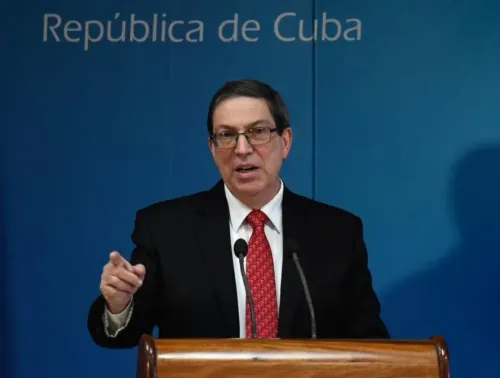
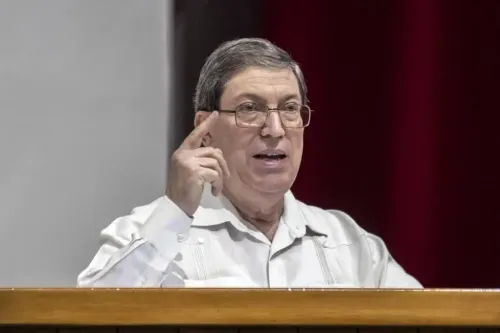
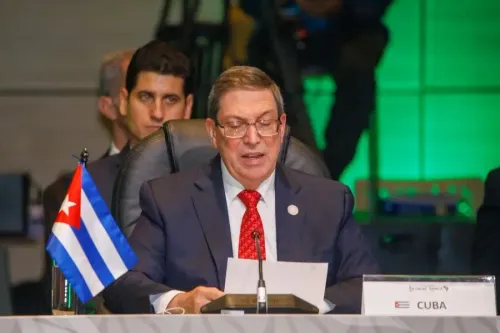
Cuban Foreign Minister Bruno Rodriguez on 6 May called US threats "cynical and hypocritical" after more than six decades of embargo.
UN experts urged Washington to stop using energy restrictions as a "coercive tool" against international human rights norms.
Three independent human rights experts of the UN Human Rights Council have warned that a fuel blockade imposed on Cuba by the United States since January 2025 constitutes "energy starvation" — a condition they say is incompatible with international human rights norms. The warning was issued in a joint statement from Geneva on 8 May.
What the UN Experts Said
"Cuba has been subjected to energy starvation by the United States, a condition in which the lack of fuel cripples the functioning of essential services required for a dignified life," said Surya Deva, Sofia Monsalve Suarez, and Pedro Arrojo-Agudo, all independent special rapporteurs under the UN Human Rights Council.
The three experts argued that the US "unlawful blockade" has not only disrupted the daily lives of Cuban citizens but has also undermined "the enjoyment of a wide range of human rights." They urged Washington to stop deploying such measures as a "coercive tool."
Impact on Cuban Citizens
Fuel shortages have reportedly prevented Cubans from reaching hospitals and children from attending school. According to the experts' statement, Cuba's health system is facing a backlog of more than 96,000 pending surgeries, including 11,000 for children. Delays in the national immunisation programme have additionally affected thousands of infants, compounding what the experts describe as a humanitarian emergency driven by energy deprivation.
Trump's Threats and Military Posturing
Speaking at a recent event in Palm Beach, Florida, US President Donald Trump said the United States would take control of Cuba "almost immediately" after "finishing a job" — a reference widely interpreted as alluding to the ongoing conflict with Iran in the Middle East. He also threatened to position the aircraft carrier USS Abraham Lincoln approximately "100 yards" off Cuba's coast upon its return from the region. Since January, the Trump administration has imposed successive oil restrictions on Cuba and has repeatedly threatened military action to overthrow the Cuban government.
Cuba's Response
On 6 May, Cuban Foreign Minister Bruno Rodriguez called it "cynical and hypocritical" for the United States to threaten military force to "liberate" Cuba after more than six decades of economic, commercial, and financial embargo. His remarks reflect Havana's longstanding position that the US blockade — which predates the current administration by over 60 years — is itself a violation of international law.
Broader Context
This is not the first time UN human rights bodies have criticised the US embargo on Cuba; resolutions condemning the blockade have passed at the UN General Assembly with overwhelming majorities for decades. What is notable now is the explicit framing of energy denial as a human rights violation, escalating the diplomatic pressure on Washington at a moment when military rhetoric from the Trump administration is intensifying. How the US responds to the UN experts' call — and whether Cuba's health crisis deepens further — will be closely watched in the weeks ahead.
Point of View
A combination that raises the stakes for regional actors and US allies alike. The 96,000-surgery backlog is not an abstraction — it is the kind of statistic that can shift international opinion, even if it does not move US policy in the short term.
NationPress
22 Sept 2026
Frequently Asked Questions
What did UN experts say about the US fuel blockade on Cuba?
Three independent UN Human Rights Council experts — Surya Deva, Sofia Monsalve Suarez, and Pedro Arrojo-Agudo — said the US fuel blockade amounts to 'energy starvation', a condition that cripples essential services and violates international human rights norms. They urged Washington to stop using such measures as a coercive tool.
How has the fuel blockade affected Cuba's healthcare system?
According to the UN experts' statement, Cuba's health system is facing a backlog of more than 96,000 pending surgeries, including 11,000 for children. Fuel shortages have also delayed the national immunisation programme, affecting thousands of infants.
What military threats has Trump made against Cuba?
Speaking at an event in Palm Beach, Florida, President Trump said the US would take control of Cuba 'almost immediately' after concluding its engagement in the Middle East. He also threatened to position the aircraft carrier USS Abraham Lincoln approximately 100 yards off Cuba's coast.
How has Cuba responded to US pressure?
Cuban Foreign Minister Bruno Rodriguez on 6 May called US threats 'cynical and hypocritical', arguing it is contradictory to threaten military liberation of a country subjected to more than six decades of economic, commercial, and financial embargo.
Is the US blockade on Cuba a new development?
The broader US embargo on Cuba has been in place for over six decades. The current fuel-specific restrictions were intensified by the Trump administration from January 2025, escalating an already long-standing economic blockade that the UN General Assembly has repeatedly voted to condemn.