CM Fadnavis Pays Tribute to Jana Sangh Founder on Balidan Diwas
Synopsis
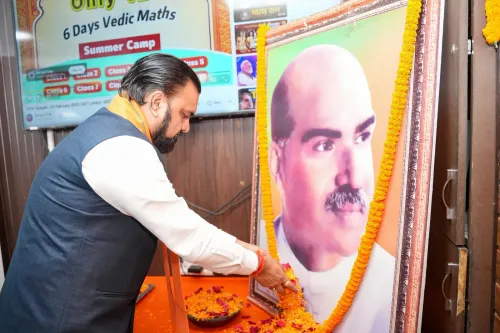
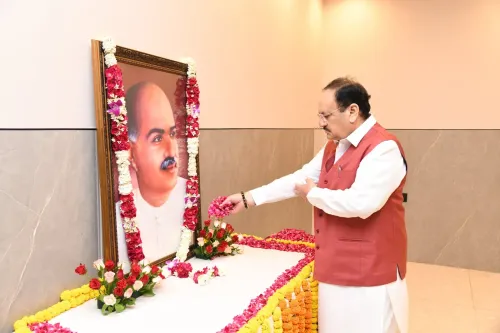
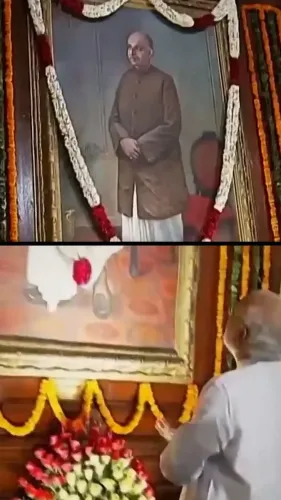
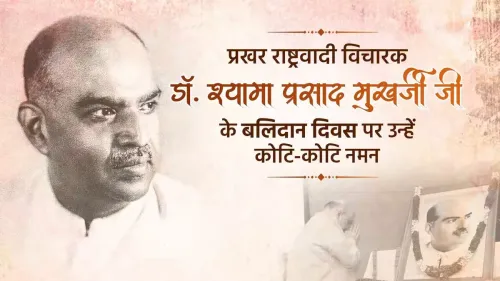
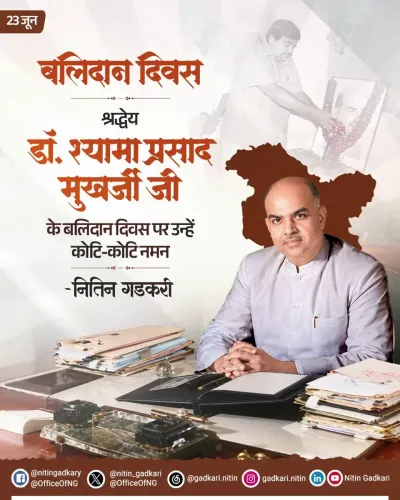
Maharashtra CM Devendra Fadnavis on 23 June paid tribute to Dr. Syama Prasad Mookerjee, founder of the Bharatiya Jana Sangh, on his Balidan Diwas — the anniversary of his 1953 death in detention in Jammu and Kashmir while protesting the region's special constitutional status.
Key Takeaways
Devendra Fadnavis , Chief Minister of Maharashtra, paid tribute to Dr.
Syama Prasad Mookerjee on 23 June , his Balidan Diwas.
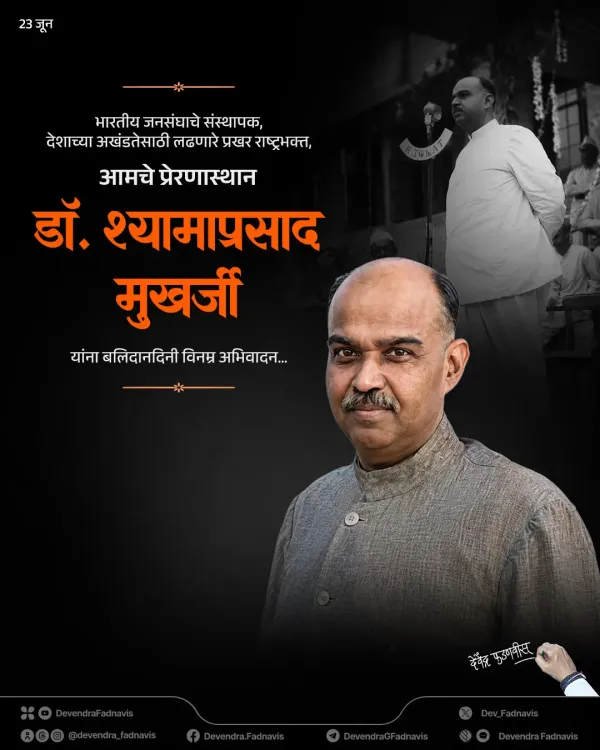
Fadnavis described Mookerjee in Marathi as a 'प्रखर राष्ट्रभक्त' (fierce patriot) and 'आमचे प्रेरणास्थान' (our source of inspiration).
Mookerjee founded the Bharatiya Jana Sangh on 21 October 1951 and died on 23 June 1953 while in detention in Jammu and Kashmir .
The BJP has observed 23 June as Balidan Diwas since its formation in 1980 , linking the day to its commitment to national integration.
The Jana Sangh is the direct ideological predecessor of the Bharatiya Janata Party , which abrogated Article 370 in 2019 — a cause Mookerjee championed.
Maharashtra Chief Minister Devendra Fadnavis on Tuesday, 23 June paid tribute to Dr. Syama Prasad Mookerjee, the founder of the Bharatiya Jana Sangh, on his Balidan Diwas — the anniversary of his death in detention in 1953. Fadnavis described Mookerjee as a distinguished leader, a great educationist, and a source of inspiration for the nationalist movement.
Context
In his post, Fadnavis offered tributes in both English and Marathi, calling Mookerjee a 'प्रखर राष्ट्रभक्त' (fierce patriot) who fought for the country's integrity. He described him as 'आमचे प्रेरणास्थान' — 'our source of inspiration' — underscoring the ideological bond that the Bharatiya Janata Party claims with the Jana Sangh's legacy. The tribute was posted on the morning of 23 June 2026, the day observed annually by the BJP as Balidan Diwas.
Policy Backdrop
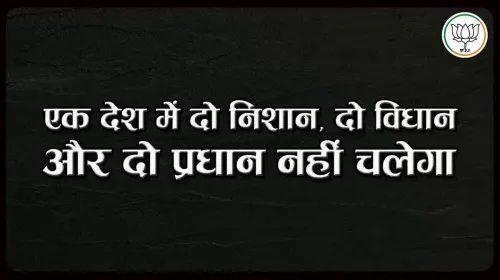
Dr. Syama Prasad Mookerjee founded the Bharatiya Jana Sangh on 21 October 1951, having resigned from Prime Minister Jawaharlal Nehru's cabinet in 1950 over the Nehru-Liaquat Pact. He died on 23 June 1953 while in detention in Jammu and Kashmir, where he had gone to protest the permit system that required Indians from other states to obtain special permission to enter the region — a policy rooted in the territory's special constitutional status. The Jana Sangh later merged into the Janata Party and its cadre went on to form the BJP in 1980, which has since traced its ideological lineage directly to Mookerjee's politics of integral nationalism.
The BJP has observed 23 June as Balidan Diwas since its formation, using the occasion to reaffirm its commitment to national integration and territorial unity. The day carries particular resonance given the party's long-standing position on Article 370, which was abrogated by the central government in 2019 — a move that many within the BJP framed as the fulfilment of Mookerjee's unfinished mission.
Stakeholders and Impact
Balidan Diwas tributes serve a dual purpose for BJP leaders: they honour a founding ideological figure while simultaneously reinforcing the party's narrative of continuity between early post-independence nationalism and its present-day policy positions. For Maharashtra's BJP cadre, such commemorations also function as moments of internal mobilisation, reaffirming shared political identity ahead of state-level activities. BJP leaders across states issue similar tributes annually, making the day a coordinated exercise in party messaging.
What's Next
State units of the BJP typically organise commemorative programmes, seminars, and community outreach events on Balidan Diwas, and Maharashtra is expected to follow suit. Any announcements regarding institutions, roads, or schemes named after Dr. Mookerjee in the state would be in keeping with the BJP's broader practice of honouring its ideological forebears through public infrastructure. The day's observance also sets the tone for the party's messaging on federalism and national unity in the weeks that follow.
Point of View
Part of a coordinated BJP effort across states to reinforce the party's self-image as the inheritor of Mookerjee's nationalist project. The commemoration carries added weight post-2019, as the abrogation of Article 370 allows the party to present Mookerjee's sacrifice as having found its ultimate resolution under BJP governance. In Maharashtra, such tributes also serve as intra-party signals, reminding cadres of the organisation's foundational values during a period when coalition politics can blur ideological edges. The bilingual English-Marathi framing of Fadnavis's post reflects a conscious effort to speak simultaneously to a national BJP audience and a regional Maharashtra base.
NationPress
23 Jun 2026
Frequently Asked Questions
Who is Dr. Syama Prasad Mookerjee and why is Balidan Diwas observed?
Dr. Syama Prasad Mookerjee was an educationist and politician who founded the Bharatiya Jana Sangh in 1951. Balidan Diwas is observed on 23 June, the anniversary of his death in detention in Jammu and Kashmir in 1953, where he had gone to protest the region's special constitutional status.
Why did Syama Prasad Mookerjee resign from Nehru's cabinet?
Dr. Mookerjee resigned from Prime Minister Jawaharlal Nehru's cabinet in 1950 over the Nehru-Liaquat Pact, which he believed did not adequately protect the interests of Hindus in East Pakistan.
What is the connection between the Bharatiya Jana Sangh and the BJP?
The Bharatiya Jana Sangh, founded by Dr. Mookerjee in 1951, merged into the Janata Party in 1977. Its former members went on to form the Bharatiya Janata Party in 1980, making the Jana Sangh the BJP's direct ideological predecessor.
Why did Devendra Fadnavis pay tribute to Mookerjee?
As Maharashtra Chief Minister and a senior BJP leader, Fadnavis paid tribute on Balidan Diwas — 23 June — to honour the Jana Sangh founder's legacy and reaffirm the BJP's ideological continuity with Mookerjee's politics of national integration.
What happened to Article 370 that Mookerjee opposed?
Article 370, which granted Jammu and Kashmir its special constitutional status and was a central issue in Mookerjee's protest, was abrogated by the central government in August 2019.