CM Fadnavis Pays Tribute to Syama Prasad Mookerjee on Balidan Diwas

Synopsis
Maharashtra Chief Minister Devendra Fadnavis on 23 June 2026 paid homage to Dr. Syama Prasad Mookerjee on Balidan Diwas, honouring the Bharatiya Jana Sangh founder's commitment to national unity. The tribute reinforces the BJP's narrative of ideological continuity from its Jana Sangh roots.
Key Takeaways
Maharashtra Chief Minister Devendra Fadnavis posted a tribute to Dr.
Syama Prasad Mookerjee on 23 June 2026 , his death anniversary known as Balidan Diwas .
Mookerjee founded the Bharatiya Jana Sangh in 1951 and died in Srinagar custody on 23 June 1953 while protesting the permit system in Jammu and Kashmir.
The Bharatiya Jana Sangh is the ideological predecessor of the BJP , which was reconstituted in 1980 .
The BJP's 2019 revocation of Article 370 was described by the party as fulfilling Mookerjee's lifelong goal of full integration of Jammu and Kashmir .
Annual Balidan Diwas tributes by BJP leaders reinforce the party's narrative of ideological continuity and national unity.
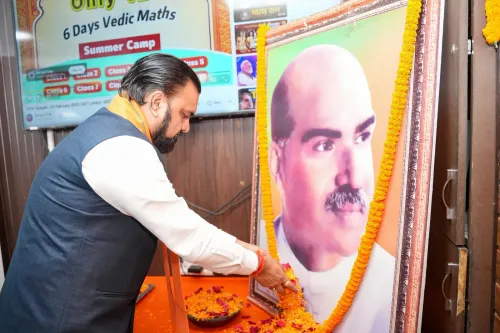
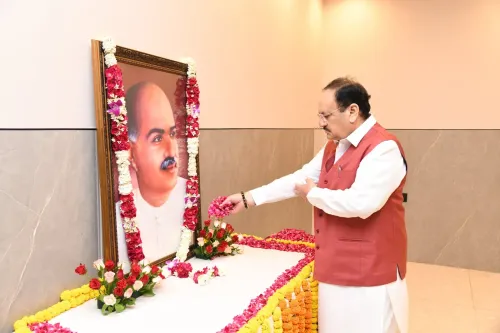
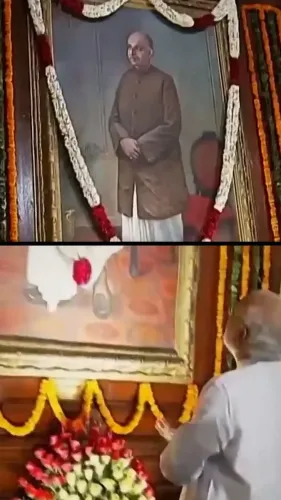
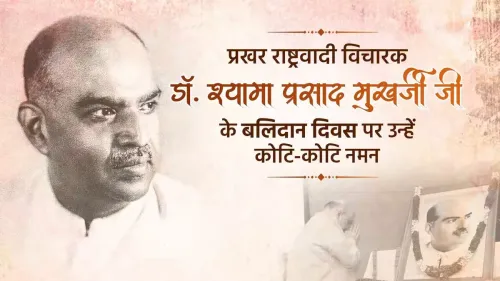
Maharashtra Chief Minister Devendra Fadnavis on Tuesday, 23 June 2026, paid tribute to Dr. Syama Prasad Mookerjee, founder of the Bharatiya Jana Sangh, on his death anniversary, observed nationally as Balidan Diwas. Fadnavis hailed Mookerjee's ideals of national unity and described him as an enduring source of inspiration for generations.
Context
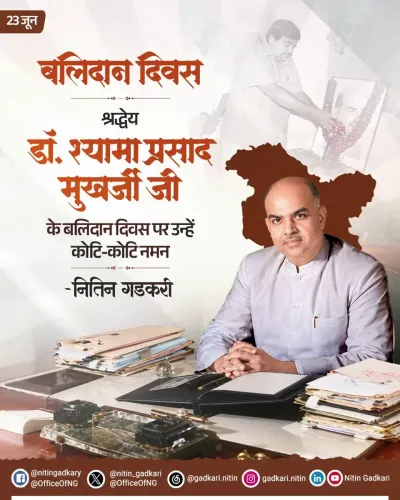
Posting on X, Fadnavis wrote in English: 'Remembering the founder of Bharatiya Jan Sangh, Dr. Syama Prasad Mookerjee, on his BalidanDin... His ideals and unwavering commitment to national unity continue to inspire generations.' In Marathi, he added: 'भारतीय जनसंघाचे संस्थापक, प्रखर राष्ट्रवादी विचारवंत, राष्ट्रीय अखंडतेचे मूर्तिमंत, आमचे प्रेरणास्थान डॉ. श्यामाप्रसाद मुखर्जी यांना बलिदानदिनी विनम्र अभिवादन…' ['Humble salutations on Balidan Diwas to Dr. Syama Prasad Mookerjee — founder of the Bharatiya Jana Sangh, fervent nationalist thinker, embodiment of national integrity, and our source of inspiration.']
Policy Backdrop
Dr. Syama Prasad Mookerjee founded the Bharatiya Jana Sangh in 1951 and became one of the most vocal opponents of Article 370, which granted special status to Jammu and Kashmir. He died on 23 June 1953 while in detention in Srinagar, having entered the state in defiance of a permit system he considered unconstitutional — a death that his party and its successors have since commemorated as a political martyrdom.
The Bharatiya Jana Sangh later merged into the Janata Party before its cadre reconstituted the Bharatiya Janata Party (BJP) in 1980. The BJP has consistently positioned itself as the ideological heir to the Jana Sangh, and the 2019 revocation of Article 370 was officially described by the party as completing the territorial integration of Jammu and Kashmir that Mookerjee had championed seven decades earlier.
Stakeholders and Impact
Annual tributes to Mookerjee on 23 June have become standard practice among BJP office-bearers at both the central and state levels, reinforcing the party's narrative of ideological continuity from the Jana Sangh era. For Maharashtra, a state where the BJP governs, such messaging from the Chief Minister aligns the state administration with the national leadership's emphasis on integral nationalism.
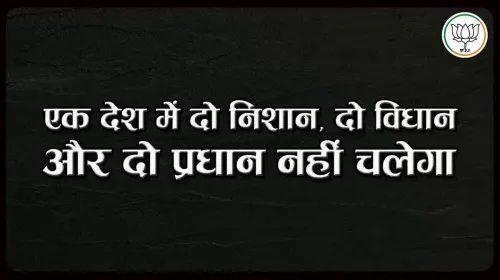
The tributes resonate particularly with BJP cadre and affiliated nationalist organisations, for whom Mookerjee's legacy of opposing the two-permit system and advocating 'one nation, one Constitution' remains a foundational reference point. Chief ministers issuing such statements also signal to the party base that state governments remain anchored to the BJP's ideological roots.
What's Next
State governments have, in past years, announced commemorative programmes — including library dedications and public lectures — in the weeks following 23 June. Parliamentary references to Mookerjee's legacy are also likely when the monsoon session of the legislature convenes. Whether Maharashtra follows with a formal state-level programme around this year's Balidan Diwas remains to be seen, but Fadnavis's public tribute sets the tone for the party's observance across the state.
Point of View
One that the BJP deploys annually to reinforce its claim of ideological descent from the Jana Sangh. By invoking Mookerjee's 'national unity' credentials — the same framing used to justify the 2019 Article 370 revocation — the Chief Minister aligns Maharashtra's state government with the BJP's central narrative of integral nationalism. The bilingual English-Marathi format is also telling: it signals both a national audience and a local Maharashtrian base simultaneously. Such tributes accumulate into a sustained identity architecture that differentiates the BJP from rivals on the question of historical nationalist legacy.
NationPress
23 Jun 2026
Frequently Asked Questions
Why is 23 June observed as Balidan Diwas?
23 June is observed as Balidan Diwas to mark the death anniversary of Dr. Syama Prasad Mookerjee , who died on this date in 1953 while in detention in Srinagar . He had entered Jammu and Kashmir without a permit to protest the state's separate entry rules, and his death in custody is commemorated by the BJP and affiliated organisations as a political martyrdom.
Who was Dr. Syama Prasad Mookerjee?
Dr. Syama Prasad Mookerjee was a Bengali politician and academic who founded the Bharatiya Jana Sangh in 1951 . He was a prominent critic of Article 370 and the two-permit system that treated Jammu and Kashmir differently from the rest of India. He is regarded as the ideological forebear of the modern BJP .
What is the connection between Bharatiya Jana Sangh and BJP?
The Bharatiya Jana Sangh , founded by Dr. Syama Prasad Mookerjee in 1951 , merged into the Janata Party in the late 1970s. Its former members reconstituted the Bharatiya Janata Party (BJP) in 1980 , making the Jana Sangh the direct ideological and organisational predecessor of the BJP.
Why did Devendra Fadnavis pay tribute to Mookerjee?
Maharashtra Chief Minister Devendra Fadnavis is a senior BJP leader, and paying tribute to Dr. Syama Prasad Mookerjee on Balidan Diwas is a standard annual practice among BJP office-bearers. It reinforces the party's narrative of ideological continuity from the Jana Sangh and its commitment to national unity.
What did Mookerjee's opposition to Article 370 lead to?
Dr. Mookerjee campaigned against Article 370 and the separate permit system for Jammu and Kashmir in the early 1950s, ultimately dying in detention there in 1953 . Decades later, the BJP government revoked Article 370 in 2019 , officially describing the move as fulfilling the goal of complete integration of Jammu and Kashmir that Mookerjee had championed.