CM Fadnavis pledges to fulfil Annasaheb Patil's vision for Mathadi workers
Synopsis
At a large Mathadi workers' rally in Navi Mumbai on 25 September 2026, CM Devendra Fadnavis pledged to fulfil the legacy of late labour leader Annasaheb Patil, invoking the 1969 Mathadi welfare law and reaffirming the state's commitment to head-load workers.
Key Takeaways
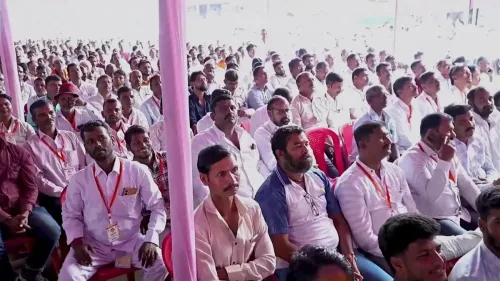
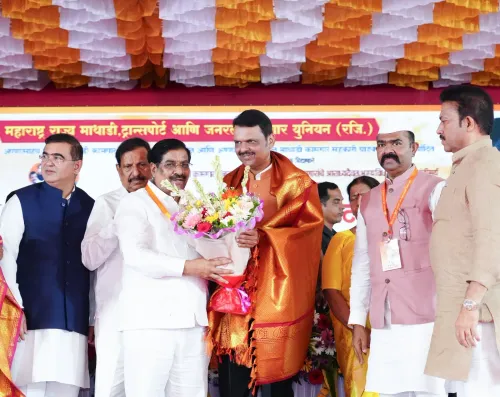
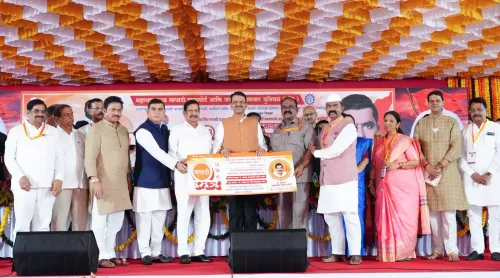
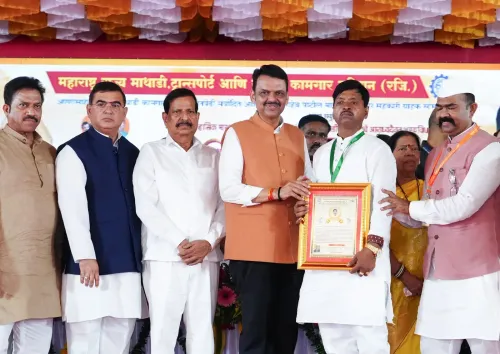
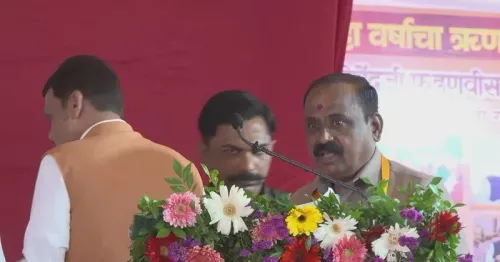
CM Devendra Fadnavis addressed a grand Mathadi workers' rally in Navi Mumbai on 25 September 2026 .
He reaffirmed the state government's commitment to realising the vision of late labour leader Annasaheb Patil .
Annasaheb Patil's movement led to the landmark Maharashtra Mathadi, Hamal and Other Manual Workers (Regulation of Employment and Welfare) Act, 1969 .
Mathadi workers — head-load porters and manual labourers — are heavily concentrated in the Mumbai–Thane–Navi Mumbai corridor .
Dedicated tripartite welfare boards for Mathadi workers have been maintained by successive Maharashtra governments since 1969.
No specific new scheme or wage revision was announced in the public post; implementation of pending demands remains to be watched.
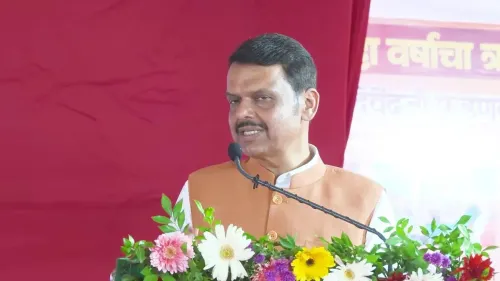
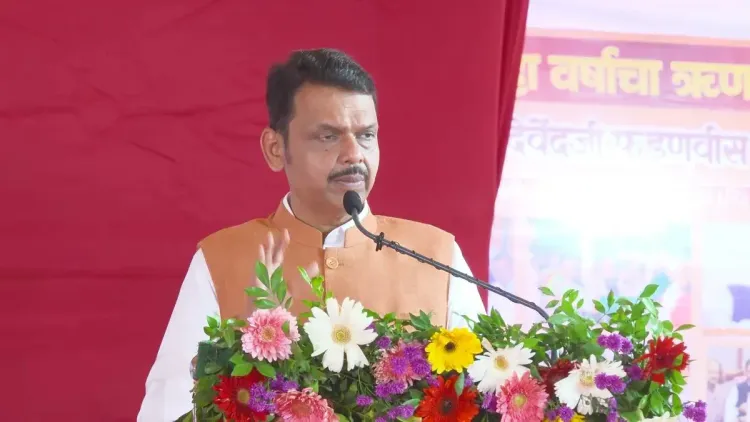
A vast gathering of Mathadi workers in Navi Mumbai on 25 September 2026 became the stage for a pointed commitment — Maharashtra Chief Minister Devendra Fadnavis reaffirmed that the state government is steadily working to realise the dream of the late Annasaheb Patil, the pioneering leader who fought to secure dignity and legal protection for the state's head-load labourers.
In a bilingual post on X, Fadnavis wrote: 'स्व. अण्णासाहेब पाटील यांचे स्वप्न पूर्ण करण्याच्या दिशेने राज्य सरकार सातत्याने काम करत आहे' — 'The state government is continuously working towards fulfilling the dream of the late Annasaheb Patil.' The message was addressed to the grand Mathadi workers' rally in Navi Mumbai, and carries the event hashtags #MathadiKamgar, underscoring its targeted audience.
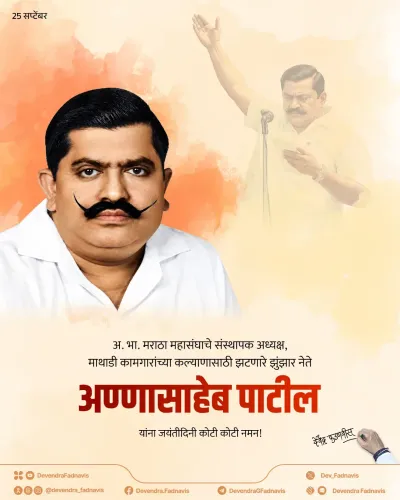
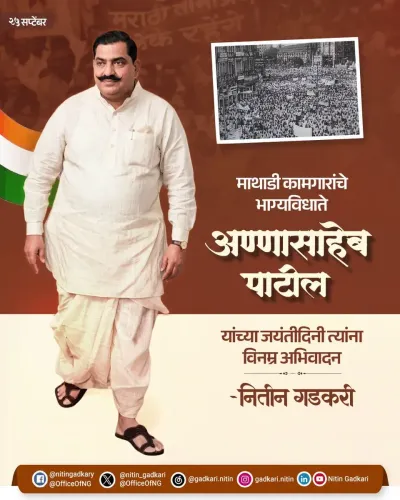
Who was Annasaheb Patil — and why his name still moves a crowd
Annasaheb Patil is revered among Maharashtra's unorganised labour movement as the man who transformed the lives of head-load workers — the porters, loaders and manual labourers who kept the state's markets, godowns and transport yards moving. His sustained agitation led directly to one of independent India's most significant pieces of labour legislation: the Maharashtra Mathadi, Hamal and Other Manual Workers (Regulation of Employment and Welfare) Act, 1969.
That law created dedicated tripartite welfare boards — employer, worker and government — to handle registration, wage fixation and social benefits for a workforce that had previously operated entirely outside formal protection. Annasaheb Patil didn't just win a law; he built an institutional architecture that outlasted him. Invoking his name at a mass gathering is not merely ceremonial — it is a direct signal to the Mathadi community that the current government sees itself as the custodian of that legacy.
Why Navi Mumbai — and who the Mathadi workers are
Mathadi workers are concentrated precisely in the Mumbai–Thane–Navi Mumbai corridor, where large wholesale markets, logistics hubs and construction yards create constant demand for manual loading and carrying labour. Navi Mumbai — home to the APMC market complex, one of Asia's largest agricultural produce trading centres — is in many ways the heartland of Mathadi employment in the state. Holding a grand rally here is a deliberate geographical choice, not an accident of convenience.
Successive Maharashtra governments, across party lines, have maintained the Mathadi Board structure and conducted periodic revisions of piece-rate wages to keep pace with inflation and changing conditions. The current administration's outreach follows that established pattern — but the scale of today's gathering, described as a bhavya melava (grand assembly), signals a deliberate push to deepen engagement with this constituency.
The pledge and what follows
Fadnavis stopped short of announcing specific new schemes or revised wage rates — at least in the public post — but the framing of the message is forward-looking. The phrase 'satatpane karya karat ahe' (is continuously working) suggests an ongoing programme rather than a one-time event. Whether that translates into concrete announcements on pending welfare board demands or fresh wage revisions will be the metric by which the Mathadi community judges this commitment.
For now, one of Maharashtra's most organised blocs of unorganised labour has heard their Chief Minister stand before them and invoke the name of their founding champion. The next test is in the follow-through.
Point of View
CM Fadnavis is doing more than paying homage — he is staking a claim to a labour-welfare legacy that has historically mobilised hundreds of thousands of voters in the Mumbai metropolitan region. The Mathadi workforce, though classified as 'unorganised,' has one of Maharashtra's most institutionally mature advocacy structures, giving any government engagement with it an immediate political resonance. This move fits a broader pattern of the Mahayuti administration courting organised blocs within the unorganised sector ahead of potential electoral cycles, using welfare-board institutions as both a policy instrument and a political bridge. The real test will be whether the 'continuous work' rhetoric translates into measurable outcomes — wage revisions, expanded board coverage, or resolution of pending grievances.
NationPress
25 Sept 2026
Frequently Asked Questions
Who was Annasaheb Patil and what did he do for Mathadi workers?
Annasaheb Patil was a late Maharashtra labour leader who spearheaded the movement for the rights of head-load workers, leading to the enactment of the Maharashtra Mathadi, Hamal and Other Manual Workers (Regulation of Employment and Welfare) Act in 1969, which created dedicated welfare boards for this workforce.
What is the Mathadi workers' welfare board in Maharashtra?
The Mathadi welfare board is a tripartite body — comprising employer, worker and government representatives — established under the 1969 Act to oversee registration, wage fixation and social welfare benefits for head-load porters and manual workers in Maharashtra's markets, godowns and transport sectors.
Why was the Mathadi rally held in Navi Mumbai?
Navi Mumbai is a major concentration point for Mathadi workers due to its large wholesale markets, logistics hubs and construction sites, including the APMC complex. It sits at the heart of the Mumbai–Thane–Navi Mumbai corridor where Mathadi employment is densest.
What did CM Fadnavis announce for Mathadi workers at the rally?
CM Devendra Fadnavis reaffirmed the state government's commitment to fulfilling the vision of late leader Annasaheb Patil. No specific new scheme or wage revision was announced in the public post; follow-up announcements on pending welfare board demands are awaited.
What is the Maharashtra Mathadi Act 1969?
The Maharashtra Mathadi, Hamal and Other Manual Workers (Regulation of Employment and Welfare) Act, 1969 is a landmark state labour law that brought head-load workers under formal regulation, established welfare boards, and mandated wage and benefit standards for one of Maharashtra's largest unorganised labour segments.