CM Fadnavis Relaunches 'Mathadi Mitra' for Headload Workers

Synopsis
Chief Minister Devendra Fadnavis relaunched 'Mathadi Mitra', a fortnightly publication advocating rights and awareness for Maharashtra's headload workers, at a Navi Mumbai event on 25 September 2026, underlining the state's continued commitment to unorganised-sector labour welfare.
Key Takeaways
CM Devendra Fadnavis personally relaunched the fortnightly publication 'Mathadi Mitra' in Navi Mumbai on 25 September 2026 .
The publication is dedicated to voicing the rights and welfare awareness of Mathadi (headload and manual) workers in Maharashtra.
Mathadi workers are protected under the Maharashtra Mathadi, Hamal and Other Manual Workers (Regulation of Employment and Welfare) Act, 1969 .
The Act established a welfare board that funds housing, health, and education benefits for registered workers through employer levies.
Maharashtra governments have a pattern of supporting targeted publications as low-cost awareness tools for unorganised-sector workers.
The Navi Mumbai venue is significant as the city's markets and logistics corridors house a large concentration of registered Mathadi workers.
A fortnightly publication once silenced is back — and Maharashtra's Chief Minister is the one turning the page. Chief Minister Devendra Fadnavis relaunched the labour welfare publication 'Mathadi Mitra' in Navi Mumbai on Friday, 25 September 2026, reviving a voice for the state's headload and manual workers.
What 'Mathadi Mitra' stands for
The publication's name translates literally as 'Mathadi Mitra' — 'Friend of the Headload Worker'. The Chief Minister's Office described it as a fortnightly dedicated to 'voicing the legitimate rights of Mathadi workers and bringing awareness to the labour movement'. In a sector where workers often lack access to formal communication channels, a regularly published periodical carries outsized significance — it is simultaneously a rights bulletin, a policy update, and a symbol of institutional recognition.
Who Mathadi workers are — and why they need a statute
Mathadi workers are a distinct category under Maharashtra law: headload and manual workers employed in markets, transport yards, and similar informal settings. Their welfare is governed by the Maharashtra Mathadi, Hamal and Other Manual Workers (Regulation of Employment and Welfare) Act, 1969 — one of the earliest state-level statutes in India to extend social-security protections to unorganised labour. The Act established a dedicated welfare board to register workers, collect levies from employers, and channel funds into housing, health, and education benefits.
Despite that statutory backbone, awareness of entitlements has historically been patchy on the ground. Publications like Mathadi Mitra fill exactly that gap — translating policy into plain language for a workforce that is largely non-white-collar and often disconnected from official digital channels.
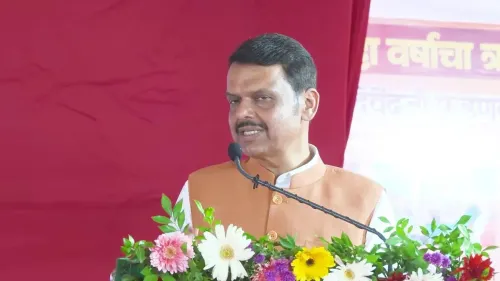
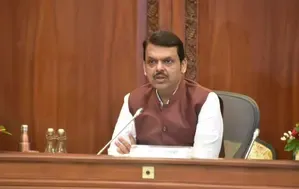
Fadnavis at the podium in Navi Mumbai
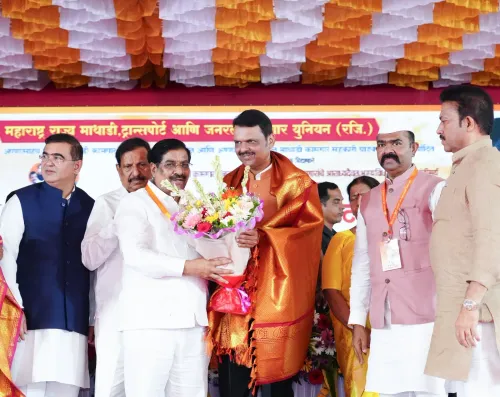
The relaunch event brought together several legislators and officials tagged in the official post, including Speaker Rahul Narvekar and labour-sector representatives. Maharashtra governments across political cycles have periodically supported targeted publications and worker-awareness drives as a low-cost, high-reach welfare complement — a pattern the Fadnavis administration is now explicitly continuing. The choice of Navi Mumbai, a major commercial and logistics hub, is itself a signal: the city's markets and freight corridors are home to a significant concentration of registered Mathadi workers.
The revival of the publication also arrives as the state government watches for opportunities to extend similar outreach models to other unorganised-sector segments across Maharashtra's regions.
For a workforce that built India's mandis and markets with their hands, having the Chief Minister show up to relaunch their magazine is more than ceremony — it is a reminder that the 1969 Act's promise still has living advocates in 2026.
Point of View
Unionised Mathadi constituency — carry genuine electoral weight in Mumbai's market belts. For the Fadnavis government, reviving a dormant publication is a low-cost, high-visibility signal to organised unorganised labour, a constituency that has historically been courted by multiple political formations. The move also dovetails with a broader push to demonstrate administrative continuity with Maharashtra's progressive labour-law legacy dating to 1969, distinguishing a statutory commitment from mere campaign rhetoric. Watchers of state labour policy will note whether the relaunch is accompanied by substantive welfare-board reforms or remains primarily a communications exercise.
NationPress
25 Sept 2026
Frequently Asked Questions
What is Mathadi Mitra?
'Mathadi Mitra' is a fortnightly publication focused on advocating the rights and raising awareness among Mathadi (headload and manual) workers in Maharashtra. It was relaunched by Chief Minister Devendra Fadnavis in Navi Mumbai on 25 September 2026.
Who are Mathadi workers in Maharashtra?
Mathadi workers are headload and manual labourers employed in markets, transport yards, and similar informal workplaces in Maharashtra. Their employment and welfare are regulated under the Maharashtra Mathadi, Hamal and Other Manual Workers (Regulation of Employment and Welfare) Act, 1969.
What is the Maharashtra Mathadi Act 1969?
The Maharashtra Mathadi, Hamal and Other Manual Workers (Regulation of Employment and Welfare) Act, 1969 is a state law that established a welfare board to register Mathadi workers, collect levies from employers, and provide benefits such as housing, health care, and education to registered workers.
Why did CM Fadnavis relaunch Mathadi Mitra?
The Chief Minister's Office stated the publication is meant to give voice to the legitimate rights of Mathadi workers and bring awareness to the labour movement. It serves as a direct communication channel for a largely non-digital workforce covered under state welfare regulations.
Where was the Mathadi Mitra relaunch event held?
The relaunch event was held in Navi Mumbai, Maharashtra, on 25 September 2026. Navi Mumbai was chosen partly because its markets and freight corridors are home to a significant number of registered Mathadi workers.