CM Fadnavis: Pune memorial for Lahuji Vastad Salve 65% done
Synopsis
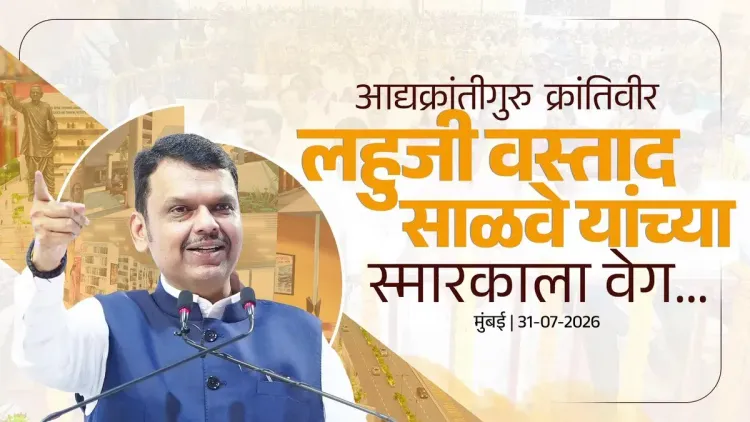
Maharashtra CM Devendra Fadnavis announced on 31 July 2026 that the Pune memorial for 19th-century reformer Lahuji Vastad Salve is 65 per cent complete, while also laying the foundation stone for the Lokshahir Annabhau Sathe Research and Training Institute in Mumbai.
Key Takeaways
The Pune memorial for Adya Krantiguru Krantiveer Lahuji Vastad Salve is 65 per cent complete , CM Fadnavis confirmed on 31 July 2026 .
Fadnavis pledged to complete the remaining work on the 'grand memorial' soon.
The foundation stone for the Lokshahir Annabhau Sathe Research and Training Institute was laid in Mumbai on the same day.
Lahuji Vastad Salve was a 19th-century wrestler-revolutionary closely associated with Jyotirao Phule's anti-caste movement.
Annabhau Sathe was a 20th-century Marathi folk poet and activist who championed labourers and marginalised communities.
Both projects continue Maharashtra's long-standing pattern of state-funded memorials and institutes for social reformers.
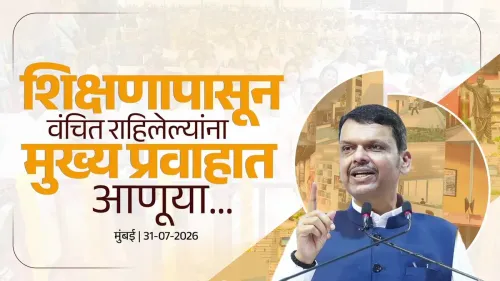
Two of Maharashtra's most towering social reformers are getting the physical tribute the state has long promised — and Maharashtra Chief Minister Devendra Fadnavis marked 31 July 2026 with a twin announcement that puts both projects firmly in the public eye. The grand memorial for Adya Krantiguru Krantiveer Lahuji Vastad Salve in Pune has crossed the 65 per cent completion mark, Fadnavis declared, pledging to see the remaining work through to its finish.
Posting in Marathi and Hindi, Fadnavis said: 'आद्यक्रांतीगुरु क्रांतिवीर लहुजी वस्ताद साळवे यांच्या पुण्यातील स्मारकाचे 65% काम पूर्ण झाले असून, लवकरच हे भव्य स्मारकही पूर्णत्वास नेऊ!' — 'Sixty-five per cent of the work on the Pune memorial for Adya Krantiguru Krantiveer Lahuji Vastad Salve is complete, and we will soon bring this grand memorial to completion!'
Who was Lahuji Vastad Salve — and why Pune?
Lahuji Vastad Salve was a 19th-century wrestler, revolutionary, and social reformer from Maharashtra, revered as the Adya Krantiguru — the 'first revolution-guru' — for his role in awakening anti-caste consciousness and his close association with Jyotirao Phule's reform movement. Pune, the heartland of that movement, is the natural home for his memorial. For communities that trace their social-reform lineage to Salve and Phule, the Pune memorial carries deep symbolic weight — a permanent, stone-and-mortar acknowledgment of a legacy that shaped modern Maharashtra.
Foundation stone for the Annabhau Sathe institute laid in Mumbai
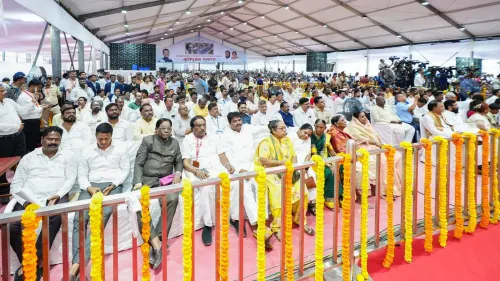
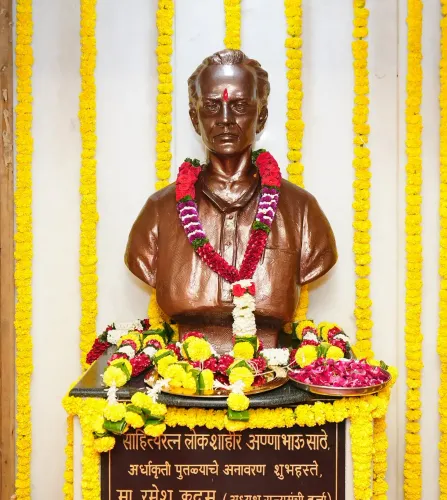
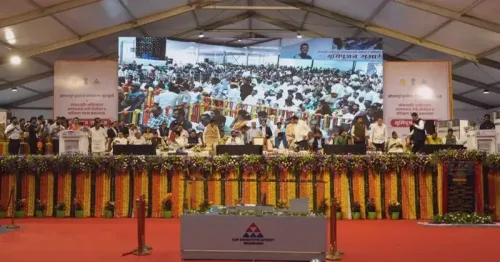
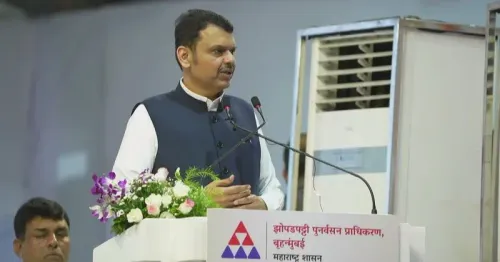
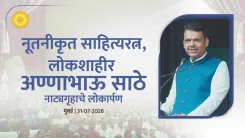
The same day, Mumbai witnessed the bhoomipooja — foundation-stone laying — of the Lokshahir Annabhau Sathe Research and Training Institute project. Annabhau Sathe, the 20th-century Marathi folk poet and social activist, gave voice to labourers and marginalised communities through his tamasha performances and writing; a dedicated research institute in his name would institutionalise the study and dissemination of that tradition. The hashtag #LokshahirAnnabhauSathe in the Chief Minister's post signals the state's intent to keep his memory active in public discourse.
Maharashtra's pattern of reformer-memorial infrastructure
Neither project is born in a vacuum. Maharashtra governments across administrations have consistently channelled state funds into memorials and cultural institutes honouring the state's anti-caste and independence-era reformers — from Dr B. R. Ambedkar to Savitribai Phule. These are not merely cultural gestures; they are infrastructure investments that shape civic identity, attract researchers, and serve as pilgrimage points for communities whose histories have often been sidelined in mainstream national narratives. The Fadnavis government's simultaneous push on both the Salve memorial and the Sathe institute fits squarely within that longer arc.
With 35 per cent of the Pune memorial still to be built, and the Mumbai institute just breaking ground, the real test will be delivery speed. Maharashtra has a history of reformer-memorial projects that stall between announcements and inaugurations. Fadnavis has now staked his word — publicly, in two languages — on seeing both through.
Point of View
One ground-breaking — give the Fadnavis government a tangible cultural-governance story to tell ahead of the remaining assembly term. Honouring Salve and Sathe, both icons for Dalit and OBC communities in Maharashtra, carries clear political significance in a state where social-justice symbolism shapes electoral arithmetic. The 65 per cent completion figure also functions as accountability framing: it sets a public benchmark against which the project's eventual delivery — or delay — will be measured. Whether these projects translate into operational institutions, or join Maharashtra's long list of stalled reformer-memorial schemes, will define the legacy of this particular pledge.
NationPress
31 Jul 2026
Frequently Asked Questions
Who was Lahuji Vastad Salve?
Lahuji Vastad Salve was a 19th-century Maharashtrian wrestler, revolutionary, and social reformer revered as 'Adya Krantiguru' (first revolution-guru) for his role in the anti-caste movement alongside Jyotirao Phule.
Where is the Lahuji Vastad Salve memorial being built?
The memorial is being constructed in Pune, Maharashtra, and CM Devendra Fadnavis announced on 31 July 2026 that 65 per cent of the work has been completed.
Who was Annabhau Sathe?
Annabhau Sathe was a 20th-century Marathi folk poet, writer, and social activist known for his tamasha performances and literary works that highlighted the lives of labourers and marginalised communities.
What is the Lokshahir Annabhau Sathe Research and Training Institute?
It is a state-proposed institute in Mumbai dedicated to research and training in the tradition of Lokshahir Annabhau Sathe. Its foundation stone was laid in Mumbai on 31 July 2026.
What did CM Fadnavis announce on 31 July 2026?
CM Devendra Fadnavis announced that the Pune memorial for Lahuji Vastad Salve is 65 per cent complete and pledged to finish it soon, while also attending the bhoomipooja of the Annabhau Sathe Research and Training Institute in Mumbai.