CM Fadnavis Secures Defence Land Deal for Nagpur Airport Phase I
Synopsis
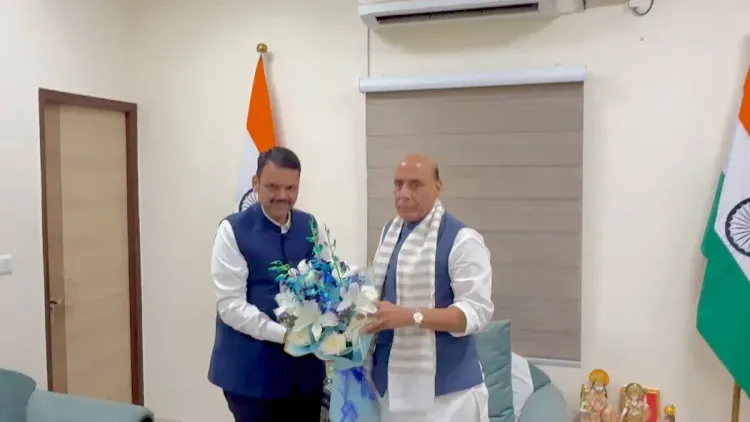
Maharashtra CM Devendra Fadnavis met Defence Minister Rajnath Singh in New Delhi on October 7, securing an agreement to hand over 9 hectares of Air Force land for Nagpur Airport's terminal building immediately, with 18 more hectares due by June 2028, enabling Phase I completion before June 2029.
Key Takeaways
9 hectares of Air Force land will be handed over now, along with construction permissions for the Nagpur Airport terminal building.
The remaining 18 hectares of required Air Force land will be made available by June 2028 .
GMR Nagpur International Airport Limited (GNIAL) and the Maharashtra government will fund connectivity to the new Air Force site and support operations during transition.
Union Minister Nitin Gadkari participated in the meeting online, alongside senior Air Force and state government officials.
The agreement clears the path for Phase I of Nagpur Airport development to be completed before June 2029 .
A critical infrastructure logjam got a breakthrough on Wednesday, October 7 — Maharashtra Chief Minister Devendra Fadnavis flew to New Delhi and walked out of a meeting with Defence Minister Rajnath Singh with a concrete, time-bound agreement to release Air Force land blocking the expansion of Nagpur Airport.
What was agreed at the New Delhi meeting
The meeting produced two deliverables. First, construction permissions will be granted immediately, along with the handover of 9 hectares of land needed specifically for the new terminal building. Second, the remaining 18 hectares of Air Force land will be transferred by June 2028 — a firm deadline where none existed before.
Union Minister Nitin Gadkari, who joined the discussion online, lent further political weight to the outcome. Senior Indian Air Force officers and Maharashtra government officials were also present, signalling that the agreement carries operational, not merely political, backing.
Maharashtra and GMR's commitments to the Air Force
The deal is not one-sided. In exchange, the Government of Maharashtra and GMR Nagpur International Airport Limited (GNIAL) — the private airport developer — have committed to building connectivity infrastructure to the new Air Force site and to supporting the Air Force's day-to-day operations until its replacement facilities are fully ready. That arrangement protects operational continuity for the defence establishment while construction proceeds around it.
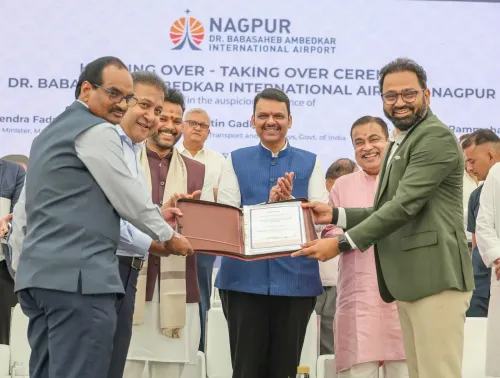
GNIAL operates Dr. Babasaheb Ambedkar International Airport, Nagpur, and has been pursuing runway, taxiway, and terminal expansion as passenger demand in central India grows. Land availability from the adjacent Air Force station has been the single most consequential constraint on that expansion timeline.
The June 2029 Phase I finish line
Wednesday's agreement clears the path for the Phase I development of Nagpur Airport to be completed before June 2029 — the target Fadnavis had committed to. The sequencing now makes sense: construction permissions flow immediately, the terminal-building plot is handed over now, the balance land arrives mid-2028, leaving roughly a year of finishing work before the Phase I deadline.
Nagpur sits at India's geographic centre and is a designated Multimodal Logistics Hub under national freight policy. Its airport's expansion is therefore not just a city infrastructure story — it feeds directly into the broader supply-chain architecture that planners have built around the region. A delayed airport means delayed cargo throughput, slower connectivity for Vidarbha's industry corridor, and lost time on an investment already in motion.
For Fadnavis, the breakthrough also carries political geometry: Nagpur is his home constituency, and Gadkari — another Nagpur heavyweight — joining the meeting online amplifies the message that the city's infrastructure ambitions now have unified, cross-ministry momentum behind them.
Point of View
Nagpur's most powerful Union minister, signals that the Centre is now co-invested in the airport's timeline, reducing the risk of future slippage. For the BJP's Maharashtra leadership, delivering visible infrastructure progress in Fadnavis's home city before state elections matters as much as the logistics dividend. The June 2028 and June 2029 deadlines are now on record — which means accountability is built in.
NationPress
7 Oct 2026
Frequently Asked Questions
How much Air Force land is needed for Nagpur Airport expansion?
A total of 27 hectares of Air Force land is required — 9 hectares for the terminal building (being released now with construction permissions) and 18 hectares more to be handed over by June 2028 .
When will Nagpur Airport Phase I development be completed?
According to the agreement reached on October 7, 2026 , Phase I of Nagpur Airport development is targeted for completion before June 2029 .
Who operates Nagpur Airport?
GMR Nagpur International Airport Limited (GNIAL) operates Dr. Babasaheb Ambedkar International Airport in Nagpur and is the private developer handling the airport's expansion.
What did Devendra Fadnavis meet Rajnath Singh for?
Maharashtra Chief Minister Devendra Fadnavis met Defence Minister Rajnath Singh in New Delhi on October 7, 2026 to negotiate the early handover of Air Force land required for Nagpur Airport's development.
What will Maharashtra provide to the Air Force in return for the land?
The Government of Maharashtra and GNIAL will build the necessary connectivity infrastructure to the new Air Force site and support the Air Force's day-to-day operations until its new facilities are completed.