Nagpur Airport handed to GMR: Capacity to triple to 3 crore passengers by 2029
Synopsis
After six years of legal battles and policy delays, Babasaheb Ambedkar Nagpur Airport is finally in GMR's hands — and the ambitions are outsized. Passenger capacity is set to triple to 3 crore, direct flights to Dubai and Singapore are on the agenda, and the state is betting the entire Vidarbha growth story on this one handover. The 2029 deadline is the one to watch.
Key Takeaways
Babasaheb Ambedkar Nagpur Airport was formally handed over to GMR Company on 25 June 2025 for modernisation and expansion.
Annual passenger capacity will grow from 30 lakh to 60 lakh in the near term, with a long-term target of 3 crore passengers .
The full airport project, including two terminals and two runways , is targeted for completion by 2029 .
Direct international flights to Dubai , Singapore , Europe , and the United States are planned as a priority.
The state government will provide land for MIHAN and MIDC , with the airport expected to benefit neighbouring states Telangana , Chhattisgarh , and Madhya Pradesh .
GMR first qualified as eligible bidder in 2019 ; legal challenges delayed the handover by several years.
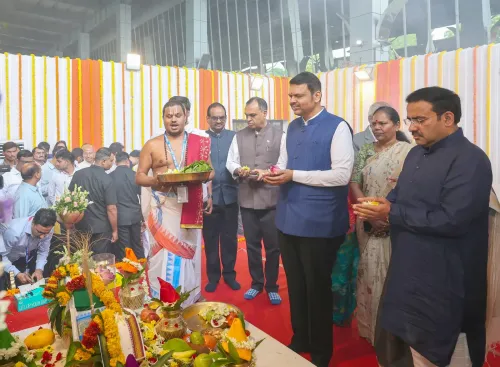
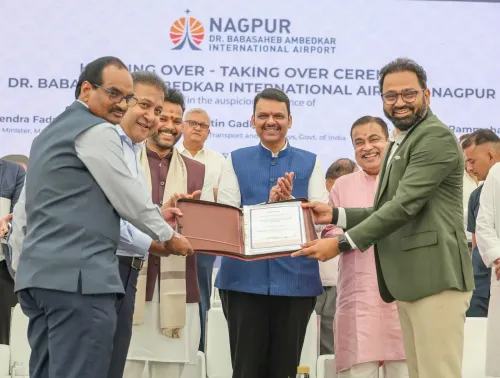
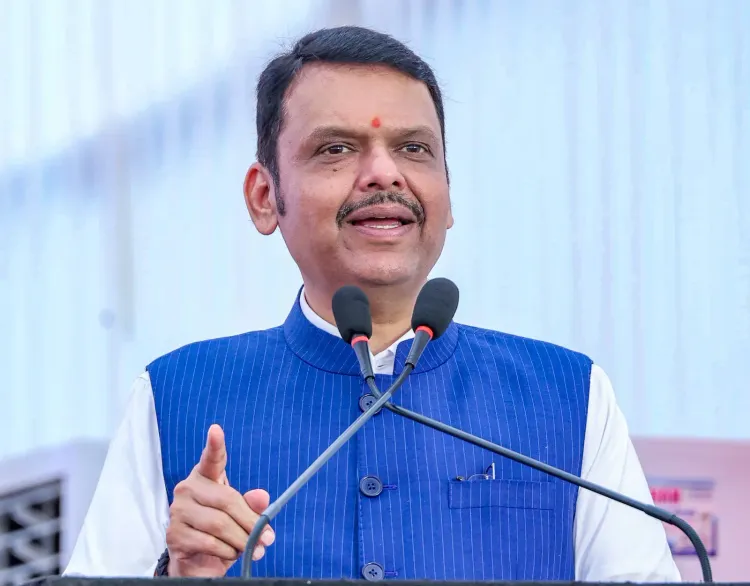
Babasaheb Ambedkar Nagpur Airport was formally handed over to GMR Company on Thursday, 25 June, marking a pivotal shift in the region's infrastructure trajectory. Maharashtra Chief Minister Devendra Fadnavis declared the airport will become the economic growth engine for Vidarbha and central India, backed by surging investments in defence aviation manufacturing, auto-aviation, and maintenance command sectors.
Key Developments at the Handover Ceremony
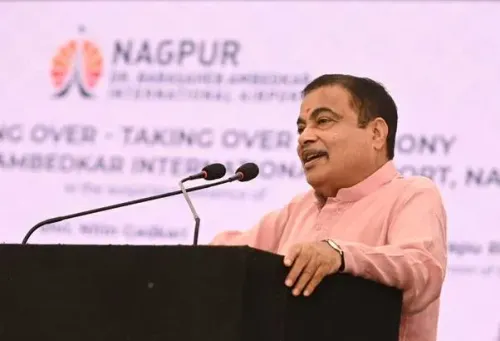
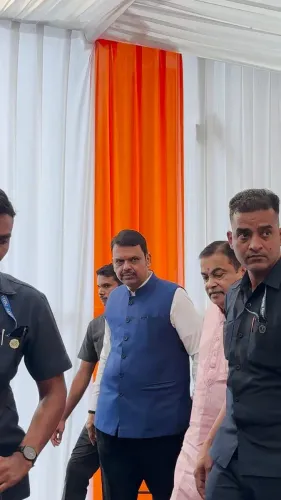
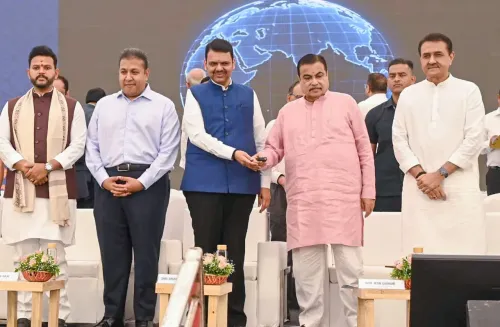
The handover function was held at the airport premises in the presence of Union Civil Aviation Minister Kinjarapu Rammohan Naidu, Union Road Transport and Highways Minister Nitin Gadkari, and former civil aviation minister Praful Patel. Chief Minister Fadnavis noted that tenders for the airport's modernisation were first floated in 2018, with GMR qualifying as the eligible bidder in 2019. Legal challenges in the High Court and the Supreme Court delayed the process before a positive verdict cleared the path forward.
Prime Minister Narendra Modi extended full support to the project, and the Union Cabinet formally approved it ahead of Thursday's handover.
What GMR's Takeover Means for Nagpur
Under the new arrangement, GMR will oversee the modernisation, expansion, and overall development of the airport. Chief Minister Fadnavis stated that two terminals and two runways are essential to handle projected passenger and cargo volumes. The airport already benefits from connectivity via metro rail and road networks, and parallel infrastructure work is underway to ensure seamless access in the near future.
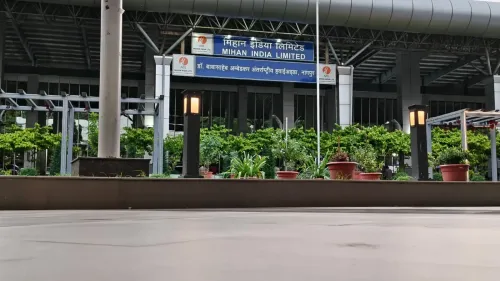
Fadnavis expressed confidence that visible transformation in passenger facilities should be evident within a year, with the entire airport project targeted for completion by 2029. The state government has also committed to providing land for the Multi-modal International Cargo Hub and Airport at Nagpur (MIHAN) and the Maharashtra Industrial Development Corporation (MIDC), along with all necessary cooperation.
Passenger Capacity to Triple; Direct Global Flights Planned
Union Civil Aviation Minister Naidu outlined an ambitious capacity roadmap: the airport's current annual passenger handling of 30 lakh is set to double to 60 lakh in the near term, with a long-term target of 3 crore passengers annually. He also emphasised that priority will be given to launching direct international flight services from Nagpur to destinations including Dubai, Singapore, Europe, and the United States.
Naidu described the handover as not merely an administrative transfer but a 'takeoff' for Vidarbha's development — signalling the airport's transition from a transit point to a full-fledged industrial and logistics hub.
Regional and Economic Significance
Union Minister Gadkari underscored Nagpur's strategic geography, noting that the city provides connectivity to all four major metro cities within hours and is recognised as a Logistics Capital Hub. He highlighted that the region around Nagpur hosts tiger reserves with a population of more than 350 tigers, presenting significant potential for domestic and international tourism. Mineral wealth in the surrounding region is also expected to accelerate mineral-based industrial development.
Chief Minister Fadnavis added that industrial growth in Nagpur and Vidarbha will benefit neighbouring states — Telangana, Chhattisgarh, and Madhya Pradesh — making the airport pivotal to the broader central Indian economy. A dedicated cargo hub is also planned to give exports a significant boost.
What Comes Next
With legal hurdles cleared and the handover formalised, GMR is now expected to accelerate construction timelines. The state government's commitment on MIHAN land and MIDC support adds a layer of policy certainty that has been absent since 2018. How swiftly GMR executes on the two-terminal, two-runway blueprint will determine whether the 2029 deadline holds.
Point of View
GMR was selected in 2019, and six years of litigation consumed what should have been construction time. The 3-crore passenger target is credible only if GMR moves fast on the two-runway, two-terminal blueprint, and if MIHAN's cargo potential is actually unlocked rather than perpetually announced. Nagpur's case as a logistics hub rests on execution, not ceremony. The 2029 deadline is ambitious; the real test begins now.
NationPress
24 Sept 2026
Frequently Asked Questions
Why was Nagpur Airport handed over to GMR Company?
Nagpur Airport was handed over to GMR Company on 25 June 2025 for modernisation, expansion, and long-term development. The process began with tenders in 2018 and GMR's selection in 2019, but legal challenges in the High Court and Supreme Court delayed the handover until a positive verdict was delivered.
What is the passenger capacity target for Nagpur Airport after expansion?
The airport's current annual capacity of 30 lakh passengers is set to double to 60 lakh in the near term, with an ultimate long-term target of 3 crore passengers per year. The full project, including two terminals and two runways, is targeted for completion by 2029.
Which international destinations will get direct flights from Nagpur?
Union Civil Aviation Minister Kinjarapu Rammohan Naidu stated that priority will be given to launching direct flights from Nagpur to Dubai, Singapore, Europe, and the United States, positioning the airport as an international hub rather than a domestic transit point.
What is MIHAN and how does it relate to Nagpur Airport?
MIHAN stands for Multi-modal International Cargo Hub and Airport at Nagpur. It is an integrated cargo and industrial zone linked to the airport. The Maharashtra government has committed to providing land for MIHAN and MIDC support as part of the broader airport development plan.
How will Nagpur Airport's expansion benefit the wider region?
Chief Minister Devendra Fadnavis stated that the airport's growth, combined with investments in defence aviation and auto-aviation, will benefit not just Nagpur and Vidarbha but also neighbouring states Telangana, Chhattisgarh, and Madhya Pradesh. A dedicated cargo hub is also planned to boost regional exports.